

When you decide whether or not to wrap a brisket, you’re also deciding how long the cook will take. Wrapping brisket isn’t just about bark or moisture.
Once the brisket hits the stall, wrapping determines how quickly (or slowly) it pushes through that phase.
This guide is part of my Ultimate Brisket Guide.
Why wrapping changes the cook time
The brisket stall happens because surface moisture evaporates faster than the meat can heat up.
The stall typically begins around 150-170F and can last anywhere from 30 minutes to 3 hours depending on conditions.
Wrapping reduces that evaporation, allowing the internal temperature to climb again.
Different wrap types slow evaporation at different levels:
- Foil: Blocks evaporation almost completely → fastest cook
- Butcher paper: Breathable → moderate cook time
- No wrap: Full evaporation → slowest cook
Think of it like adjusting the airflow on a smoker. The more you trap heat and moisture, the quicker the brisket cooks.
How much time wrapping saves
Every brisket behaves differently, but here’s a general breakdown:
Foil (Fastest)
- Can shorten the cook by 1-2 hours
- Pushes through the stall quickly
- Most dramatic steam build-up, meaning it’s the fastest braise
Butcher Paper (Moderate)
- Usually saves 45-90 minutes
- Allows some airflow, so the stall lasts longer than foil
- Balances speed with bark preservation
No-Wrap (Slowest)
- Full stall duration, sometimes 2-3 hours
- Longest total cook time
- Produces the driest, crunchiest bark
If you’re cooking hot and fast (300-325F), wrapping becomes even more influential because foil and paper compound the high heat, creating very fast finishes.
Environmental factors that interact with wrapping
Even wrapped briskets can behave differently depending on:
- Outside temperature (cold cooks take longer)
- Wind (pulls heat from the smoker)
- Humidity (high humidity = shorter stall)
- Altitude (liquid evaporates at lower temperatures)
Foil creates a sealed micro-environment around the brisket, which makes the meat far less sensitive to weather swings.
When wrapping makes the biggest difference
Use wrapping strategically when:
- You’re cooking hot and fast
- You’re working with lean briskets
- You need precise timing (like competitions)
- You’re cooking in cold climates
- You want maximum tenderness
Choose no-wrap when:
- Bark quality is more important than timing
- You’ve got plenty of hours to spare
- You’re experimenting with old-school offset flavor profiles
Christie’s Pitmaster Take
When I need a brisket done at a specific time, especially for comps, I rely on wrapping to keep cook times predictable.
But when I want that deep, rustic, crunchy bark, I accept the longer cook and stay unwrapped longer or skip wrapping altogether.
Brisket Guides
This BBQ Tip is part of my Ultimate Brisket Guide, which breaks down every step from anatomy to trimming to cooking.
Explore more brisket fundamentals:
For a full overview:

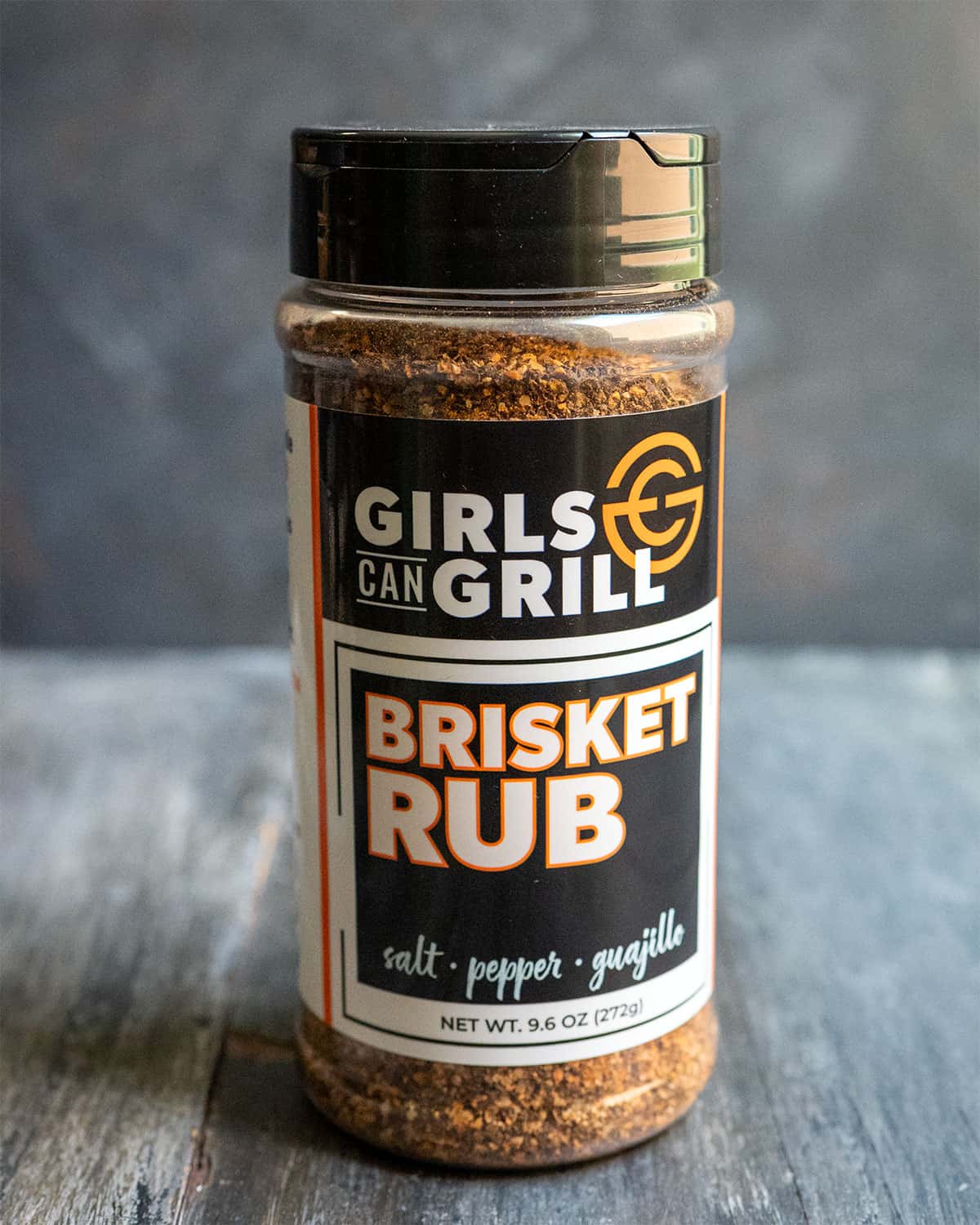
My Go-To Brisket Rub for Building Flavor and Bark
I use Girls Can Grill Brisket Rub on all of my briskets. This blend layers salt, pepper, garlic and savory spices to highlight the natural beef flavor while helping the bark develop evenly.