

There is no single internal temperature that tells you exactly when brisket is done. One brisket might be perfect at 195F, while another won’t be ready until it pushes past 205F or even 210F.
That’s why experienced pitmasters don’t cook brisket by temperature alone. They cook by feel.
This method is known as probe tender brisket, and it’s the most reliable way to know when your brisket is actually finished cooking.
See the full Brisket Troubleshooting Guide
PRO TIP: For a moist brisket every time, follow all of the steps in my no-fail brisket recipe.
Why Temperature Alone Isn’t Enough
For years, I’ve preached, “Cook to temp, not time.” However, there are some nuances with cooking to temperature when you’re cooking brisket.
Brisket is a tough cut loaded with connective tissue. To cook a perfectly tender brisket, you need to render that collagen into gelatin.
The internal temperature where brisket becomes tender depends on several variables:
- Size and thickness: Thicker sections hold heat differently and often need to reach a slightly higher internal temperature before the connective tissue fully breaks down and the meat relaxes.
- Grade and fat content: Highly marbled briskets, like Wagyu, contain more intramuscular fat. That fat has to fully render before the meat becomes tender, which often means the brisket needs to cook to a higher internal temperature.
- Pit temperature: Briskets cooked at higher pit temps often become probe tender at higher internal temperatures, while lower-and-slower cooks can feel tender at slightly lower temps.
- Altitude: At higher elevations, water boils at a lower temperature. This affects how moisture behaves inside the meat, so brisket often becomes probe tender at a lower internal temperature than it would at sea level.
That’s why internal temperature should be treated as a reference point — not a finish line.
What “Probe Tender” Really Means
When people talk about probe tender brisket, they’re describing the resistance you feel when inserting a temperature probe into the meat, not the number on the screen.
Here’s how to test it properly:
- Insert your probe into the flat and the point
- Ignore the temperature reading
- Pay attention to how the probe slides in
If the probe glides in with little to no resistance, like pushing into soft butter, the brisket is done.
If you feel drag, tightness or resistance, the brisket needs more time, even if the thermometer says it’s “hot enough.”
I often compare it to fruit:
- An unripe peach feels firm and fights back
- A ripe, juicy peach lets the probe slide right in
Probing a brisket should feel like the ripe peach.
Where to Check for Probe Tender
Don’t test just one spot. Briskets cook unevenly because the point contains more marbling than the flat.
Check:
- The thickest part of the flat
- The point
- Hit it at a couple of different angles
All areas should feel tender. If one section still resists, keep cooking.
What to Do After It’s Probe Tender
Once your brisket passes the probe tender test, resist the urge to slice immediately.
Here’s what I recommend:
- Wrap the brisket tightly with foil or butcher paper
- Wrap it in a towel
- Place it in a dry cooler (no ice)
- Rest for at least 1 hour and up to 3 if possible
Resting gives the brisket time to finish tenderizing and fully relax after the cook. Skipping this step can undo an otherwise perfect brisket.
Christie’s Pitmaster Take
Use temperature as a guide. Use probe tenderness as a non-negotiable.
I’ve cooked award-winning briskets that finished at very different internal temperatures, but they all had one thing in common: the probe slid in with zero resistance. That buttery feel matters more than any number on a thermometer.
When you learn to cook brisket by feel instead of fear, everything changes. You cook calmer and slice with confidence.
Brisket Guides
This BBQ Tip is part of my Ultimate Brisket Guide, which breaks down every step from anatomy to trimming to cooking.
Explore more brisket fundamentals:
For a full overview:

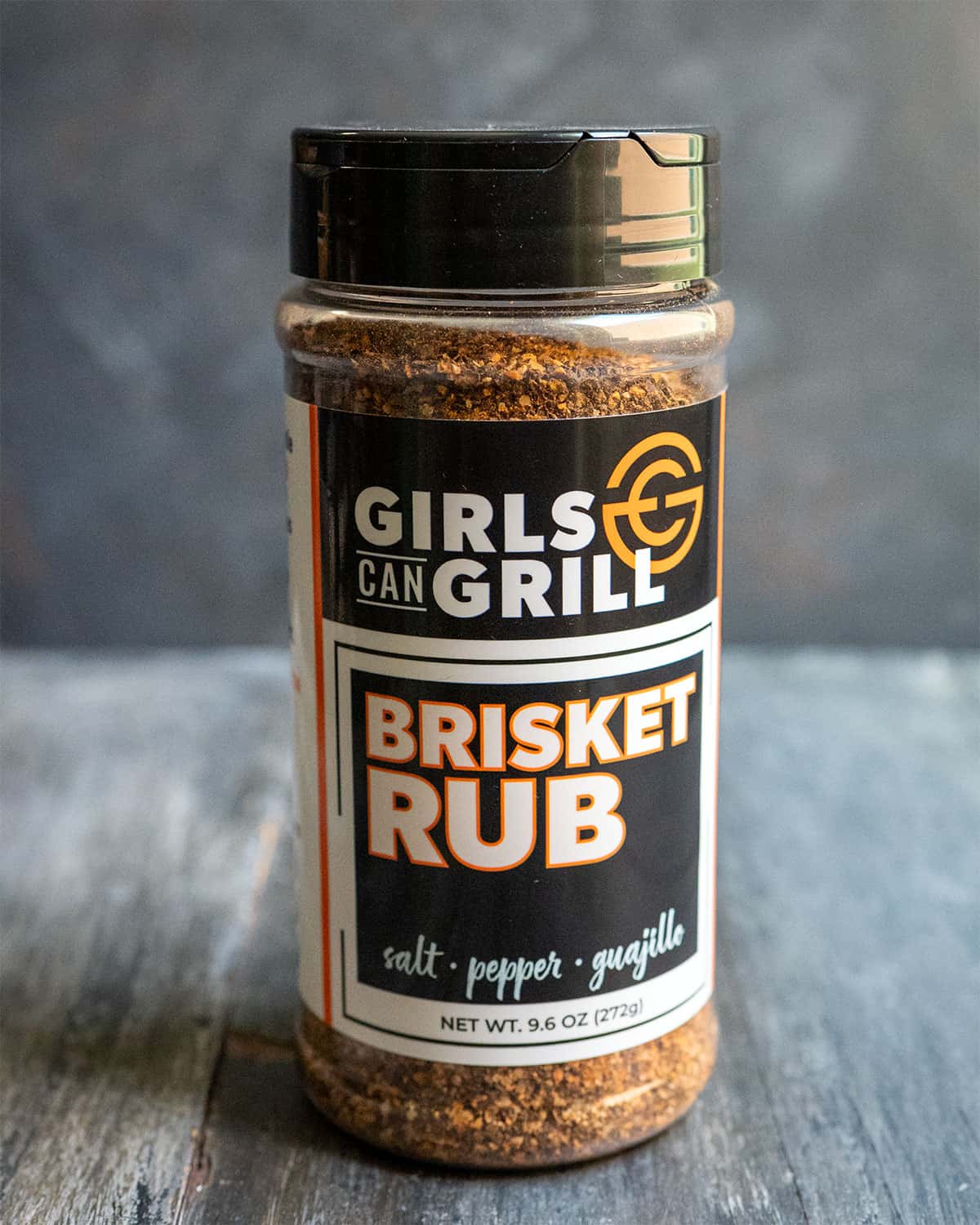
My Go-To Brisket Rub for Building Flavor and Bark
I use Girls Can Grill Brisket Rub on all of my briskets. This blend layers salt, pepper, garlic and savory spices to highlight the natural beef flavor while helping the bark develop evenly.