Angela’s Summer Flowers in North Carolina


Hi GPODers!
When we say goodbye to the summer months we also largely say goodbye to some garden visitors that are always welcome guests: pollinators. Some migrate long distances to find warmer weather, others hibernate in protected corners and crevices of our landscapes, and others still spend the winter months developing as eggs or larvae to emerge in their final form by spring. While they are out of sight they shouldn’t stay out of mind, and Angela G. in Statesville, North Carolina has a garden that reminds us that our outdoor spaces should be offering vital support for theses beneficial bugs as well as providing us with beauty. Her plantings may be new, but they’re already producing an abundance of blooms that support a variety of pollinators.
I garden in Statesville, NC and have been in my location for 3 years. The main area of focus so far has been the beds around the pool, where I have tried to select plants that peak in the summer and that attract pollinators. All of the photos included here are from the beds surrounding the pool, however, in a future submission I hope to be able to show progress on a new pollinator garden I started in spring 2025 and other plantings I am working on as I remove overgrown shrubs and redesign the foundation plantings around the house.
Thanks so much, I really enjoy seeing everyone’s gardens and getting ideas, and hope that someone will get some enjoyment out of seeing mine.
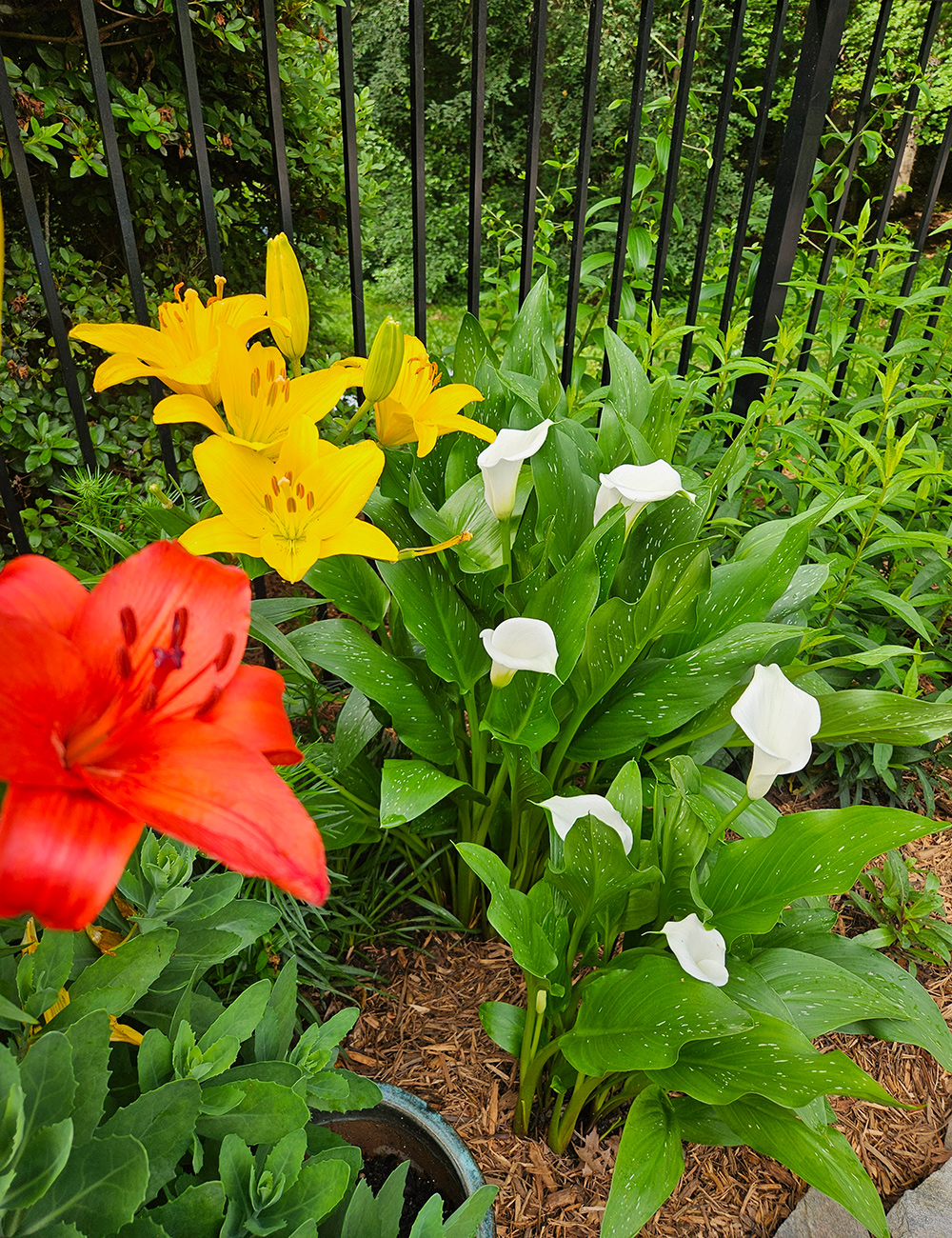 This first corner looks to be dedicated to lilies. Some colorful true lilies bring the heat and bright white calla lilies add another form while keeping the bed balanced.
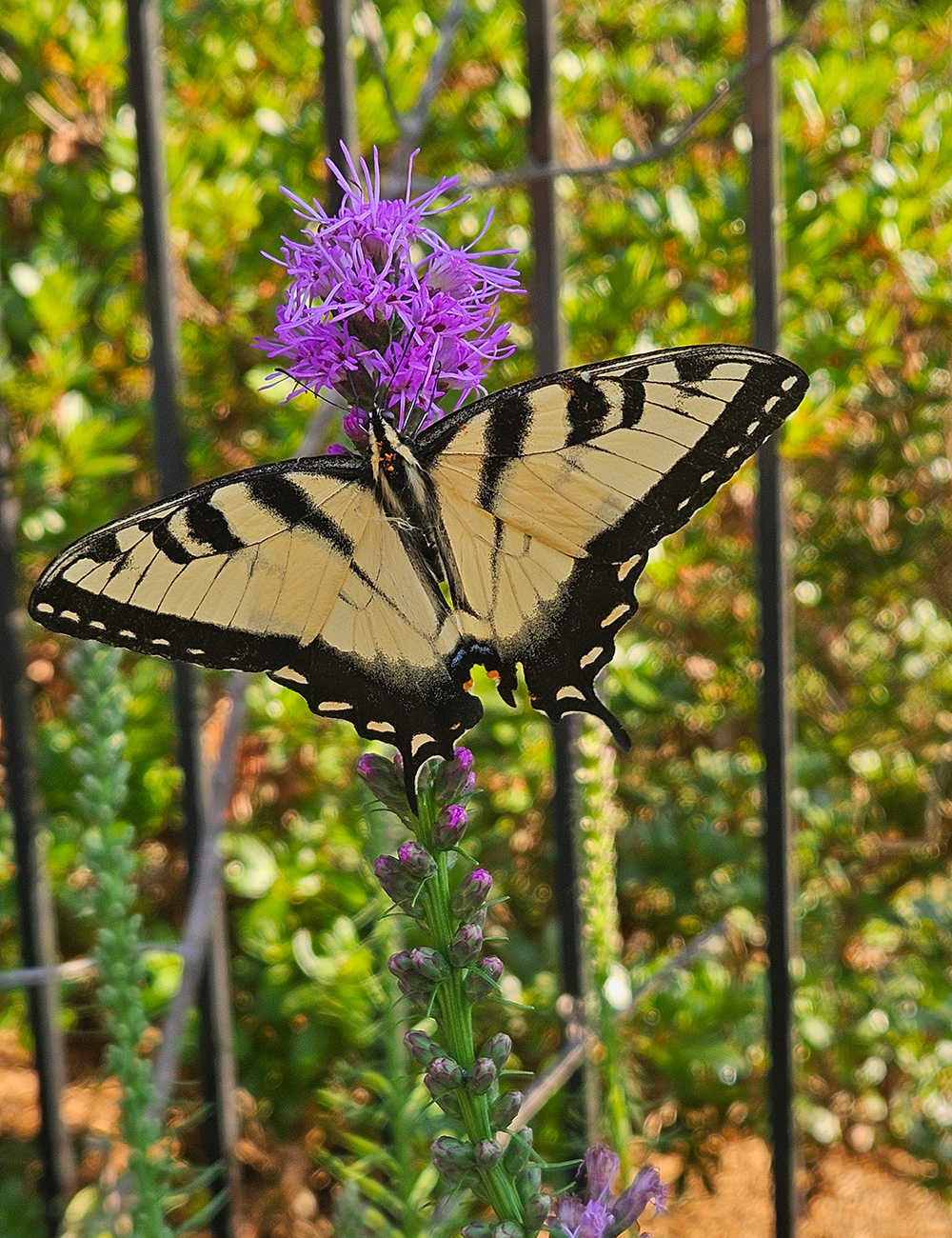 Angela’s photos show that her plantings are already a big hit with the butterflies in her area. This liatris, a pollinator favorite, was just beginning to bloom when an Eastern tiger swallowtail (Papilio glaucus) made a visit.
 A better look at that dense blazing star (Liatris spicata, Zone 3–9) reveals frosty lamb’s ear (Stachys byzantina, Zone 4–8) and a pair of purple coneflower purple coneflower (Echinacea purpurea, Zone 3–9) directly behind.
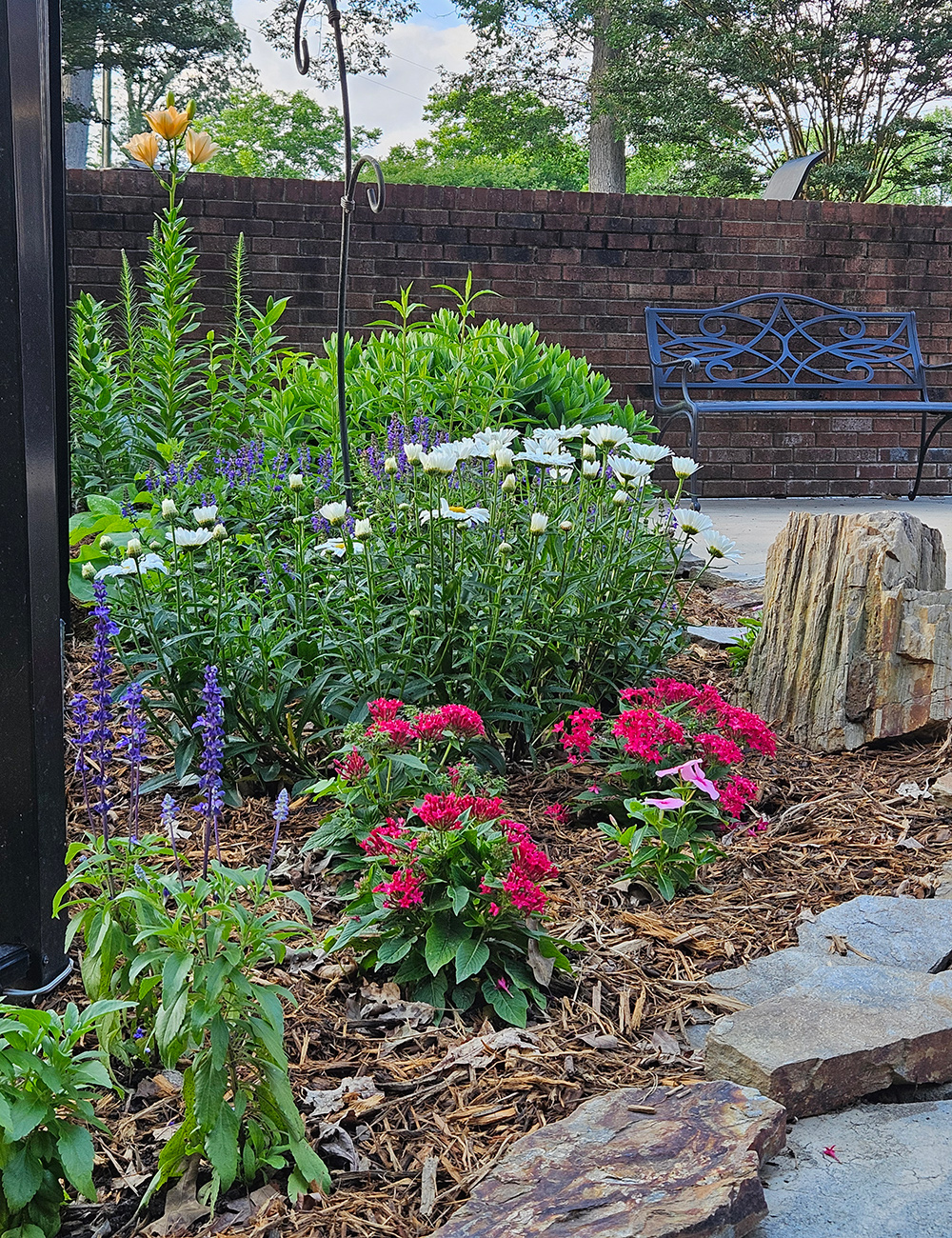 Angela’s pool-side beds aren’t expansive in size, but they still provide a beautiful buffet of different blooms for the various pollinators that visit her garden. A diverse assortment of colors and flower shapes is not only an aesthetic benefit, but also helps to attract and support a wider array of pollinators.
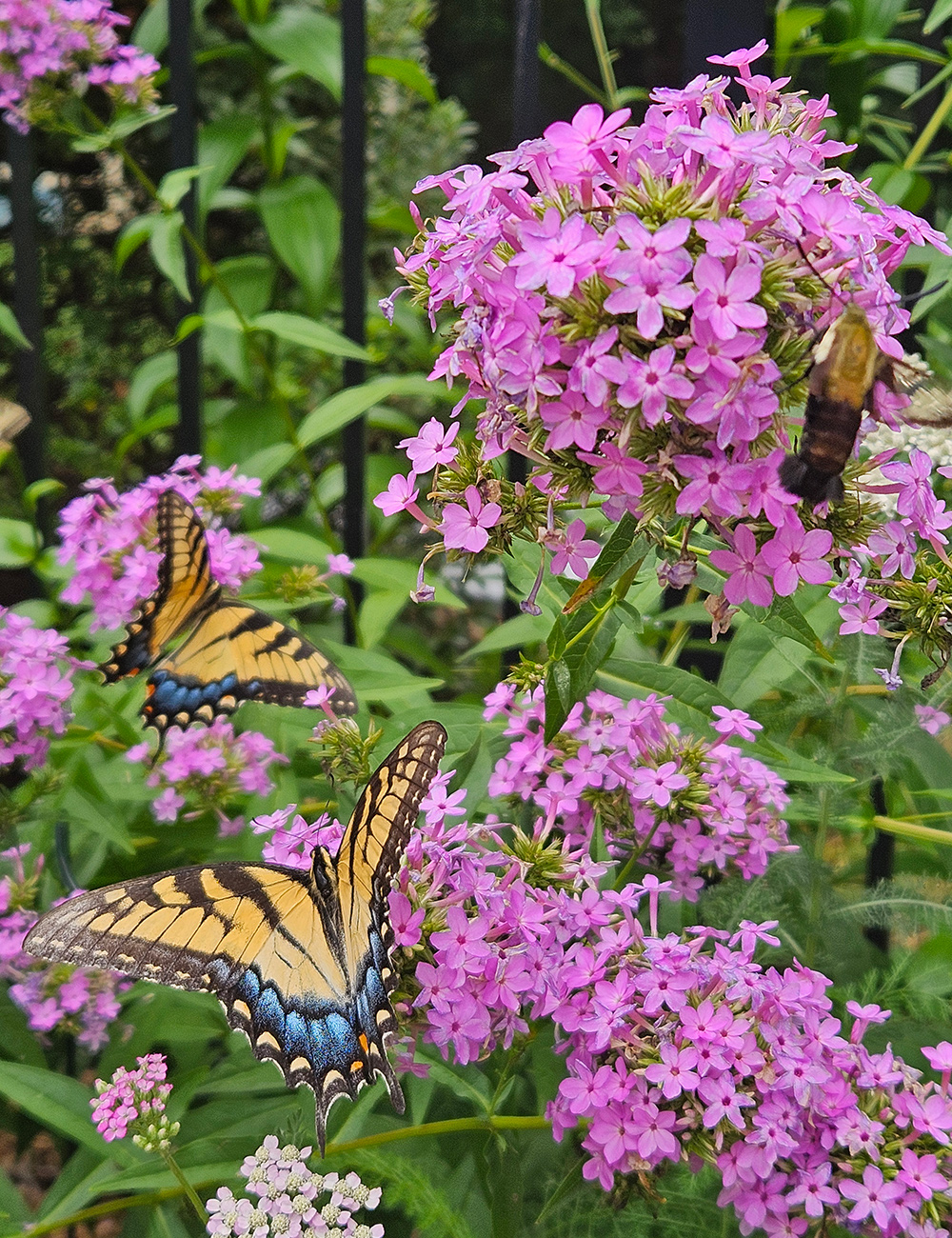 And speaking of pollinators, this garden phlox (Phlox paniculata, Zone 3–9) is causing a frenzy! Two female Eastern tiger swallowtail butterflies are joined by a hummingbird clearwing moth (Hemaris thysbe) to enjoy in this floral feast.
 Behind that garden phlox a ‘Black-Beauty’ lily (Lilium ‘Black Beauty’, Zone 3–9) adds a a more magenta-pink punch to this planting while providing more pollinating possibilities for butterflies and hummingbirds.
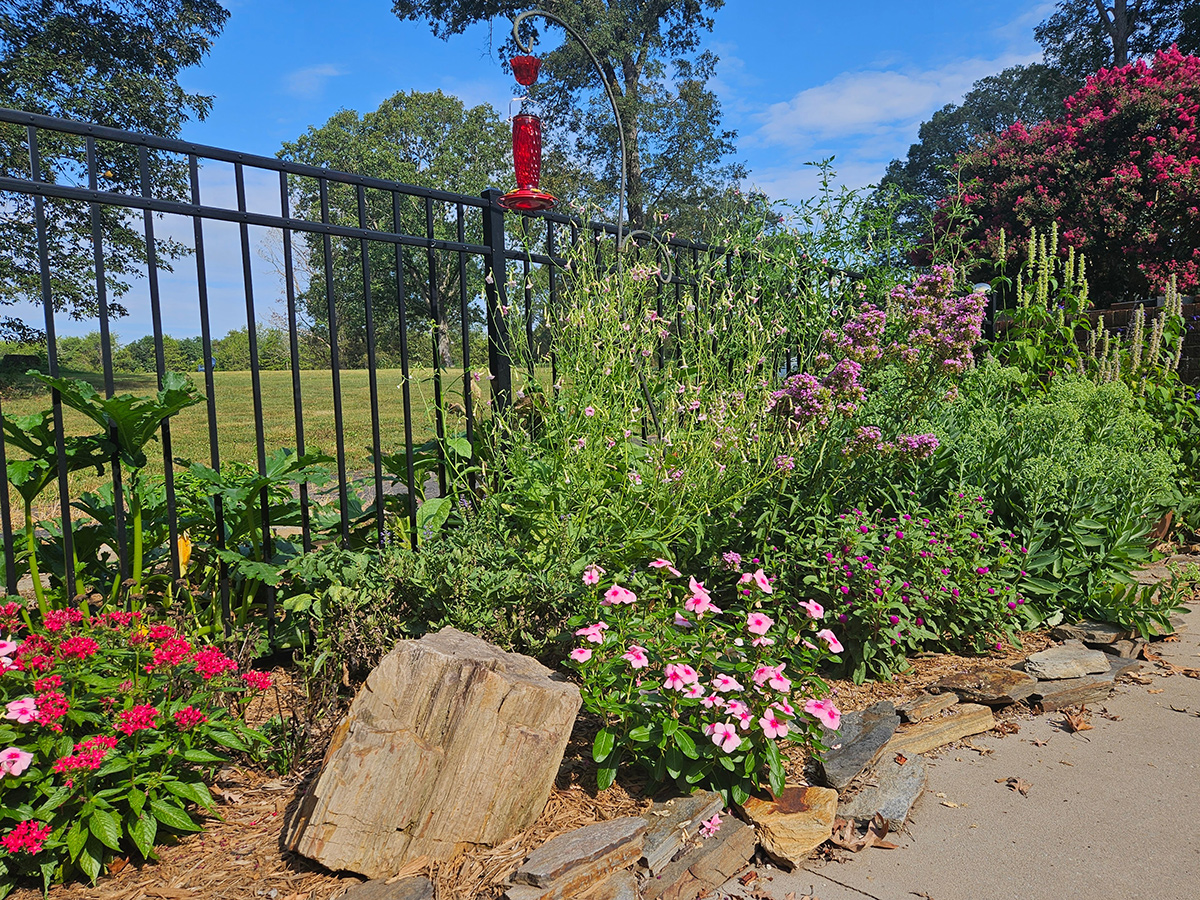 As much as flowers are vital to our pollinators’ survival, various parts of the plant are utilized throughout a beneficial bug’s lifecycle. Having densely planted areas with plenty of foliage, like this lush border bed, is also a vital source of food and protection for larvae and caterpillars.
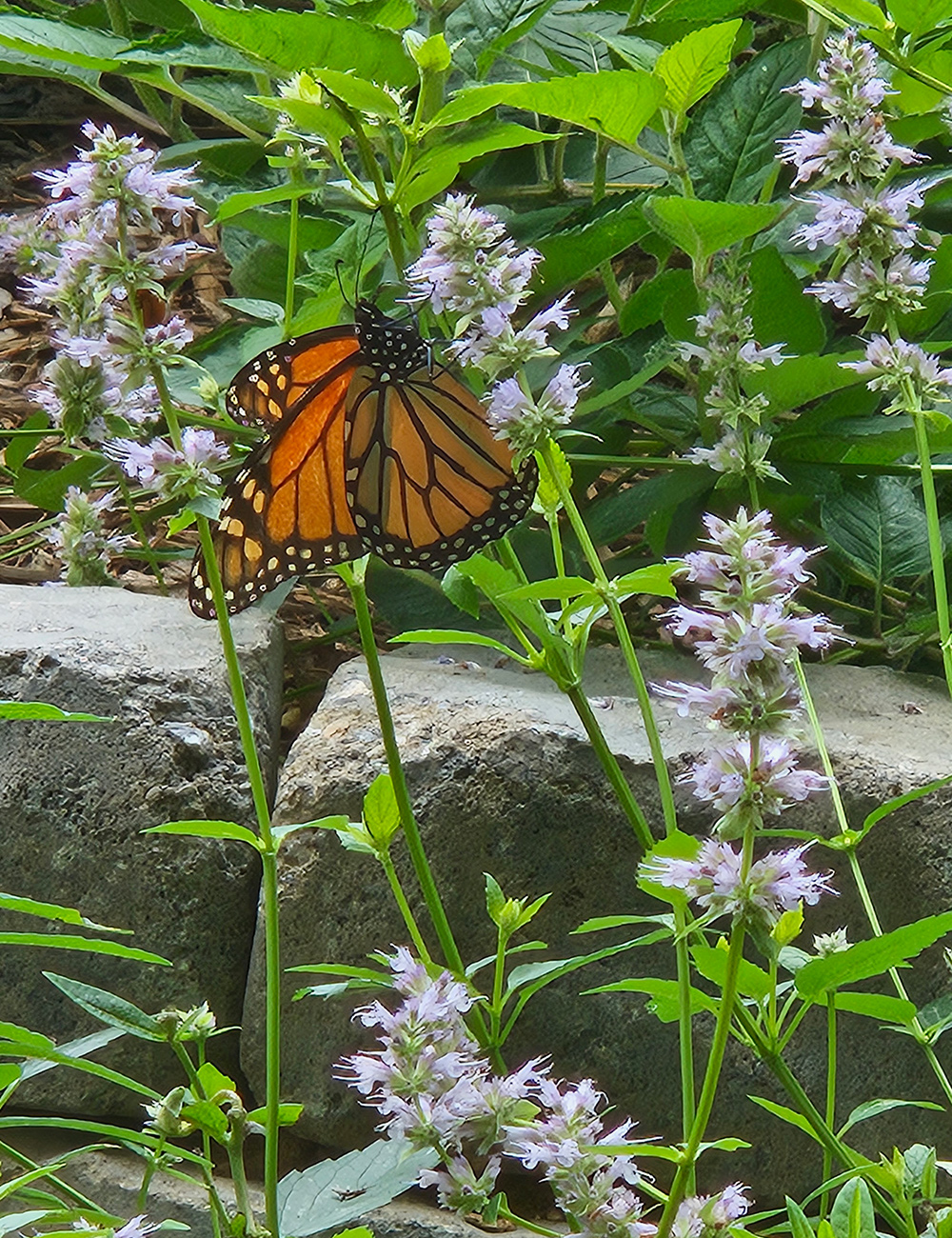 One final photo shows a beloved monarch butterfly (Danaus plexippus) visiting Angela’s agastache. The best way to attract these incredible, and threatened, pollinators is to plant a native species of milkweed (their host plant). However, they will also make an appearance to most gardens where an abundance of pollinator-friendly flowers are present, as Angela has so successfully done.
Thank you so much for sharing your vibrant garden with us, Angela! Getting a taste of summer color is exactly what the doctor calls for this time of year and your floral abundance is the perfect prescription.
Summer color may be long gone, but we have all winter to celebrate seasonal highlights on Garden Photo of the Day! As you’re scrolling through garden photos from the past year and planning your plantings for next year, consider sharing your favorite highlights with the blog. Follow the directions below to submit photos via email, or send me a DM on Instagram: @agirlherdogandtheroad.
We want to see YOUR garden!
Have photos to share? We’d love to see your garden, a particular collection of plants you love, or a wonderful garden you had the chance to visit!
To submit, send 5–10 photos to [email protected] along with some information about the plants in the pictures and where you took the photos. We’d love to hear where you are located, how long you’ve been gardening, successes you are proud of, failures you learned from, hopes for the future, favorite plants, or funny stories from your garden.
Have a mobile phone? Tag your photos on Facebook, Instagram, or Twitter with #FineGardening!
Do you receive the GPOD by email yet? Sign up here
Fine Gardening Recommended Products

Morvat Heavy Duty Brass Y-Valve
Fine Gardening receives a commission for items purchased through links on this site, including Amazon Associates and other affiliate advertising programs.
– Instantly create two tap outlets with this ultra-durable Y hose splitter. The dual-valve design features built-in shut-off valves.
– Fitted with US Standard NH 3/4″ threads for use with most water source fittings
– Screw the 2 way splitter adapter by hand or wrench with the updated hexagonal top connection. The 360° rotatable swivel connection attaches to any water source.

The Crevice Garden: How to make the perfect home for plants from rocky places
Fine Gardening receives a commission for items purchased through links on this site, including Amazon Associates and other affiliate advertising programs.
A crevice garden replicates the environmental conditions of mountain tops, deserts, coastlines, and other exposed or rocky places on earth. These striking garden features provide perfect conditions for the plants native to these far-off places, bringing the cultivation of these precious gems within everybody’s reach.
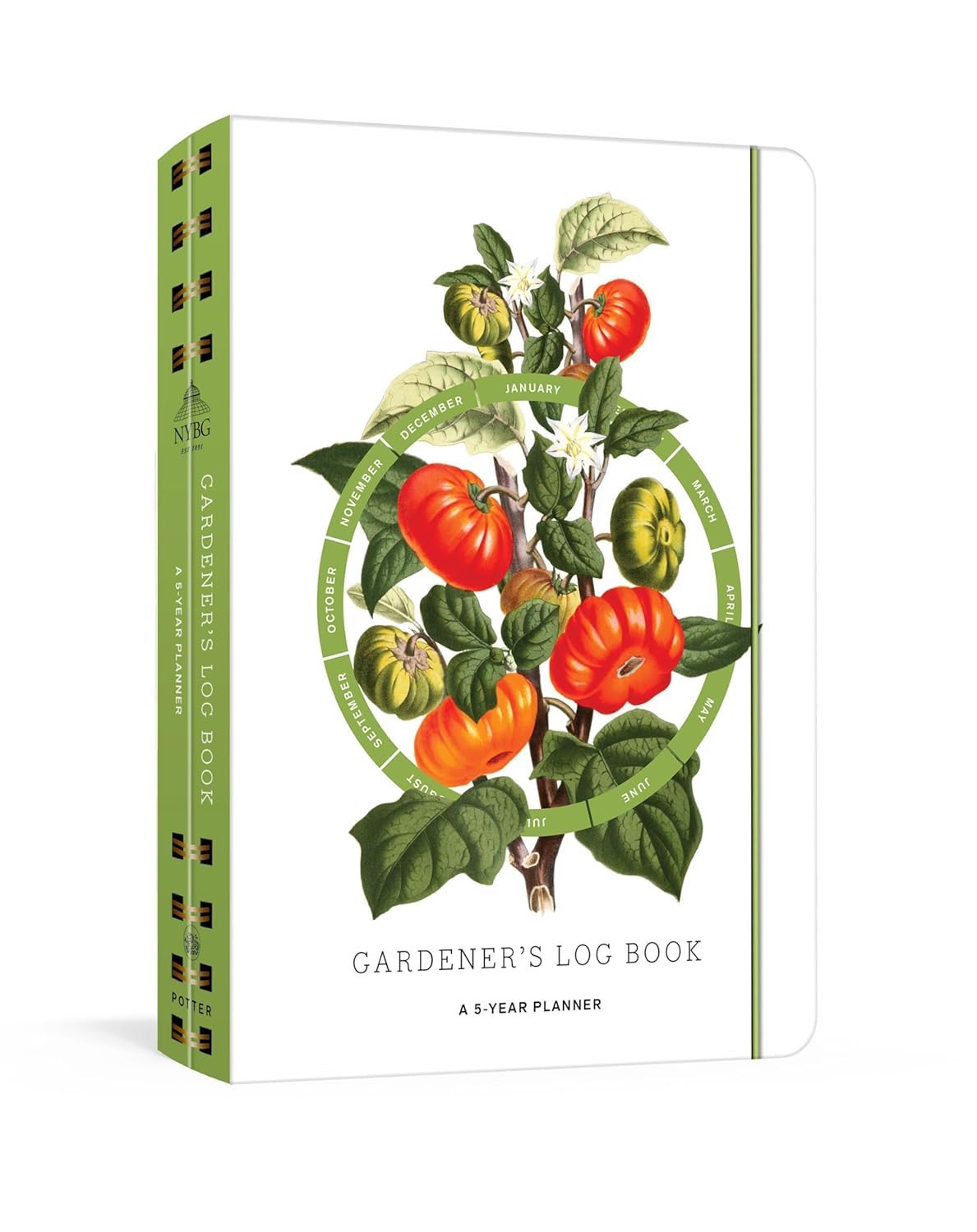
Gardener’s Log Book from NYBG
Fine Gardening receives a commission for items purchased through links on this site, including Amazon Associates and other affiliate advertising programs.
This weatherproof five-year log book includes the following features:
· Sturdy waterproof cover to protect pages from rain and muddy soil
· Lined pages and gridded paper for plotting beds
· Five years of 12-month bloom and harvest grids for recording what you planted and when
· Authoritative appendices on composting, pruning, pest and disease control, and container gardening
· Useful reminders by season on fertilizing, mulching, and transplanting
· Space for listing your favorite sources and suppliers.