
A deserving victory
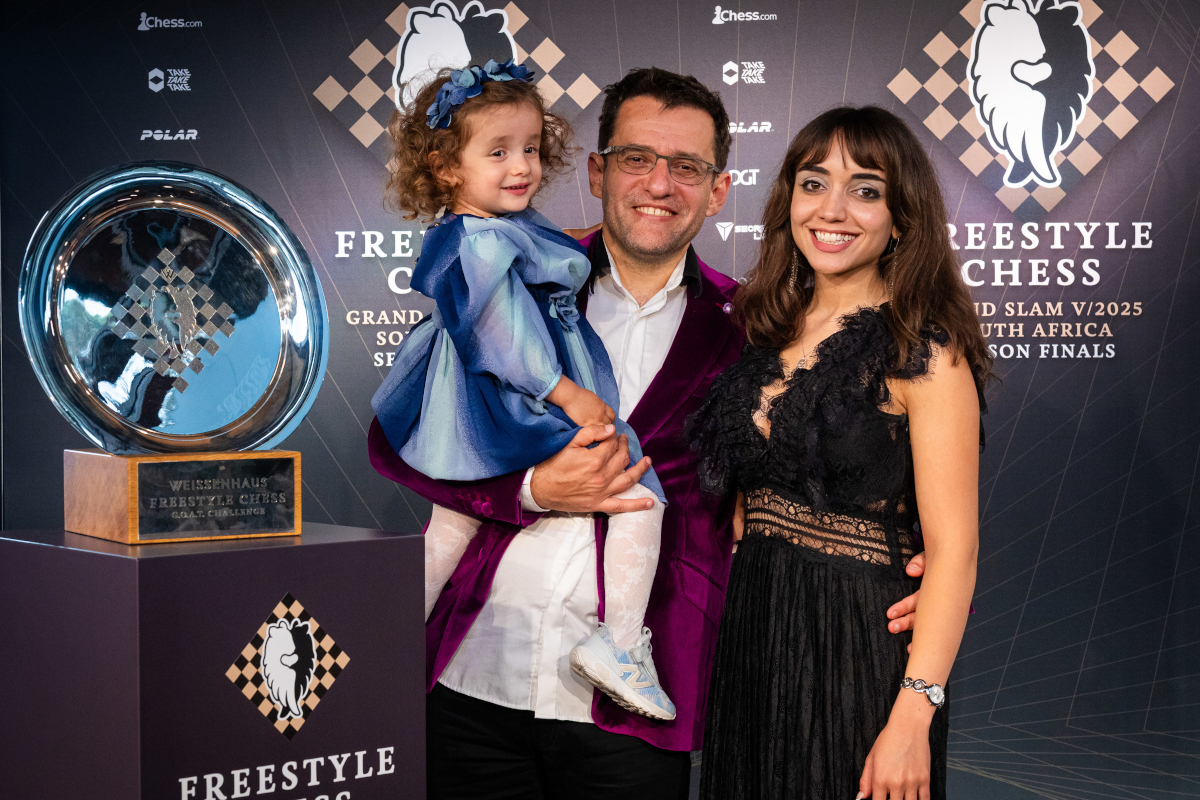
Levon Aronian won the final match of the Freestyle Chess Grand Slam Finals in South Africa, defeating Magnus Carlsen 1½–½ to secure the $200,000 first prize. The victory follows his success in Las Vegas earlier in the year, marking his second consecutive Grand Slam event win. Carlsen, however, still concludes the season as the overall Freestyle Chess Tour champion, a title that awards him $100,000 based on his cumulative results across the series.
The opening game of the final set the tone for the match. Aronian accepted Carlsen’s early pawn sacrifice and managed to consolidate the extra material with careful play. Carlsen, unusually short on time from the early stages, struggled to generate practical chances and never successfully built the compensation needed for the pawn. Aronian converted the advantage smoothly, giving him a lead that placed significant pressure on the world number one going into game two.
Although the second game ended in a draw, the assessment on paper does not fully capture the effort required from Aronian. Carlsen probed throughout the endgame, and there were moments – particularly near the finish – when his efforts forced Aronian to demonstrate precise defensive technique.
Despite a late wobble that briefly raised concerns among commentators, Aronian avoided any decisive mistakes and held the draw he needed to win the match.
Aronian completed the event without losing a single game across four days, an achievement he attributed in part to the support of his family, who were present throughout the competition. Carlsen, while falling short in the final, remained the dominant player across the wider tour, finishing 37 points clear of Aronian in the overall standings.
 Ganguly introduces conceptually fresh directions in several key lines – even in the most played main lines.
The Ragozin Defence (1.d4 Nf6 2.c4 e6 3.Nf3 d5 4.Nc3 Bb4) has become a cornerstone of modern chess theory. With 3.Nf3 gaining popularity as a way to avoid Nimzo-Indian setups and the challenges Black faces in the Queen’s Indian, the Ragozin offers a solid and dynamic alternative.
Free video sample: Introduction
Free video sample: 5.cxd5 exd5 6.Bf4
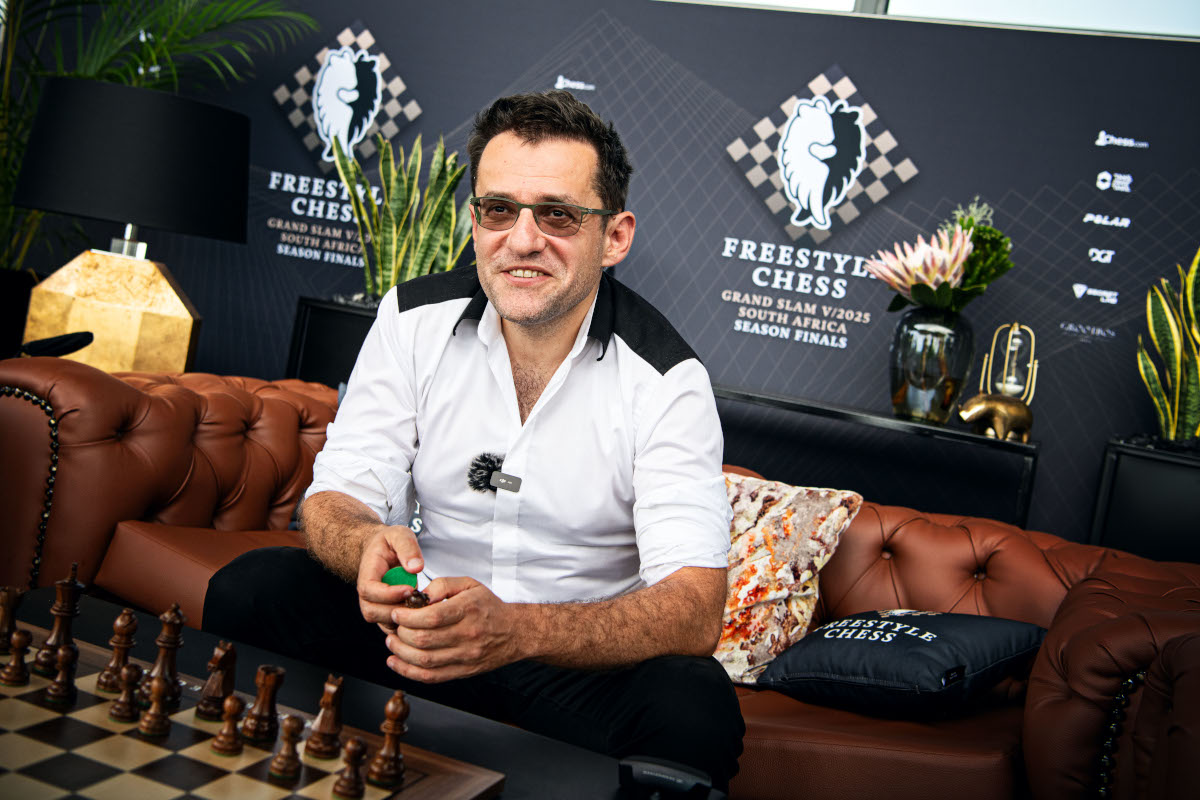
Levon Aronian | Photo: Freestyle Chess / Stev Bonhage

Magnus Carlsen lost the final match but won the inaugural Freestyle Chess yearly series | Photo: Freestyle Chess / Stev Bonhage
Keymer defeats Sindarov to reach the podium
The match for third place saw Vincent Keymer getting a 2-0 victory over Javokhir Sindarov. Both contestants, the youngest in the Finals, showed strong performances in the Freestyle Chess variant. While Keymer won the inaugural tournament of the series in Weissenhaus, Sindarov – who came from winning the FIDE World Cup – remarkably won the round-robin stage in Cape Town.
In the match, Keymer first demonstrated his attacking skills to win game one and then broke through exemplarily in a technical endgame to also take the second encounter.
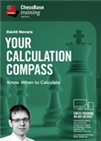 In this insightful video course, Grandmaster David Navara shares practical advice on when to calculate deeply in a position — and just as importantly, when not to.
In this insightful video course, Grandmaster David Navara shares practical advice on when to calculate deeply in a position — and just as importantly, when not to.
Free sample video: Introduction
Free sample video: Invisible moves

Vincent Keymer seems to be enjoying the analysis session with Arjun Erigaisi and Levon Aronian | Photo: Freestyle Chess / Lennart Ootes
Caruana and Niemann win fast-paced matches
While the matches for first and third place featured 30-minute games, much like in the previous stages of the knockout, the matches for fifth and seventh place saw the players battling in 10-minute encounters.
Fabiano Caruana scored a 1½-½ victory over Arjun Erigaisi to claim fifth place, while Hans Niemann came from behind to beat Parham Maghsoodloo to grab finish seventh – after losing game one, Niemann first won on demand (with the white pieces) and then prevailed in both blitz tiebrekakers to get a final 3-1 victory.
Niemann checkmated Maghsoodloo in the last game of the match.
White’s 26.Kc1 was a mistaken manoeuvre, though he was already in deep trouble. Niemann’s deciding attack started with 26…Rh1+ 27.Kb2 Qf1 28.Ka2 Bb5
The threat is …Bb4, so Maghsoodloo replied by 29.Ka3. But now came 29…Qc1+ 30.Rb2 (30.Qb2 is better, but would have merely delayed the inevitable mate) Qa1+ 31.Kb3 Rh3+ 32.c3
 Experts examine the games of Max Euwe. Let them show you which openings Euwe chose to play, where his strength in middlegames were, which tactical abilities he had or how he outplayed his opponents in the endgame.
Max Euwe became the fifth World Chess Champion after beating Alexander Alekhine in the 1935 World Championship match. A maths teacher by profession, Euwe remained an amateur throughout his life, but was still the best chess player in the Netherlands, and one of the world’s best players. Euwe holds the record for the most Dutch national championships, with twelve. After winning the World Championship, Euwe was also the world’s best player for a while. He lost the title again in 1937 in the rematch against Alexander Alekhine.
Free video sample: Openings
32….Qa4# Checkmate.

Fabiano Caruana, Javokhir Sindarov and Hans Niemann trying to understand the day’s Freestyle Chess position | Photo: Freestyle Chess / Stev Bonhage
All games
EXPAND YOUR CHESS HORIZONS
Data, plans, practice – the new Opening Report In ChessBase there are always attempts to show the typical plans of an opening variation. In the age of engines, chess is much more concrete than previously thought. But amateurs in particular love openings with clear plans, see the London System. In ChessBase ’26, three functions deal with the display of plans. The new opening report examines which piece moves or pawn advances are significant for each important variation. In the reference search you can now see on the board where the pieces usually go. If you start the new Monte Carlo analysis, the board also shows the most common figure paths.