Finally, a Disease-Resistant Dogwood – Fine Gardening

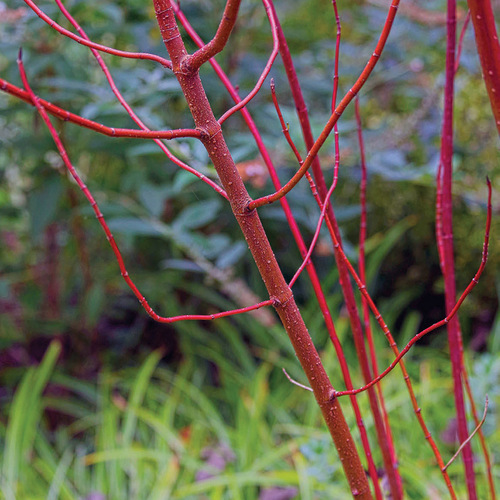
I first fell in love with red twig dogwoods about 25 years ago when a gardening friend took me to visit another of her friends. The sweet woman pointed out a large, multi-stemmed shrub growing in the middle of her lawn. She told me it was a red twig dogwood, and I thought to myself, “What a strange-looking dogwood.” It was midsummer, and the shrub did not look all that appealing to me, but I was so plant hungry at the time that I gladly accepted two suckers she dug out for me. Was I surprised that winter when the stems turned a brilliant red! I wanted more, so I asked about red twig dogwoods at local nurseries but with no success. I eventually learned that they are highly susceptible to stem canker and blight, especially in the South. Still, red twig dogwoods are hard to beat for their colorful show in winter, so I continued to plant them, typically getting five or so years of enjoyment out of a plant before it would succumb to disease. The way I figured, potato chips don’t last long either, but I buy them over and over.
In the winter of 2011 while driving to Charlottesville, Virginia, Michael Dirr spotted a bright red-twig silky dogwood (Cornus amomum) growing in a swamp on the side of the highway. He waded out among the beavers to snag some cuttings, and ‘Cayenne’ was born. Silky dogwood was not particularly known for its stem color until this roadside discovery. It’s native along streams, edges of swamps, and other low areas across much of the eastern United States and isn’t affected by stem canker like many other Cornus species.
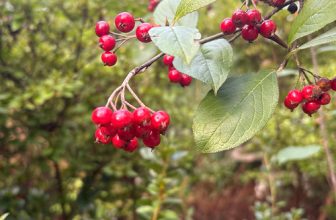
‘Cayenne’ has fresh green foliage all summer. Numerous small white flowers that look similar to Queen Anne’s lace are produced on the end of the stems in late spring and give way to clusters of pea-size porcelain blue fruit in late summer. The fruits are enjoyed by birds as well as people. As the temperatures cool, the real show begins, with the leaves turning orange-red, then dropping to reveal bright red stems.
As with the other species of red twig dogwoods, ‘Cayenne’ is a multistemmed shrub that spreads by suckers. The best winter stem color occurs on young new growth. Once the stems are a couple of years old, the bark matures to gray. To ensure fresh, colorful stems each year, older stems should be cut back close to the ground in late winter or early spring. Strong new stems will quickly spring forth. Thanks to Dirr, there is finally a red twig dogwood that can be enjoyed even in Southern gardens for many years—and now I’ll have more money to spend on potato chips.

‘Cayenne’ silky dogwood
(Cornus amomum ‘Cayenne’)
Zones: 4–9
Conditions: Full sun to partial shade; moist, well-drained soil
—Jason Reeves is research horticulturist at the University of Tennessee Gardens–Jackson.
Illustration: Elara Tanguy
Sources:
Fine Gardening Recommended Products
Black and Decker 22-inch Cordless Hedge Trimmer
Fine Gardening receives a commission for items purchased through links on this site, including Amazon Associates and other affiliate advertising programs.
Quick and easy to put into operation and is less noisy and lighter in weight than gas-powered hedge trimmers.
– 38 x 7 x 7 inches
– 6.9 pounds
– 1 Lithium Ion battery required (included)

ARS Telescoping Long Reach Pruner
Fine Gardening receives a commission for items purchased through links on this site, including Amazon Associates and other affiliate advertising programs.
Telescopes from 4 to 7′. Cut and Hold (160) Blades. Drop forged blades for unsurpassed long lasting sharpness. Lightweight, 2.3 lbs., for continued use. Perfectly balanced for easy pruning.