

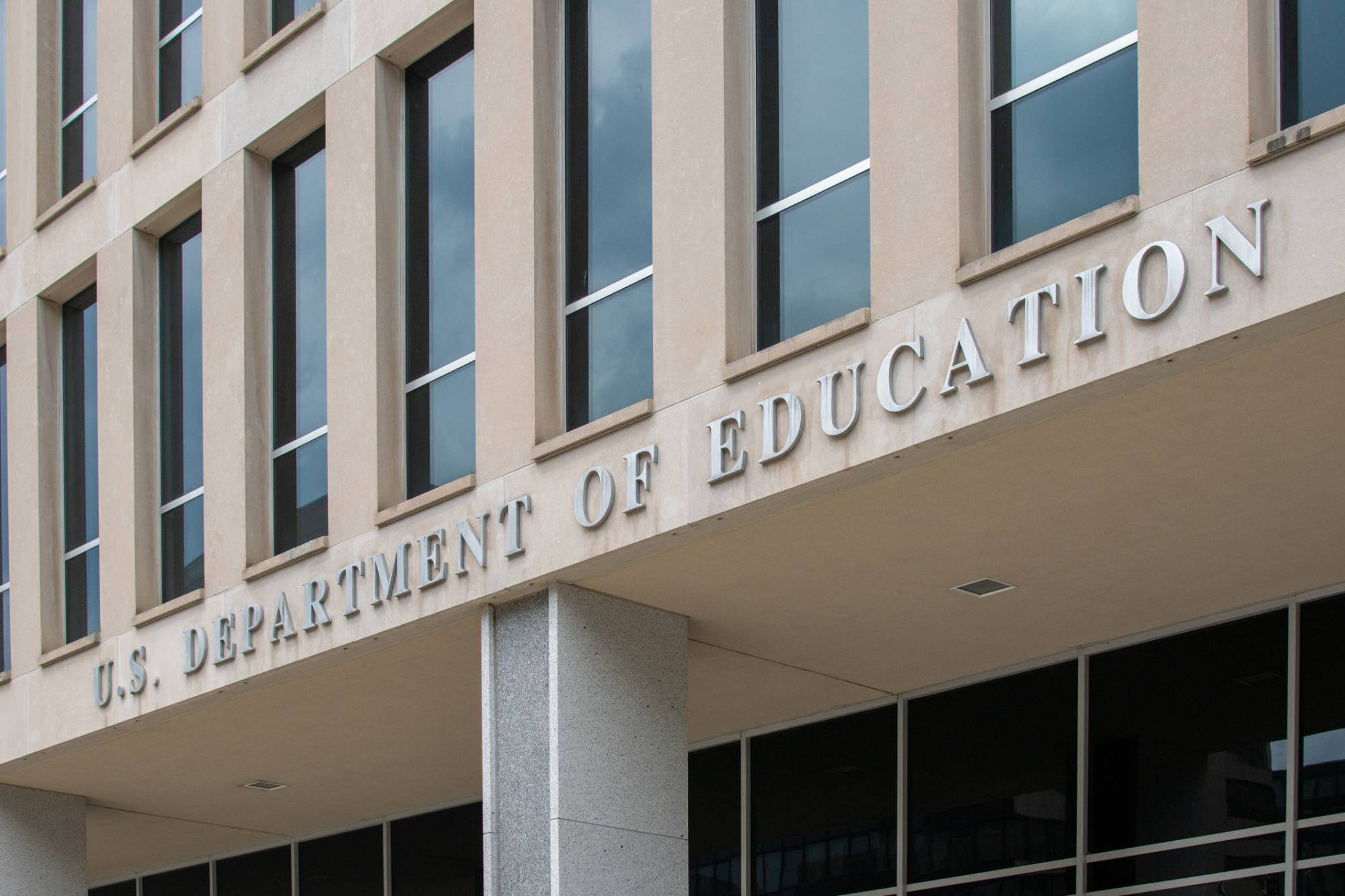
Even core federal datasets were not spared. The termination of a contract for EDFacts, which collects demographic data about students, was inconceivable. The data is essential for administering the highly regarded National Assessment of Educational Progress (NAEP), the federal test that tracks reading and math achievement. It is also critical for allocating $18 billion for the Title I program, which gives federal subsidies to high-poverty schools. DOGE killed evidence-based teacher guides for math instruction. Even data on homeschooling — long a conservative priority — was cut. A department spokeswoman said the cuts eliminated “waste, fraud and abuse.”
Much of the agency’s work is conducted by outside contractors, and DOGE pressured vendors to accept massive contract reductions; some payments were frozen entirely. The ripple effects were immediate: Research labs, university offices and federal contractors were thrown into chaos, scrambling to save data and unsure of their jobs.
The month ended with a shocking firing at the National Center for Education Statistics (NCES), a major source of reliable data. The commissioner, Peggy Carr, was escorted out of the building by a security guard under circumstances that remain unclear. She was one of the first in a string of senior Black officials across the federal government who were tossed out by the Trump administration. Former department employees told me Carr had resisted DOGE’s demand to make severe cuts to NAEP. Her removal sent a clear signal that resistance would have consequences.
March: Mass firings
The unprecedented devastation continued in March, when nearly half of the Education Department’s workers lost their jobs, including almost 90 percent of staffers assigned to the research and statistics division. The agency Carr led was reduced to a skeletal staff of three employees from about 100. In another sign of the internal chaos, Chris Chapman, who had been installed to replace Carr, was fired after only 15 days, adding to the confusion about who, if anyone, was in charge.
Linda McMahon, newly confirmed as education secretary, publicly defended the cuts, describing them as “a first step” toward closing the agency. With so few staffers to oversee contracts, NAEP test development stalled. DOGE even suggested substituting off-the-shelf tests from private vendors, sources said, undermining decades of federal assessment development.
“My job was to make sure that the limited public dollars for education research were spent as best as they could be,” a former education official said in March. Her job was to issue grants for the development of new innovations. “We make sure there’s no fraud, waste and abuse. Now there’s no watchdog to oversee it.”
April: More cuts, more chaos
By April, the board that oversees the NAEP exam reluctantly killed more than a dozen assessments scheduled over the next seven years. The cuts were painful. They meant not measuring how much American students know in science and history or measuring writing skills. They also meant eliminating some state comparisons, diminishing the ability to highlight states that are making progress. But board members described how DOGE threatened the whole NAEP program, and they hoped that these cuts would be enough to preserve the quality of the main biennial tests in math and reading. The board had effectively amputated limbs to save the brain and heart.
The destruction spread beyond the Education Department. At the National Science Foundation, DOGE-directed cuts targeted education more than any other area. Of the billion dollars in NSF grants that DOGE eliminated, three-quarters were for education research, largely conducted at universities. Many of the killed projects focused on increasing the participation of women and minorities in the STEM fields of science, technology, engineering and mathematics and on combating misinformation.
By chance, thousands of researchers and statisticians were in Denver for the annual meeting of the American Educational Research Association (AERA) as DOGE was destroying their field. They fought back. Three lawsuits, including one led by AERA, challenged the legality of contract terminations and mass firings.
Public outcry grew. McMahon publicly admitted that some cuts had gone too far. “When you are restructuring a company, you hope that you’re just cutting fat,” McMahon said before Congress. “Sometimes you cut a little in the muscle.”
But by then the damage was deep and far-reaching. Data collections were paused midstream, rendering them useless. Evaluations of efforts to improve teaching and learning were left incomplete.
“Years of work have gone into these studies,” said Dan McGrath, a Democracy Forward lawyer who is representing plaintiffs in one of the lawsuits. “At some point it won’t be possible to put Humpty Dumpty back together again.”
Researchers were left navigating a landscape that had been transformed overnight, with no clear road map for survival. LinkedIn was flooded with new “open to work” updates. Many fled Washington and the field of education altogether, taking decades of institutional knowledge with them.
As the destruction continued, public scrutiny began to influence the department’s actions. Two days after I wrote a column on the defunding of the Education Resources Information Center, an online library of critical educational documents known as ERIC, the department restarted it — albeit with only half its previous budget.
May and June: Mixed signals
By late spring, the relentless onslaught of destruction shifted into a more confusing narrative of tentative reversals, with some contracts restarted and some staff rehired. The flagship “Condition of Education” report, a comprehensive data compilation about U.S. schools, students and teachers, wasn’t published by its June 1 deadline for the first time in history. Hours after I wrote about the missed deadline, which is mandated by Congress, the department hastily posted some “coming soon” declarations on its website, but the information was late and incomplete. The 2025 report remains unfinished.
McMahon recognized that she could not operate her agency on such a thin staff. In May, she disclosed that she had quietly brought back 74 of those who had been fired. Five employees of the board that oversees NAEP were loaned to the Education Department to keep the 2026 exam in reading and math on track. Of course, these numbers are a tiny fraction of the 2,000 employees who were let go, but they were also a sign that the Trump administration saw value in some of the department’s work.
More reversals — at least partial ones — followed. Lawsuits and public scrutiny prompted the restart of roughly 20 research and data contracts and the preservation of data access for researchers. EDFacts was among them. Even so, restorations were often incomplete, sometimes no more than symbolic and with little practical effect.
In one example, the department said it was reinstating a contract for operating the What Works Clearinghouse, a website that informs schools about evidence-based teaching practices, a congressionally mandated function. But, in that same legal disclosure, the department also said that it was not planning to reinstate any of the contracts to produce new content for the site.
Throughout the Institute of Education Sciences, budgets were slashed, leaving programs under-resourced. And no new research was being reviewed or approved for funding. Trump’s budget proposed slashing IES’ 2026 budget by two-thirds, a move that Republican Senate appropriators would later reject.
Still, there was a glimmer of hope: At the end of May, McMahon tapped Amber Northern, a respected researcher, to lead an effort to revamp and modernize IES.
July–September: A Supreme Court ruling
The fallout continued in July. NAEP scores were delayed because of a leadership vacuum. Matt Soldner, juggling multiple roles inside the Education Department, was assigned yet another one — acting director of NCES — in order to release reports. In August, the administration ordered a new data collection on college admissions, a politically charged project undertaken without sufficient staff or funding. Experts warned it could be weaponized to accuse universities of reverse discrimination. Still, it was an indication that the Trump administration had discovered that the Education Department could be useful in enforcing its political priorities, even if it wasn’t yet willing to fund them.
By September, some NAEP results were finally released, three months behind schedule. Higher education data slowly emerged, albeit incomplete. New job postings and public comment requests hinted at a slow rebuilding, but the system remained fragile. Across states, districts and universities, the consequences of eight months of disruption were already visible: delayed reports, stalled research and weakened trust in federal statistics.
In the spring, a federal court in Boston ordered the return of fired staffers, but in July, the Supreme Court sided with the Trump administration: The employees would remain fired. In addition, the vast majority of the research contracts would remain terminated while lawsuits slowly moved through the court system — which could take years. The damage was done and probably irreversible.
October and November: Shutdown and uncertainty
On Oct. 1, everything stopped. More than 400 comments on how to reform IES poured in by the Oct. 15 deadline, but the department couldn’t post them because of the government shutdown.
On Nov. 18, McMahon announced she was outsourcing a host of Education Department functions to other agencies, creating an end-run around Congress because she wasn’t technically transferring these divisions. (Only Congress has the authority to eliminate the department or transfer its congressionally mandated activities elsewhere.) But research and statistics weren’t mentioned on McMahon’s outsourcing list, and the fate of IES remained unclear. The Education Department didn’t respond to my requests in November to interview an official about IES’ future.
Looking ahead
Federal education research occupies a narrow but indispensable space. Unlike private foundations, which often chase novelty or seek to make a visible mark on the field, the federal system is designed for the slow, unglamorous work of establishing baseline data in reading and math, conducting large-scale evaluations and studying interventions that schools actually adopt. The system had its flaws — outdated methodologies, expensive vendor contracts, research adrift from classroom needs — and critics had long pushed for reform. But even those critics agreed that you don’t fix a system by gutting it midstream. Real reform requires investment, not indiscriminate cuts.
Some consequences are already evident. Almost no new grants or contracts for fresh research were awarded in 2025, meaning that a generation of studies may never materialize. There were exceptions. On the eve of the shutdown, IES quietly pushed through nine small education technology innovation grants, initiated during the Biden administration, totaling $450,000. Then after the shutdown, IES announced $14 million in contracts to 25 small businesses to develop and test new ed tech products.
Public confidence in federal data faltered as publications arrived late, abbreviated or not at all. What had once been the backbone of the American educational system began to feel fragile and unreliable.
Partial restorations have taken place, but they reveal the limits of what can be reclaimed. The online library ERIC survived on half its funding; NAEP continued, though scaled back; and the regional laboratories that were slated to restart still haven’t. Inside IES, the workforce had been gutted, leaving few people to execute the remaining programs. These restorations highlight the importance of public scrutiny, lawsuits and reporting, yet they cannot undo the carnage.
The damage is cumulative and will unfold over years. Longitudinal studies were cut off midstream, multiyear research programs collapsed, and promising lines of inquiry vanished before they could mature. Careers were derailed, but the deeper loss belongs to the children and teachers who will never benefit from the knowledge that would have been generated.
In a fragmented system where every district makes its own choices, evidence is one of the few forces capable of offering coherence. And the statistics that track the nation’s schools — achievement, inequality, enrollment, finances — are irreplaceable. As it stands now, there is a lot we won’t know, measure or trust in the future of education.
The deeper irony is that the cuts did not simply weaken the field of education research, they compromised the country’s ability to see its own school system clearly. Reform may indeed be overdue. But rebuilding confidence in federal data — and recovering the institutional knowledge lost in a single chaotic year — will take far longer than the dismantling.