


Muscle wasting has quietly become one of the most widespread metabolic problems in the modern world. It is happening among children, young adults, and older adults who are following popular diet trends that dramatically reduce protein intake. Weight-loss shots, plant-based diets, and low-calorie programs can produce rapid weight loss on the scale, but the weight that disappears is often the very tissue people need for long-term stability. Muscle is not decorative tissue. It is an essential organ system that regulates metabolism, blood sugar control, immunity, and overall health.[1]
Most people today are overfed and undernourished at the same time. Highly processed foods are filled with refined carbohydrates, seed oils, additives, and plant-based fillers that supply large amounts of energy without delivering the amino acids required for muscle maintenance. Even individuals who are considered health-conscious often consume far less protein than their bodies need. Many of the foods marketed as healthier alternatives are incomplete sources of protein, lacking the full spectrum of essential amino acids. Over time, this creates an internal environment in which muscle cannot be maintained.[2-3]]
Childhood Development and the Decline of Structural Health

Children are showing early signs of nutritional deficiencies despite having constant access to food. Packaged snacks, plant-based substitutes, fortified cereals, and grain-heavy meals often take up most of a child’s plate, yet these foods deliver calories without much real protein. Growing bodies depend on high-quality amino acids for brain development, strong bones, stable moods, and a resilient immune system. When those amino acids are missing, children simply do not get what they need to build a strong foundation for lifelong health.. This pattern contributes to weaker musculoskeletal development and fragile metabolic health early in life.
Parents often assume they are feeding their children well if the packaging appears natural, organic, or nutrient fortified. In reality, many foods marketed to children lack the amino acid density required for proper development. When diets are built around refined carbohydrates, the body does not receive the tools needed to construct strong tissue. These deficiencies compound over time, and the consequences become more difficult to reverse in adolescence and adulthood. A lack of high-quality protein in childhood creates a foundation of vulnerability that persists throughout life.[4-6]
The Ozempic Fad and Fast Track Muscle Loss

Weight-loss injections such as Ozempic and Wegovy have shaped a cultural trend that promotes appetite suppression rather than nourishment. Many users experience such significant reductions in appetite that they unintentionally consume far too little protein. As weight drops quickly, a large percentage of the loss comes from lean mass instead of stored body fat. Studies show that people using these medications lose a meaningful portion of their skeletal muscle, which creates long-term consequences that are often ignored. Muscle loss leads to poorer glucose regulation, reduced metabolic rate, and increased frailty.
Celebrities who promote extreme transformations often display the cosmetic outcomes while hiding the physiological costs. Public figures like Mindy Kaling, Elon Musk, and various Hollywood personalities have become symbols of dramatic weight loss, yet little attention is paid to the internal changes. When millions of people copy these trends, they repeat the same nutritional mistakes. Rapid weight loss without adequate amino acids does not create health. It creates metabolic instability that becomes harder to correct over time because lost muscle is not easy to rebuild.[7-9]
Plant-Based Diets and the Reality of Incomplete Amino Acids
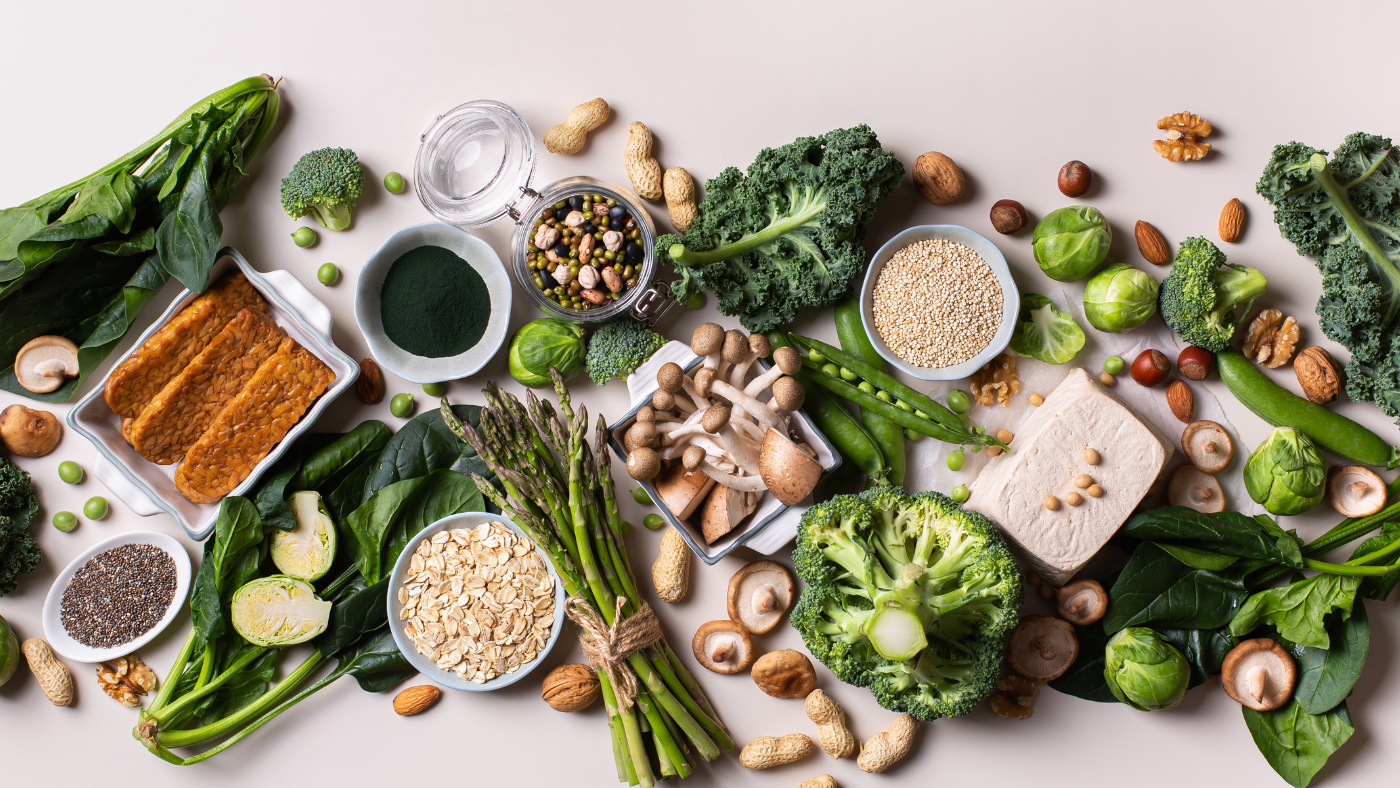
Plant-based diets are often presented as modern and nutrient-dense, but the proteins in these foods do not always match what the human body actually needs. Many plant proteins fall short of key amino acids, like leucine, which is the signal the body uses to start repairing or building muscle. When that leucine threshold is not met, the body cannot effectively carry out the muscle-building process, no matter how many total protein grams someone eats. Many plant-based foods also contain antinutrients such as phytic acid that interfere with digestion and absorption. This combination results in a steady decline in amino acid availability, even when total protein grams appear acceptable.[10]
As people get older, the body becomes less efficient at absorbing nutrients, which means protein needs actually go up, not down. When someone in their forties or older leans into a plant-based diet, the risk of muscle loss increases rapidly. Animal proteins offer the full range of amino acids in a form the body can absorb and use right away for repairing and maintaining muscle tissue. Substituting these foods with plant-based alternatives leads to long-term deficits that accumulate silently. Many people do not recognize the problem until symptoms of weakness, fatigue, and decreased physical capacity become unavoidable.[11]
A Culture That Purposely Eats Less Protein Than It Needs
Much of the modern dietary landscape encourages the elimination of protein-rich foods. Weight-loss programs emphasize calorie restriction, plant-based marketing encourages replacing animal foods, and pharmaceutical appetite suppressants reduce hunger across the board. The result is a population that consumes far less high-quality protein than biologically required. Muscle becomes the first casualty of this pattern. A decline in lean mass increases the risk of insulin resistance, metabolic syndrome, cognitive decline, and early mortality.[12]
Even people who appear slim or fit may have dangerously low muscle mass. This condition is often overlooked because weight alone is considered a marker of success. Metabolic health depends on the presence of strong, healthy muscle tissue, not simply the absence of body fat. Focusing only on the scale misses the deeper reality that muscle is the central organ of longevity, mobility, energy production, and resilience. When it is lost, health declines in ways that cannot be seen from the outside.[13]
Where Carnivore Bar Fits In

Carnivore Bar exists because proper human nutrition requires both protein and fat together. Muscle needs more than amino acids to stay healthy, and fat plays a major role in hormone production, nutrient absorption, mitochondrial function, and steady energy. Many modern eating patterns are centered on carbohydrates and seed oils, pushing out the traditional balance of protein and fat that humans are built to thrive on. Carnivore Bar restores this balance by providing beef protein and rendered tallow in a ratio that mirrors ancestral eating patterns. The bar contains the complete amino acids necessary for muscle repair, along with the high fat that allows the body to utilize those amino acids efficiently.
High-fat intake is essential for metabolic stability, satiety, and sustained energy. Fat is not a filler. Fat serves as the primary fuel source for the human body, especially when carbohydrate intake is low or inconsistent. Carnivore Bar is built around that principle by putting fat first while still providing meaningful, complete protein. That balance turns the bar into more than a convenient option, offering a steady nutritional anchor that helps preserve muscle in a food landscape where most products undermine metabolic stability. For individuals with busy schedules or in food environments dominated by low-protein, low-fat options, access to high-quality fat and protein becomes essential.
Carnivore Bar is not a snack created for novelty or marketing. It is a purposeful return to proper human macros in a portable and shelf-stable form. High-fat and high-quality protein protect against muscle wasting that occurs when people follow low-fat, low-protein diets, especially those influenced by plant-based trends or appetite-suppressing medications. For anyone who wants to maintain strength, support metabolism, and stay nourished in a modern environment, this combination matters. Strong nutrition comes from strong macros, and Carnivore Bar delivers exactly that.[14-16]
Conclusion
The hidden problem of muscle wasting is not a rare condition or an inevitable part of aging. Muscle loss becomes almost unavoidable when diet trends focus on shrinking the body rather than nourishing it, especially amid the push toward weight-loss drugs and plant-based diets. Modern eating habits flood people with calories but leave them short on the essential amino acids and fats needed for muscle building and stable metabolic health. Children grow without the building blocks they need; adults lose strength too early in life; and weight-loss injections accelerate protein and fat deficiencies. The crisis is not one of overeating. It is one of the undernourished.
Preserving muscle requires high-quality animal protein and meaningful dietary fat. These nutrients support metabolism, longevity, physical capability, and cognitive resilience. When modern diets fail to provide the body with what it needs, health declines quickly. When nutrition aligns with human physiology, strength and stability return, and real health begins with proper macros that come from real food.
CItations:
- Phillips, Stuart M. “A Brief Review of Critical Processes in Exercise-Induced Muscular Hypertrophy.” Sports Medicine, vol. 44, no. S1, 2014, pp. 71–77.
- Simpson, Steven J., and David Raubenheimer. “Obesity: The Protein Leverage Hypothesis.” Obesity Reviews, vol. 6, no. 2, 2005, pp. 133–142.
- Monteiro, Carlos A., et al. “Ultra-Processed Products Are Becoming Dominant in the Global Food System.” Obesity Reviews, vol. 14, 2013, pp. 21–28.
- Deutz, Nicolaas E. P., et al. “Protein Intake and Exercise for Optimal Muscle Function with Aging.” Nutrients, vol. 6, no. 8, 2014, pp. 3454–3482.
- Nardi, Gabriel M., et al. “Ultra-Processed Food Consumption, Diet Quality, and Nutritional Status in Children and Adolescents.” Journal of the Academy of Nutrition and Dietetics, vol. 121, no. 5, 2021, pp. 983–995.
- Schwarzenberg, Sarah J., and Michael K. Georgieff. “Advocacy for Improving Nutrition in the First 1000 Days to Support Childhood Development and Adult Health.” Pediatrics, vol. 141, no. 2, 2018, pp. e20173716.
- Farr, Olivia M., et al. “Long-Term Weight Loss With Semaglutide Is Accompanied by Disproportionate Lean Mass Reduction.” Obesity, vol. 31, no. 1, 2023, pp. 65–74.
- Ramsey, Forrest, et al. “Impact of GLP-1 Receptor Agonists on Body Composition: A Systematic Review and Meta-analysis.” Diabetes, Obesity and Metabolism, vol. 25, no. 6, 2023, pp. 1404–1415.
- Weiss, Edward P., and Dennis T. Villareal. “Why Body Composition Should Be the Primary Outcome in Clinical Trials of Weight Loss.” Obesity, vol. 27, no. 5, 2019, pp. 701–702.
- Phillips, Stuart M. “The Impact of Protein Quality on Muscle Health.” Applied Physiology, Nutrition, and Metabolism, vol. 46, no. 6, 2021, pp. 575–580.
- Rafii, Forough, et al. “Leucine Requirement of Older Adults for Muscle Protein Synthesis.” Journal of Nutrition, vol. 146, no. 8, 2016, pp. 1535–1543.
- Mitchell, Cameron J., et al. “Sarcopenia, Dynapenia, and the Impact of Advancing Age on Human Skeletal Muscle Size and Strength.” Journal of Cachexia, Sarcopenia and Muscle, vol. 3, no. 4, 2012, pp. 245–252.
- Srikanthan, Preethi, and Arun S. Karlamangla. “Muscle Mass Index as a Predictor of Longevity in Older Adults.” American Journal of Medicine, vol. 127, no. 6, 2014, pp. 547–553.
- Volek, Jeff S., et al. “Carbohydrate Restriction Has a More Favorable Impact on the Metabolic Syndrome Than a Low Fat Diet.” Lipids, vol. 44, no. 4, 2009, pp. 297–309.
- Paoli, Antonio, et al. “Beyond Weight Loss: A Review of the Therapeutic Uses of Very Low Carbohydrate (Ketogenic) Diets.” European Journal of Clinical Nutrition, vol. 67, no. 8, 2013, pp. 789–796.
- Yki-Järvinen, Hannele. “Nutritional Modulation of Insulin Resistance: Fatty Acids and Muscle.” Diabetologia, vol. 34, no. 3, 1991, pp. 207–214.


