
Understanding the Foundations of Mediation and Emotional Well-Being

Abstract
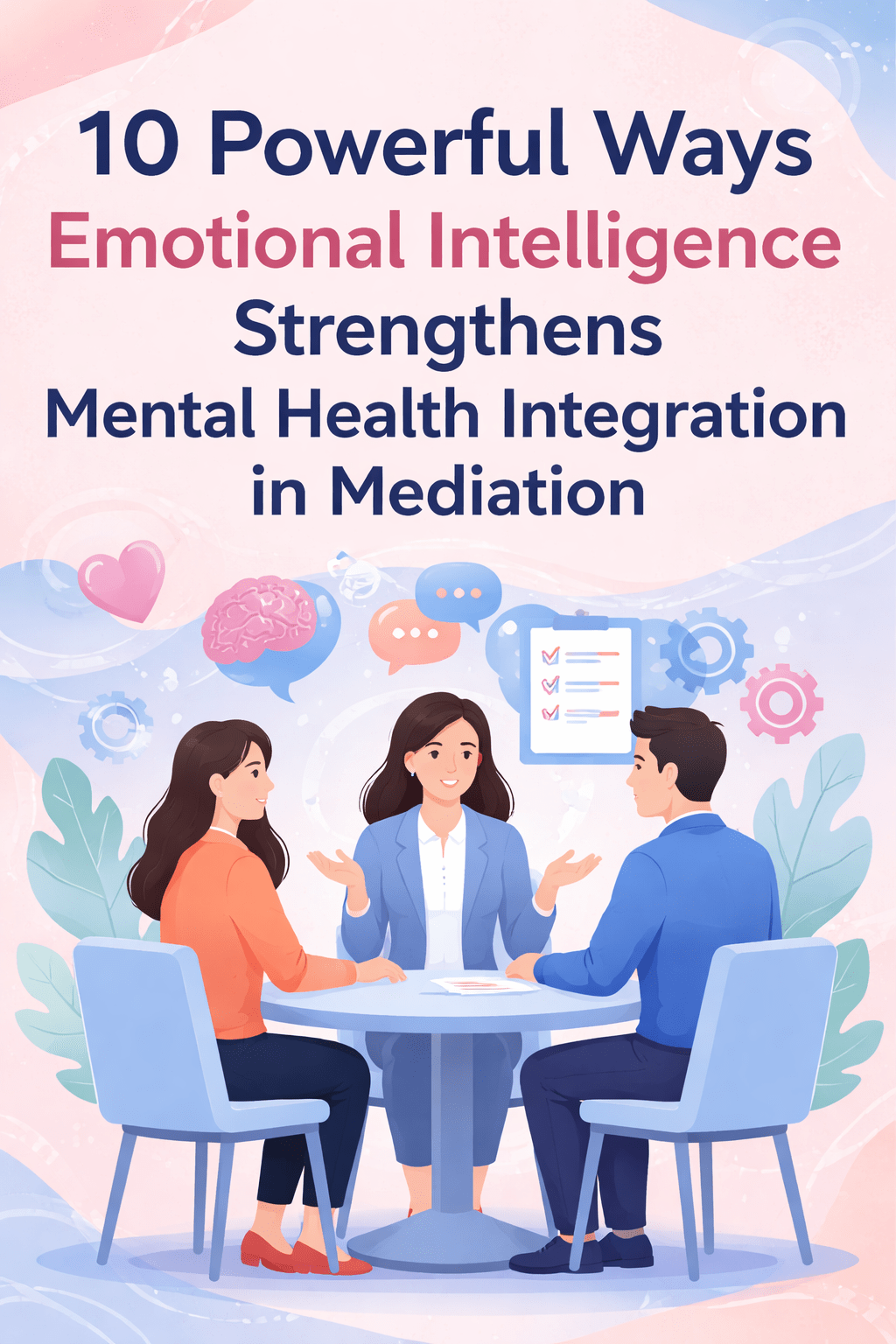
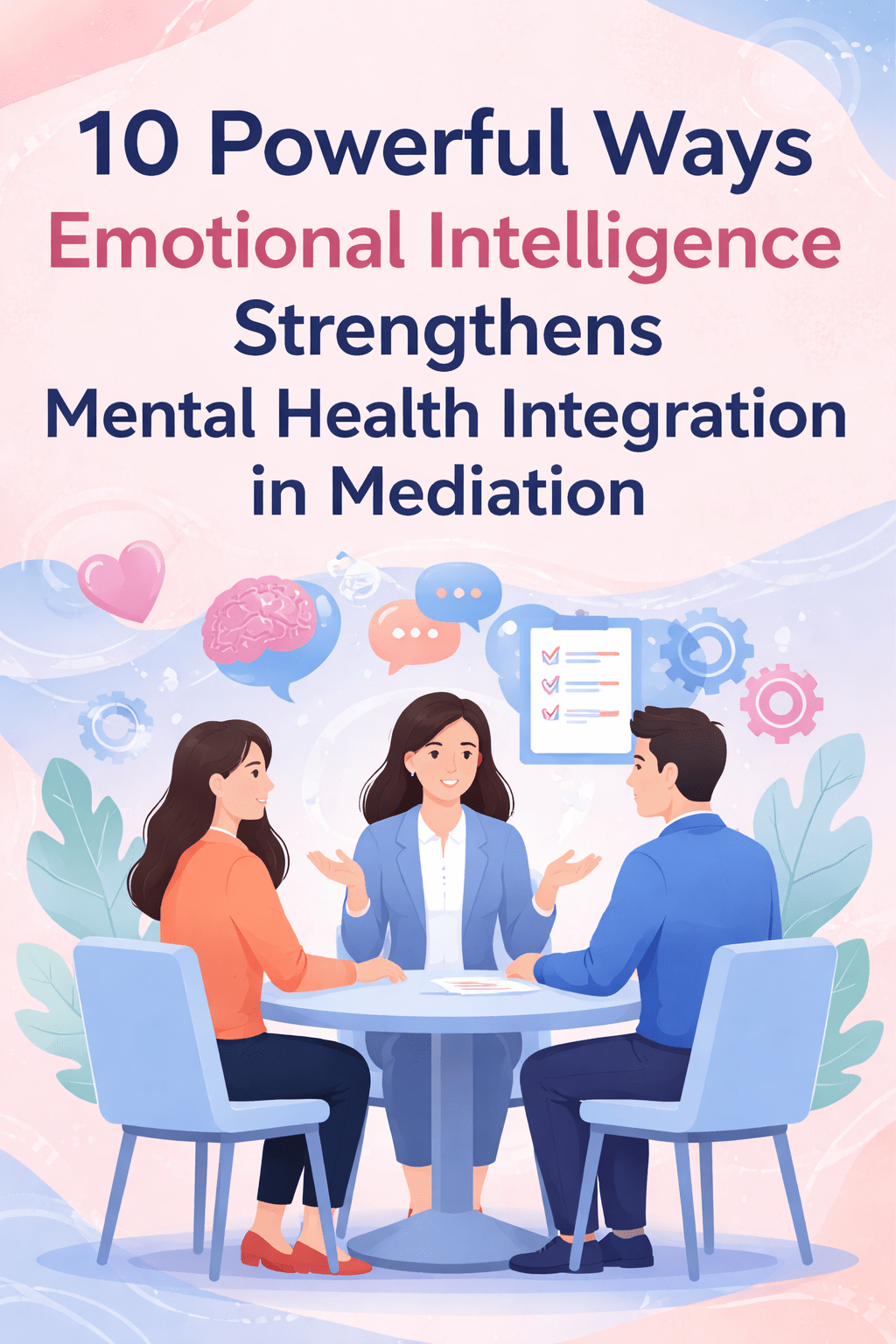
This article examines how Emotional Intelligence and Mental Health Integration in Mediation work together to strengthen conflict resolution processes and support participant well-being. As mediation increasingly addresses the emotional dimensions of conflict, mediators are relying on emotional intelligence competencies such as self-awareness, empathy, and self-regulation to maintain neutrality, build trust, and create psychologically safe environments. At the same time, many mediation programmes are incorporating mental health professionals and trauma-informed approaches to respond to stress, anxiety, and emotional distress experienced by participants. Through theoretical discussion, practical analysis, and real-world examples, this article highlights ten key ways emotional intelligence enhances mental health integration, including improved communication, early identification of emotional triggers, de-escalation of high-conflict behaviour, and collaborative support models. The findings suggest that combining emotional intelligence with mental health-informed practice leads to more ethical, humane, and effective mediation outcomes, emphasising the need for interdisciplinary training and ongoing professional development in the field.
Mediation is widely recognised as one of the most effective pathways for resolving conflicts because it balances structure with flexibility. It allows people to discuss their disagreements in a respectful, neutral environment, guided by a trained mediator whose role is to support communication and help parties find mutually acceptable solutions. However, mediation is not only a cognitive or legal process. It is also deeply emotional. Many people enter mediation feeling anxious, frustrated, fearful, or overwhelmed. Their emotional state influences their ability to communicate clearly, make decisions, and understand the perspectives of others.
For this reason, modern mediation has begun shifting toward a holistic understanding of conflict. Rather than treating mediation solely as a negotiation exercise, practitioners now look at the emotional and psychological needs of participants. They recognise that conflict often arises from unmet emotional needs, past experiences, and stress. This understanding has opened the door to exploring Emotional Intelligence and Mental Health Integration in Mediation, two frameworks that complement each other and enhance the overall effectiveness of the process.
Emotional Intelligence (EQ) enables mediators to understand and manage emotions during the mediation process. Mental health integration, on the other hand, acknowledges that unresolved emotional experiences or mental health challenges such as anxiety, depression, trauma, or stress may influence how individuals participate in mediation. When both are used together, they help create a safe environment in which people feel respected, supported, and emotionally grounded.
This expanded approach ensures that mediation is not merely about resolving the surface-level dispute but also about addressing the emotional dynamics underlying the conflict. In this article, these themes will be examined in depth to demonstrate how emotional intelligence enhances the integration of mental health support in mediation settings and why this combined approach is becoming central to modern conflict resolution.
Emotional Intelligence in Mediation Practice
Emotional Intelligence refers to a group of competencies that help individuals recognise, understand, and manage emotions in themselves and others. For mediators, EQ is not just useful it is essential. Conflict situations often involve strong emotions, and a mediator who lacks emotional awareness may struggle to maintain neutrality, manage the room, or respond appropriately to participant distress.
One of the core EQ competencies relevant to mediation is self-awareness. This allows mediators to recognise their own emotional reactions. Without self-awareness, a mediator may unknowingly project frustration, discomfort, or bias onto the parties. Another key competency is self-regulation, which enables the mediator to stay calm, even when discussions become tense. This steadiness helps parties feel safe and supported.
Empathy is central to mediation because it helps the mediator understand what each party may be feeling, even if it is not expressed verbally. When a mediator demonstrates empathy, participants are more willing to speak openly, which improves both communication and the quality of the final agreement. Social awareness and relationship management are additional EQ skills that help mediators guide conversations, manage tone, and keep discussions constructive.
EQ also allows mediators to read subtle emotional cues. These may include the tone of voice, body tension, or shifts in posture that signal anxiety or anger. Recognising these cues early enables the mediator to adjust their approach perhaps by slowing the pace, reframing a question, or inviting a brief break. Without EQ, these early warning signs might go unnoticed, increasing the risk of escalation.
Mental Health Integration in Conflict Resolution Settings
Mental health integration refers to the deliberate inclusion of psychological knowledge and professional support within mediation. This may involve collaboration with psychologists, counsellors, or coaches who help participants manage emotional distress during the mediation process. It may also include using trauma-informed practices, mental health screenings, or structured emotional support strategies.
There is growing recognition that mental health challenges often shape conflict dynamics. For example, a person experiencing anxiety may find it difficult to articulate their needs, while someone with trauma may react strongly to certain topics or communication styles. These reactions are not signs of unwillingness to participate; they are emotional responses that require sensitive handling.
When mediation programmes integrate mental health professionals, participants gain access to tools that support emotional regulation, stress reduction, and psychological safety. Mediators benefit too, because they have experts available to address emotional needs beyond the mediator’s professional scope. This partnership strengthens the overall process.
Mental health integration does not turn mediation into therapy. Instead, it acknowledges that emotional well-being influences people’s ability to negotiate, make decisions, and engage respectfully. By combining Emotional Intelligence and Mental Health Integration in Mediation, practitioners create a more supportive, ethical, and effective process for all participants.
Theoretical Perspectives Linking EQ and Mental Health
Emotional Intelligence and mental health integration are grounded in well-established psychological theories. Emotion regulation theory explains how people monitor and adjust their emotional reactions. When someone cannot regulate their emotions, they may become overwhelmed, withdraw, or react impulsively. Mediators with strong EQ can help participants regulate emotions through tone, pacing, breathing cues, or structured communication.
Interpersonal communication theory shows how messages are received and interpreted. Emotional reactions influence communication patterns, and misunderstandings often arise when emotions run high. EQ helps mediators frame questions in ways that reduce defensiveness, improving clarity.
Trauma-informed theory is also important in understanding emotional responses. This approach assumes that people may carry past experiences that affect how they respond to conflict. Mental health integration ensures mediators do not inadvertently trigger distress.
Together, these theories support the argument that Emotional Intelligence and Mental Health Integration in Mediation result in a safer, more effective environment for conflict resolution.
-
EQ Enables Mediators to Manage Their Own Emotions
A mediator’s emotional state significantly affects the tone and progression of a mediation session. When a mediator enters the room feeling stressed, frustrated, or fatigued, these internal emotions can subtly influence their body language, facial expressions, or speech patterns. Emotional Intelligence (EQ) helps mediators become aware of these internal reactions and regulate them effectively. This ability is essential because participants rely on the mediator to maintain stability and neutrality throughout the process.
Self-regulation, a key EQ competency, helps the mediator avoid reacting impulsively when conversations become tense. For instance, if a party raises their voice or expresses anger, an emotionally intelligent mediator remains calm and grounded. This calmness can reduce anxiety in the room and signal to participants that emotional expression is acceptable as long as it contributes to respectful dialogue. In this way, EQ directly supports Emotional Intelligence and Mental Health Integration in Mediation by promoting psychological safety.
Additionally, mediators with strong self-awareness can identify moments when their own biases or emotions surface. Rather than allowing these reactions to influence decisions or interactions, they can pause, reflect, and return to a neutral stance. This reflective practice prevents emotional spillover and ensures that the mediator upholds professional standards. When mediators manage their emotions, they create a stable environment where parties feel comfortable expressing themselves without fear of judgment or escalation.
-
EQ Enhances Empathy and Understanding
Empathy is the cornerstone of effective mediation. It allows mediators to recognise and understand the emotional experiences of each participant, even when those emotions are not expressed directly. Empathy does not mean agreement; instead, it means acknowledging the human experience behind a person’s feelings. This recognition helps participants feel validated, which reduces tension and increases cooperation.
Empathy also strengthens Mental Health Integration in Mediation because many participants face emotional challenges such as anxiety, fear, or unresolved trauma. A mediator with strong EQ can identify signs of emotional struggle and respond in a manner that feels supportive and non-threatening. For example, if a participant becomes tearful or overwhelmed, an empathetic mediator might slow the pace, shift to open-ended questions, or offer time for a break.
Empathy also builds rapport and trust. When participants perceive the mediator as understanding and non-judgmental, they are more likely to share information and engage in honest dialogue. This transparency allows the mediator to identify underlying concerns that may not appear in the initial discussion. As a result, empathy supports both the emotional and structural aspects of the mediation process.
-
EQ Improves Clear, Respectful Communication
Communication is at the heart of mediation, but conflict often disrupts people’s ability to communicate effectively. Strong emotions can lead to misunderstandings, defensive behaviour, or harsh statements. Emotional Intelligence equips mediators with communication strategies that reduce tension and promote clarity.
First, EQ enables mediators to adjust their tone and language to meet participants’ emotional needs. For example, if one party feels intimidated, the mediator may use softer phrasing or invite the person to share their thoughts without interruption. If another party appears defensive, the mediator may use reflective listening to demonstrate understanding and reduce hostility.
EQ also supports the use of non-verbal communication, such as nodding, maintaining appropriate eye contact, or adopting open body posture. These cues reassure participants that they are being heard and respected. Maintaining this supportive presence helps prevent escalation and encourages participants to remain engaged.
Furthermore, clear communication is vital for Mental Health Integration in Mediation because individuals dealing with stress or emotional overload may struggle to articulate their needs. A mediator with strong EQ can break down complex information into simple, manageable parts. This clarity reduces confusion and ensures that participants can make informed decisions.
-
EQ Helps Identify Emotional Triggers Early
Emotional triggers are stimuli words, gestures, topics that cause an intense emotional reaction. In mediation, triggers can surface unexpectedly and lead to conflict escalation. Mediators with strong Emotional Intelligence are skilled at identifying these triggers before they become problematic.
Recognising triggers involves observing subtle cues such as changes in facial expression, tone of voice, or body tension. For example, if a participant stiffens when a certain topic is mentioned, this may indicate emotional discomfort. A mediator with high EQ would pause and gently explore the reaction, giving the participant space to express their feelings in a safe manner.
Early identification of triggers directly supports Mental Health Integration in Mediation. Many individuals bring emotional histories or stressors into the process, and these may influence their responses. By identifying triggers early, the mediator can intervene before emotions escalate, reducing the risk of emotional harm and helping participants remain focused on constructive dialogue.
This proactive approach makes the mediation process smoother, safer, and more emotionally informed.
-
EQ Builds Trust and Psychological Safety
Trust is essential in mediation because participants must feel confident that the process is fair and that the mediator is truly impartial. Emotional Intelligence plays a critical role in building this trust by enabling the mediator to convey respect, neutrality, and genuine concern for participant well-being.
Psychological safety the feeling that one can speak openly without fear of ridicule or retaliation is also essential for productive mediation. Mediators with high EQ create this sense of safety by responding predictably, maintaining confidentiality, and showing understanding even during emotional outbursts.
When participants feel psychologically safe, they are more willing to express underlying concerns, needs, and emotions. This level of openness enhances Emotional Intelligence and Mental Health Integration in Mediation by allowing emotional and psychological factors to be addressed alongside legal or practical issues.
Trust and safety also reduce defensiveness, making negotiations smoother and more productive.
-
EQ Supports a Calm, Structured Mediation Environment
A calm environment is crucial for helping participants engage effectively, especially when emotions are high. Mediators with strong EQ can sense when the room’s emotional temperature is rising and take steps to restore calm. This might involve slowing down the conversation, summarising key points, or introducing grounding exercises such as deep breathing.
A structured environment is equally important. Structure provides predictability, which reduces anxiety and increases participants’ sense of control. Mediators can use EQ to adjust the structure based on emotional cues for example, shortening sessions if a participant becomes overwhelmed or breaking discussions into smaller, manageable segments.
Creating calm and structure aligns with Mental Health Integration in Mediation because emotional well-being is closely tied to feelings of safety, clarity, and predictability. The mediator’s emotional presence helps participants feel anchored, even during difficult conversations.
-
EQ Encourages Collaboration With Mental Health Professionals
Emotional Intelligence helps mediators recognise when participants may benefit from additional psychological support. Although mediators are trained in communication and conflict resolution, they are not mental health professionals. EQ allows them to understand the limits of their role and identify when emotional distress exceeds what can be safely handled within mediation.
For example, if a participant experiences panic symptoms, dissociation, or emotional shutdown, an emotionally intelligent mediator recognises these signs early. Rather than pushing the conversation forward, the mediator may pause the session and suggest support from a psychologist, counsellor, or coach. This collaboration enhances the overall mediation process because it ensures participants receive comprehensive care that addresses both emotional and practical needs.
Collaboration with mental health professionals is a key pillar of Emotional Intelligence and Mental Health Integration in Mediation. When mediators and mental health experts work together, they create a supportive framework that helps participants manage stress, regulate emotions, and maintain clarity throughout the process. This partnership also protects mediators from inadvertently taking on therapeutic roles beyond their training.
Furthermore, joint case planning, co-mediation arrangements, and interdisciplinary training programmes strengthen the field by encouraging shared knowledge and mutual respect between professions. These collaborations ultimately lead to more effective, ethical, and emotionally informed mediation practices.
-
EQ Helps Respond to Visible Emotional Distress
Emotional distress can manifest in many ways, including tearfulness, withdrawal, anger, or difficulty speaking. Mediators with high EQ can recognise these emotional shifts quickly and respond in ways that support the participant’s well-being.
An emotionally intelligent response may involve:
- slowing the pace of conversation
- validating the participant’s feelings
- offering a break
- summarising the participant’s message to show understanding
- grounding techniques such as guided breathing
These supportive strategies reduce emotional overwhelm and allow participants to re-engage with the process when they feel ready.
This is crucial for Mental Health Integration in Mediation because many participants may not have the emotional bandwidth to manage conflict while also managing high levels of stress or trauma. The mediator’s role is not to treat these issues but to ensure that the environment remains safe, respectful, and supportive.
When emotional distress is handled sensitively, participants feel more empowered, more respected, and more capable of engaging in meaningful problem-solving. This contributes significantly to the overall success of the mediation.
-
EQ Aids in De-escalating High-Conflict Behaviours
High-conflict behaviour such as shouting, interrupting, personal attacks, or refusal to listen often arises from emotional overload rather than intentional aggression. Mediators with strong Emotional Intelligence can de-escalate these behaviours by identifying their emotional roots.
Some de-escalation strategies include:
- using a calm and steady tone
- reframing negative statements into neutral language
- separating people from their positions
- slowing down rapid exchanges
- acknowledging strong emotions without judgment
These approaches help reduce tension and refocus the conversation on problem-solving.
This skill is central to Emotional Intelligence and Mental Health Integration in Mediation because people struggling with emotional regulation may find conflict especially overwhelming. EQ enables the mediator to support regulation through modelling calm behaviour, offering emotional validation, and maintaining clear boundaries.
Effective de-escalation not only prevents emotional harm but also promotes fairness and balanced participation. Without EQ, high-conflict moments may spiral into unproductive or harmful exchanges that undermine the mediation process entirely.
-
EQ Promotes Reflective Practice and Growth
Reflective practice involves examining one’s actions, decisions, and emotional responses to improve future performance. Mediators who use Emotional Intelligence reflect on both successful and challenging experiences to identify what worked well and what could be improved. This reflection may include reviewing communication strategies, emotional reactions, biases, or pacing decisions.
Reflective practice supports Mental Health Integration in Mediation because it encourages mediators to continually strengthen their emotional awareness and sensitivity. Through reflection, mediators gain insight into how their behaviour affects the emotional climate of the mediation room. They also become more skilled at anticipating emotional dynamics and preparing appropriate strategies.
Over time, reflective practice builds professional confidence and competence. It fosters humility, ethical awareness, and emotional maturity qualities that contribute significantly to effective mediation.
Practical Applications for Mediators
Training Approaches
Training in Emotional Intelligence and Mental Health Integration in Mediation typically includes self-awareness exercises, communication skills, and psychological literacy. Many programmes incorporate role-playing, supervised practice, and reflective journaling to help mediators recognise emotional patterns. Joint training with mental health professionals further enhances understanding of psychological processes.
Tools and Strategies
Practical tools include:
- Emotional check-ins to assess participant readiness
- Mindfulness practices to support regulation
- Structured communication frameworks such as “I-statements”
- Supportive referrals to psychologists or coaches
- Grounding techniques for anxiety or overwhelm
These tools strengthen the mediation environment by promoting clarity, emotional safety, and balanced participation.
Challenges and Ethical Considerations
Although integrating emotional intelligence and mental health considerations is valuable, mediators must remain mindful of ethical boundaries. The mediator’s role is not therapeutic, and attempting to provide mental health treatment may create legal or ethical risks. Confidentiality, informed consent, and impartiality must always be upheld.
Mediators must also be cautious not to over-identify with one participant, even when that person appears emotionally vulnerable. EQ should never compromise neutrality. Instead, it should support fairness by ensuring that both parties can participate meaningfully.
Finally, mediators need ongoing professional development to remain competent. Mental health awareness and emotional skills require continuous learning, supervision, and reflection.

Reflective Practice Example: Collaboration With a Mental Health Professional
During a workplace mediation I facilitated, I encountered a moment that significantly shaped my understanding of the practical value of emotional intelligence in mediation. As the discussion progressed, one employee began to show signs of emotional overload. Their speech became fragmented, their breathing shallow, and their body posture increasingly closed. At that moment, I became aware not only of their distress but also of my own internal response. I noticed an initial impulse to keep the process moving, which prompted me to pause and reflect rather than act automatically.
Drawing on my emotional intelligence skills, particularly self-awareness and empathy, I recognised that the participant’s reaction was not a refusal to engage but a sign of emotional overwhelm. This awareness allowed me to shift my focus from the mediation agenda to the immediate emotional needs present in the room. I made a deliberate decision to slow the process and acknowledge the participant’s experience in a calm and non-judgmental manner.
I explained that the discussion appeared to be emotionally intense and reassured the participant that their well-being was important. With their consent, I suggested a pause and raised the option of involving an organisational counsellor for additional support. This decision required me to remain mindful of my professional boundaries. Rather than attempting to manage the distress myself, I recognised the limits of my role and the importance of collaboration with a mental health professional.
The counsellor provided a brief supportive intervention focused on grounding and emotional regulation. During this time, I reflected on how easily emotional distress can surface in mediation, particularly in workplace contexts where identity, security, and self-worth are often at stake. When the mediation resumed, the participant appeared calmer and more present. They were able to express their concerns more clearly and participate in the discussion without visible distress.
This experience reinforced several important learning points for my practice. It highlighted the value of pausing the process when emotional intensity becomes overwhelming, rather than prioritising procedural momentum. It also deepened my understanding of how Emotional Intelligence and Mental Health Integration in Mediation support ethical, effective practice by ensuring that emotional safety remains central to the process. This reflection continues to shape my approach to mediation, particularly in emotionally complex cases.
Explicit Learning Outcomes
As a result of this reflective experience, I identified the following learning outcomes for my professional practice:
- I developed greater self-awareness of my own emotional responses during mediation and learned to pause rather than react automatically.
- I strengthened my ability to recognise signs of emotional distress, distinguishing between resistance and emotional overwhelm.
- I improved my use of empathy and validation to support participant well-being without compromising neutrality.
- I clarified professional boundaries, recognising when emotional needs exceed the mediator’s role.
- I enhanced my confidence in collaborating with mental health professionals as part of integrated mediation practice.
- I reinforced the importance of emotional safety as a foundation for effective communication and decision-making in mediation.
Future Implications for Mediation Practice
The future of mediation will likely involve deeper collaboration between mediators and mental health professionals. Training programmes may require mental health literacy modules, EQ development, and trauma-informed practice. Policy changes could formalise interdisciplinary approaches, ensuring consistent standards across mediation contexts.
As society becomes more aware of the importance of emotional well-being, demand for emotionally intelligent mediators will grow. Integrating mental health support will become a marker of best practice rather than an optional enhancement.
Conclusion
Emotional Intelligence and Mental Health Integration in Mediation together form a robust framework for addressing the complex emotional realities that accompany conflict. Mediation is not only a structured process for resolving disputes; it is also a human interaction shaped by emotions, stress, and psychological vulnerability. When mediators intentionally apply emotional intelligence skills such as self-awareness, empathy, and emotional regulation they are better equipped to recognise these emotional dimensions and respond to them ethically and effectively.
Integrating mental health awareness and professional support further strengthens mediation practice by acknowledging that participants may bring anxiety, trauma, or emotional overload into the process. Rather than viewing these factors as obstacles, emotionally informed mediation recognises them as essential considerations that influence communication, decision-making, and engagement. Collaboration with mental health professionals, the use of trauma-informed approaches, and the careful maintenance of professional boundaries allow mediators to support participant well-being without compromising neutrality or role clarity.
This integrated approach enhances trust, psychological safety, and meaningful participation. When participants feel emotionally safe and understood, they are more likely to engage openly, listen actively, and work collaboratively toward resolution. As a result, agreements reached through emotionally and mentally informed mediation are more likely to be durable, ethical, and sustainable over time.
As mediation continues to evolve in response to increasingly complex social, organisational, and interpersonal conflicts, the integration of emotional intelligence and mental health considerations will remain essential. Ongoing professional development, interdisciplinary collaboration, and reflective practice will be critical in ensuring that mediators are equipped to meet both the emotional and practical needs of those they serve. Ultimately, a mediation process grounded in emotional intelligence and mental health integration represents a more humane, responsible, and effective model of conflict resolution for the future.
FAQs
- Why is Emotional Intelligence important in mediation?
Because it helps mediators manage emotions, communicate effectively, and support participant well-being.
- How does mental health integration improve mediation?
It ensures emotional needs are addressed, helping participants stay calm and engaged.
- Do mediators act as therapists?
No. They maintain boundaries and refer participants to mental health professionals when needed.
- What EQ skills are most useful?
Self-awareness, empathy, self-regulation, and interpersonal communication.
- Can EQ reduce conflict escalation?
Yes. It helps identify triggers early and encourages calmer dialogue.
- Are psychologists involved in mediation?
Increasingly yes many programmes include mental health professionals to support participant well-being.
External Link for Further Reading:
American Psychological Association – Trauma-Informed Practice
https://www.apa.org
WHO ARE MINUTE MEDIATION?
Transform Conflict into Collaboration
Conflict in the workplace or community can be stressful and disruptive. Fortunately, mediation has emerged as a powerful tool for resolving disputes effectively. If you find yourself in a conflict situation, don’t worry Minute Mediation Ltd is here to help.
Our team, led by Avinder Laroya, a Senior Consultant Solicitor, Mediator, Arbitrator, Conflict coach, mental health first aider and expert in International Dispute Resolution, specializes in facilitating disputes and guiding parties to find the best possible solutions.
Ready to move forward and resolve your conflicts?
If you enjoyed this article, subscribe to our newsletter for more insights and tips on conflict resolution.
So what is the wait for?
Book Your Free Consultation Today!
Get in touch with us because every minute counts!
Click here for a free 15 minute consultation.