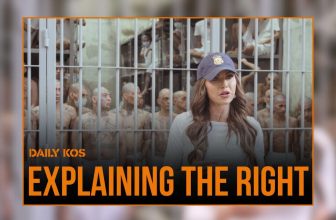
Déjà vu? Memories of the US invasion of Panama


Caribbean Matters is a weekly series from Daily Kos. Hope you’ll join us here every Saturday. If you are unfamiliar with the region, check out Caribbean Matters: Getting to know the countries of the Caribbean.
As the Trump regime continues to order patrols and murders in the Caribbean and a Navy ship has seized a Venezuelan oil tanker and sanctioned six more, the White House’s orange occupant has pardoned a major drug trafficker, all the while ranting incoherently.
The current chaos brings back memories of another POTUS: George H.W. Bush and the invasion of Panama, nicknamed “Operation Just Cause.”.
It happened 36 years ago. I was 42 at the time and a very politically active opponent of Bush and his predecessor Ronald Reagan.
The headlines in 1986 were breathless, like this one from The New York Times:
PANAMA STRONGMAN SAID TO TRADE IN DRUGS, ARMS AND ILLICIT MONEY
A senior Reagan Administration official would not discuss the assertions against General Noriega, who was previously head of military intelligence and became army commander when Brig. Gen. Omar Torrijos Herrera was killed in a helicopter crash in 1981. The Administration official expressed concern that the intelligence information would damage relations with Panama if it was seen as reflecting the views of the White House.
Officials in the Reagan Administration and past Administrations said in interviews that they had overlooked General Noriega’s illegal activities because of his cooperation with American intelligence and his willingness to permit the American military extensive leeway to operate in Panama.
They said, for example, that General Noriega had been a valuable asset to Washington in countering insurgencies in Central America and was now cooperating with the Central Intelligence Agency in providing sensitive information from Nicaragua.
Sound familiar? You can see our country’s dubious history outlined in this Al Jazeera report from Sarah Shimim titled “Meet the US’s drug running friends: A history of narcotics involvement”:
US President Donald Trump claims to be cracking down on drug gangs in Venezuela but has pardoned a Honduran drug lord serving 45 years in the US.
A subheadline in the story asks this crucial question:
“If Trump wants to clamp down on drugs, why did he pardon Hernandez?”
Back to Operation “Just Cause”—which could easily be renamed “Operation Unjust,” but we’re stuck with the propaganda-laden moniker.
The Zinn Education Project has this summary of what ensued:
On Dec. 20, 1989, the United States invaded Panama in “Operation Just Cause.” Howard Zinn provides a description in chapter 21 of A People’s History of the United States:
As if to prove that the gigantic military establishment was still necessary, the Bush administration, in its four-year term, launched two wars: a “small” one against Panama and a massive one against Iraq.
Coming into office in 1989, George Bush was embarrassed by the new defiant posture of Panama’s dictator, General Manuel Noriega. Noriega’s regime was corrupt, brutal, authoritarian, but President Reagan and Vice-President Bush had overlooked this because Noriega was useful to the United States. He cooperated with the CIA in many ways, such as offering Panama as a base for contra operations against the Sandinista government of Nicaragua and meeting with Colonel Oliver North to discuss sabotage targets in Nicaragua. When he was director of the CIA in 1976-1977, Bush had protected Noriega.
But by 1987 Noriega’s usefulness was over, his activities in the drug trade were in the open, and he became a convenient target for an administration which wanted to prove that the United States, apparently unable to destroy the Castro regime or the Sandinistas or the revolutionary movement in El Salvador, was still a power in the Caribbean.
Claiming that it wanted to bring Noriega to trial as a drug trafficker (he had been indicted in Florida on that charge) and also that it needed to protect U.S. citizens (a military man and his wife had been threatened by Panamanian soldiers), the United States invaded Panama in December 1989, with 26,000 troops.
People who don’t know this history and history buffs alike can watch several YouTube mini documentaries like this one from the “Simple History” channel:
The most important documentry you may not have seen received an Academy Award in1993 for Best Documentary Feature. The film is “The Panama Deception.”
Here’s the trailer:
The full documentary cannot be embedded here, but the film is available for viewing online.
Director Barbara Trent and Jean-Manuel Beauchamp, grandson of Panamanian dictator Manuel Noriega, discussed the film in this 2011 forum:
Vincent Canby reviewed it for The New York Times in “Invasion of Panama: Rooting Out the Reason”:
“The Panama Deception,” opening today at the Village East Cinema, is a tough, provocative, highly opinionated and slickly produced documentary, an answer to the official United States Government line about the 1989 invasion of Panama.
Barbara Trent, the film’s director; David Kasper, the writer and editor, and their colleagues say the principal purpose of the invasion was not to liberate Panama from the control of a ruthless dictator and to bring Gen. Manuel Antonio Noriega to trial on drug charges. Rather, they say, it was to destabilize the country and destroy Panama’s Defense Forces, creating a situation that would allow the United States to renegotiate the treaties, signed by President Jimmy Carter, under which the canal is to be turned over to the Panamanians by the year 2000.
The film is full of witnesses: policy makers, official spokesmen, politicians, informed observers, flunkies, historians and ordinary folk, many of them Panamanian victims of the war that, the film points out, was covered by the American news organizations almost entirely in terms that served official United States interests. This is hardly a scoop, but it’s something that needs repeating for Americans who judge the importance of everything that happens in the rest of the world, whether it’s a war or the Olympics, from the hometown point of view.
“The Panama Deception” puts the 1989 invasion in a historical context, presenting it as a continuation of the policies by which the United States first acquired rights over what would become the Panama Canal Zone under President Theodore Roosevelt. The film sees the actions of President Bush and his Administration as no less high-handed but possibly even more sorrowful in the light of what is supposed to be a better informed, more liberal age.
When Noriega died in 2017, The Guardian’s Simon Tisdall wrote and obituary titllled “Manuel Noriega: feared dictator was the man who knew too much”:
“Panamanian general was a CIA asset and go-between in Central America’s dirty wars but became a monster the US could not control,” read the subheadline.
The atmosphere outside Gen Manuel Noriega’s battered, bullet-scarred comandancia, headquarters of the Panamanian Defence Forces, one early morning in October 1989, bordered on frenetic. Beyond the railings a woman sobbed with grief. Her husband, an officer involved in the previous night’s failed coup attempt against Noriega, was missing. It later transpired he and dozens of co-conspirators had been shot out of hand.
[…]
“Who did this? Who did this?” waiting journalists shouted through the railings, meaning who was responsible for this crude attempt at forcible regime change. “The Americans did this! The piranhas did this. They want to finish Panama!” Noriega shouted back in Spanish. Then, as if fearing the Yanquis might take another shot at him, “Pineapple Face” (as Noriega was known, due to his pock-marked skin) hurried back inside.
Noriega, who died on Monday at the age of 83, was right to be nervous. The October coup attempt marked a turning point in Washington’s attitude to a man whose rise to power it had assisted, who became a valued CIA cold war asset and go-between in Central America’s dirty wars, but who turned into a monster US spy bosses could no longer control. Noriega had outlived his usefulness. Now he was an embarrassment. So Bush made him America’s most wanted.When Noriega subsequently launched a vicious wave of repression, threatened American personnel guarding the Panama Canal and declared a “state of war” with the US, Bush pounced. Economic sanctions and quiet diplomacy had failed. Control over the strategically and economically vital canal was threatened. And Noriega knew too much. In December 1989, Bush ordered Gen Colin Powell, then chairman of the joint chiefs of staff, to launch Operation Just Cause, sending 26,000 invasion troops into Panama in a rehearsal of the Powell “doctrine of overwhelming force” that was next employed two years later in the first Gulf war.
[…]
Noriega’s knowledge of US operations in Central America was detailed and highly compromising. He was said to have met Bush in person on more than one occasion. During the 1988 presidential campaign, Michael Dukakis, the Democrat nominee, attacked Bush for his close relationship with “Panamanian drug lord Noriega”. When Bush, as president, launched his signature “war on drugs”, Republicans worried about possible embarrassing contradictions.
In 1988, in the wake of Iran-contra, a Senate committee concluded: “The saga of … Noriega represents one of the most serious foreign policy failures for the United States. Throughout the 1970s and the 1980s, Noriega was able to manipulate US policy toward his country, while skilfully accumulating near-absolute power in Panama. It is clear that each US government agency which had a relationship with Noriega turned a blind eye to his corruption and drug dealing.” Noriega was allowed to establish “the hemisphere’s first narco-kleptocracy”.
In case you missed these past articles, I’ve covered the history of the Panama Canal history here, and here.
Please join me in the comments section below for more discussion, and for the weekly Caribbean News roundup.