Alternative Education: Is It Right for Your Student?


In the world of K-12 education, traditional public and private schools are the most commonly used approaches. However, those solutions aren’t necessarily right for every student or household. As a result, some parents embrace alternative education programs instead.
Alternative education options can serve the diverse needs of society and support families seeking non-traditional solutions, accommodating different lifestyles and levels of parental involvement.
As with traditional schools, alternative education isn’t automatically best for all students, as family circumstances and societal expectations can influence the decision. Additionally, there are multiple alternative school models, which may play a role in determining the ideal overall fit.
If your student is thinking about college after their K-12 education, they can use a wide array of scholarships to help make school affordable. If you and your student want to learn about finding and applying for scholarships, sign up for our free college scholarship webinar! Take a quick trip over to http://thescholarshipsystem.com/freewebinar to reserve a spot today.
What Is Alternative Education?
In a broad sense, alternative education simply refers to non-traditional schooling. What is a non-traditional school? Essentially, it includes any form of alternative schooling outside of the classic public and private school options. They challenge educational norms, using potentially unconventional strategies to promote learning and growth.
Alternative schooling options exist at every level within the K-12 framework, ranging from alternative elementary schools to non-traditional high schools. As a result, there isn’t inherently a minimum age that students need to reach before these options end up on the table.
While these options may seem risky since they don’t always align with a typical educational flow, successful alternative education programs do allow students to meet various state standards regarding education. As a result, non-traditional schools can still allow students to receive high school diplomas (or the equivalent) and qualify for college admission.

Different Types of Alternative Education Programs
Homeschooling
Among the alternative education programs, the homeschooling route is one of the most widely used. With this strategy, parents assume the role of teacher. Homeschooling is often guided by state or school district guidelines to ensure compliance with educational standards. Some may follow a set curriculum while others use a framework-less approach, mainly using graduation requirements as the only guide.
While many homeschoolers learn, in an academic sense, solely in the presence of parents and siblings, that isn’t the only strategy. In some cases, several homeschooling households come together, allowing parents to support each other and students to benefit from a broader array of expertise. Instruction in homeschooling can be tailored to the learning style and needs of individual students, allowing for personalized instruction that adapts to each child’s strengths and preferences.
Along with somewhat traditional learning, many homeschooled students regularly take part in educational activities outside of the home. Homeschooling allows families to create a flexible learning environment that supports their unique circumstances. While the closest example to the experience is field trips that commonly occur in traditional learning environments, the experience is typically more one-on-one than a conventional school can support. Many families also explore scholarships for homeschooled students to help support their educational journey.
Online-Only Schooling
From a curriculum standpoint, online-only alternative education programs often closely mimic traditional experiences. The curriculum is set by the institution, and classes are led by licensed teachers. These programs offer a variety of services and resources, such as digital learning tools, counseling, and academic support, to help students succeed in a virtual environment. The main difference is simply that students participate solely online instead of in a physical classroom.
The nature of online-only schooling can vary. Some programs are part of the local public school education system, so students proceed just as they would if they were attending classes at a brick-and-mortar school in that district. Others are operated privately, giving them space to deviate from educational norms, suggesting that they align with educational standards. Instruction in these programs is delivered by qualified educators who facilitate online learning and support students through individualized teaching methods.
In some cases, online-only schools are used in conjunction with homeschooling led by parents. It gives them a supplement or allows the online experience to serve as the core learning experience, with alternative approaches acting as augmentation.
Usually, the biggest challenges of online-only education are social, as students aren’t engaging with one another in person. Technical issues can also stymy learning. Finally, online-only learning requires a lot of self-motivation and self-discipline, as there’s less oversight in many cases.
Faith-Based Private Schools
While not all private schools are faith-based, many do have religious components. These schools often foster a strong sense of community, providing students with opportunities to build meaningful connections and engage in shared values. With these, students get a near-traditional educational experience, though they also complete educational requirements relating to the faith associated with the school.
Generally, two types of parents turn to faith-based private schools for their students. Often, the largest portion of parents is those who also follow that particular faith. However, parents who want their students to explore various religious perspectives may enroll their students in different faith-based private schools over time, essentially broadening their exposure to different perspectives. In these settings, caring faculty play a key role in supporting students’ educational needs, both academically and spiritually, ensuring a nurturing environment for growth.
Montessori Schools
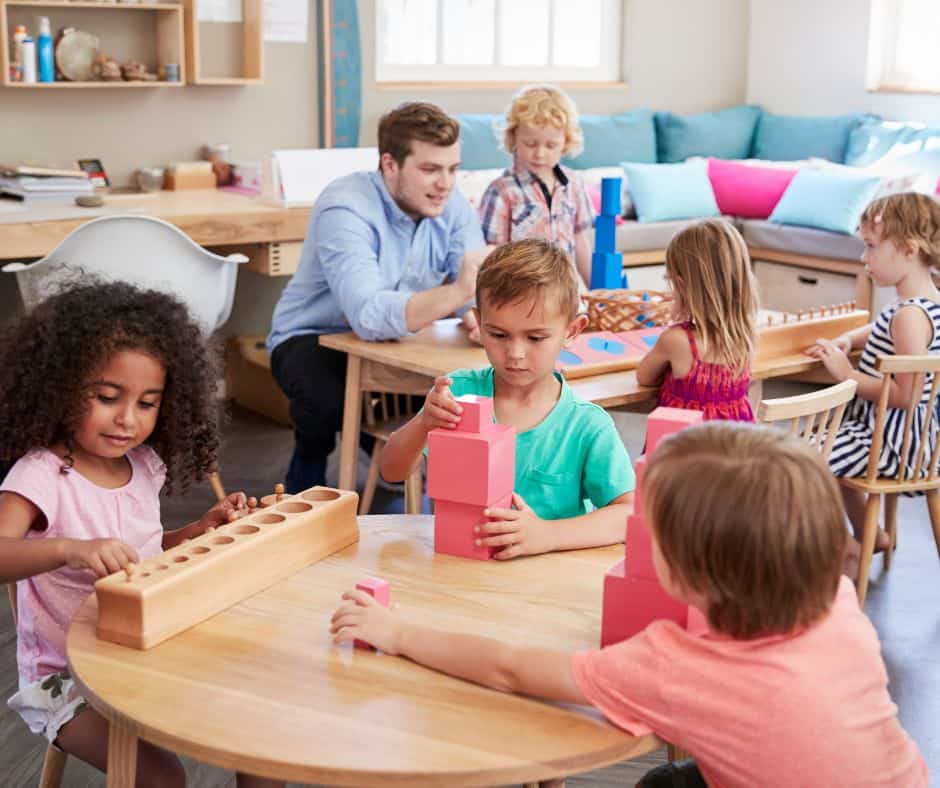
Montessori schools are based on the idea that children learn best through self-directed, hands-on exploration. The Montessori method was developed by Dr. Maria Montessori, who emphasized the importance of creating classrooms designed to foster independence, collaboration, and confidence in each child. Montessori classrooms are carefully prepared environments, featuring specialized resources and materials that encourage children to explore, discover, and express themselves at their own pace.
Customization is a common part of the approach, ensuring that curricula and teaching methods are tailored to the needs of each child, including those with learning differences. This individualized focus helps support children’s development and accommodates a wide range of learning styles and abilities. The importance of the classroom environment and resources is central to the Montessori philosophy, as these elements play a crucial role in supporting children’s growth and learning.
One primary risk is that the term “Montessori” – while originally associated with the educational philosophies of Dr. Maria Montessori – is not trademarked. As a result, any school can claim to follow the concepts, essentially using the familiar word as justification for a high price tag even if the educational experience doesn’t align with the Montessori model.
Additionally, the educational approach relies far less on adults. As a result, students who need more support and guidance may struggle to adapt to it.
Waldorf Schools
Waldorf schools, also known as Steiner schools, embrace the philosophy of Rudolph Steiner, focusing on the concept that there’s inherent goodness in people and their ability to transform themselves. Their holistic curricula emphasize art, nurturing creativity, and integrate academic subjects such as science through experiential, arts-based methods.
Steiner school classrooms are designed to support holistic development for learners, often featuring mixed-age groups and a focus on movement, creativity, and hands-on activities. This learner-centered environment encourages personal growth and accommodates diverse learning styles.
They also don’t rely on traditional grades, opting for more narrative review approaches. However, students do end up with a GPA, which can ease their transition into college.
However, this option can be challenging for parents, as significant parental involvement is expected, and it can be expensive.

Military School
Military schools serve youth who may benefit from a structured environment and are seeking alternatives to traditional education. These schools have a strong focus on discipline, leadership, and personal development, setting them apart from other educational options. The academic experience is typically high-quality, with a sense of routine and structure. Military schools also provide various services to support students’ academic and personal growth, such as counseling, mentorship, and leadership training. The ultimate goal is to help students graduate and prepare for future opportunities, including post-graduation paths like military service.
Military schools also breed certain traits in many students. Respect, discipline, leadership, time management, and accountability are all major parts of the equation. There’s also a notable emphasis on physical fitness, with daily activities being the norm at every grade level.
However, the highly regimented approach and discipline-heavy environment can be challenging for students, particularly those who lean toward the creative side. Still, the experience can be worthwhile for some. Additionally, many military schools offer opportunities for students to qualify for military scholarships, which can further support their educational and career goals.
Worldschooling
With worldschooling, the goal is to use experiential learning approaches while also traveling around the planet, often moving between multiple countries. It allows students to explore a range of cultures firsthand, giving them a clearer perspective on what life is like for others and unique chances to learn about history.
When planning educational experiences abroad, research is essential to ensure students gain meaningful and effective learning opportunities. The worldschooling approach is typically coupled with another strategy. For example, it may be used with homeschooling or online-only schooling, ensuring students have a strong academic foundation that’s supplemented with global experiences. In others, parents may enroll students in a series of local schools, essentially signing them up for a new one with every move.
A large number of families now choose worldschooling as an alternative education path, seeking flexibility and global exposure. While a deeper understanding of the world around them is beneficial, worldschooling may also lead to less interaction with traditional teachers or peers, depending on the approach. There’s also an inherent lack of routine in many cases, and frequently relocating can make it hard for students to keep friends long-term or feel a sense of stability.
Worldschooling can also prepare students for university or other post-secondary options by fostering independence, adaptability, and a global perspective that are valuable in higher education settings.
Unschooling
Potentially the most controversial alternative education program is the concept of unschooling. With this, parents generally aim to shirk a traditional approach to learning entirely, focusing more on life experiences and forgoing any form of set curriculum.
In some cases, this approach can cultivate passions in students, as they can spend more of their time learning about their areas of interest. It encourages natural exploration, using a range of techniques to facilitate learning in an organic way. The desire and motivation of the student play a significant role in the success of unschooling, as students are encouraged to pursue what they truly want to learn.
Essentially, students are able to follow their interests, nearly without restriction, as well as forgo subjects that aren’t appealing. This means that core academic skills such as writing and math may or may not be addressed, depending on the student’s choices. As a result, the educational experience can be haphazard, and many people have concerns that it leaves students ill-prepared academically.
Unschooling can cause a student to fall drastically behind their peers, especially for high school students who may face challenges in meeting their educational needs and diploma requirements. Additionally, since unschooling often doesn’t involve traditional assignments, tests, or grades, it can make qualifying for a high school diploma tricky, if not impossible. At-risk students may require additional support, and dropout prevention can be a concern in unschooling models. However, students may learn enough to pass equivalency exams, depending on whether they cover the subjects during their education.
How to Decide If Alternative Education Is Right for Your Student
When evaluating alternative education, consider the following characteristics that can impact a student’s experience and success.
Alternative education programs can seem very appealing, but figuring out if they’re right for your student isn’t always easy. Generally, the first point parents should examine is how successful their student is – or would be – in a traditional environment. Some students may have unique needs that make a classic approach to education or a typical school a poor fit.
One of the key benefits of alternative education is its ability to support individual students through personalized learning, one-to-one instruction, and targeted social-emotional strategies. These approaches can help address each student’s emotional needs, foster meaningful connections, and increase student engagement and success.
Additionally, it may be helpful to factor in a student’s talents and interests, along with general educational goals, both currently and in regard to the future. Many non-traditional schools support a transition to college later, while others can make it hard to qualify for higher education, so it’s critical to keep that in mind.
Finally, there are the financial and time commitment aspects of non-traditional schooling. Some come with high tuition rates or significant parent involvement. Whether either is practical will vary from one household to the next, so it’s crucial to make sure you include it in the equation.

Frequently Asked Questions About Alternative Education
Q: What is alternative education?
A: Alternative education refers to non-traditional schooling options outside the classic public and private school systems. These programs use different teaching methods and structures to better meet the diverse needs of students.
Q: Who can benefit from alternative education?
A: Students who struggle in traditional classrooms, have unique learning styles or needs, or seek a more personalized or flexible education often benefit from alternative education programs.
Q: Are alternative schools accredited and do they provide diplomas?
A: Many alternative schools meet state educational standards and offer diplomas or equivalent certifications, allowing students to pursue college or career opportunities.
Q: What types of alternative education programs are available?
A: Common types include homeschooling, online-only schooling, Montessori schools, Waldorf (Steiner) schools, military schools, worldschooling, and unschooling, among others.
Q: How do alternative schools support different learning styles?
A: Alternative schools often provide personalized instruction, smaller class sizes, and flexible curricula tailored to individual students’ strengths, interests, and needs.
Q: Can students in alternative education programs qualify for college scholarships?
A: Yes, students from alternative education backgrounds can qualify for many scholarships, especially when their programs align with state standards and provide recognized diplomas.
Q: Is parental involvement required in alternative education?
A: The level of parental involvement varies by program. Homeschooling and some Montessori or Waldorf schools often require significant parent participation, while online or private schools may require less.
Q: What challenges might students face in alternative education?
A: Potential challenges include less social interaction in online programs, the need for self-motivation, and possible difficulties meeting traditional diploma requirements in some models like unschooling.
Q: How do I know if alternative education is right for my student?
A: Consider your student’s learning style, academic needs, social preferences, and family circumstances. Evaluating these factors can help determine if an alternative program is a good fit.
Q: Are alternative schools more expensive than traditional schools?
A: Costs vary widely. Public alternative schools are typically tuition-free, while private or specialized programs like Montessori or military schools may have significant tuition fees.
If your student is thinking about college after their K-12 education, they can use a wide array of scholarships to help make school affordable. If you and your student want to learn about finding and applying for scholarships, sign up for our free college scholarship webinar! Take a quick trip over to http://thescholarshipsystem.com/freewebinar to reserve a spot today.