Growing Asparagus Ferns in the Northeast

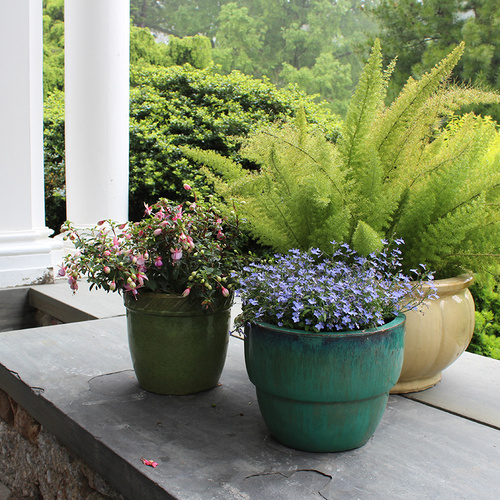
Asparagus ferns (Asparagus densiflorus, Zones 9–11) make a wonderful addition to the houseplant collection. Despite their common name, these beautiful plants are not actually ferns, but rather part of the asparagus family. If you have grown the vegetable asparagus (Asparagus officinalis, Zones 4–8) in your home garden, you may be familiar with the mature foliage the plant develops as it grows. While Asparagus densiflorus is not as dramatically tall and airy as Asparagus officinalis, it does share a similar structure of growth.
When brought indoors, the evergreen foliage of Asparagus densiflorus can be enjoyed year-round by those of us in colder northern zones. While they spend their summers tucked in a shady section of our container display at Blithewold Manor, Gardens & Arboretum in Bristol, Rhode Island, they happily winter in our Lord & Burnham glass greenhouses. However, a greenhouse is not necessary to overwinter these lovely plants.
Keeping asparagus ferns happy indoors
As a houseplant, asparagus ferns are the forgiving type. They can enjoy a period of less frequent watering in the winter months (as long as they are not forgotten forever). However, many homes are quite dry in the winter, so keep an eye on the stems and increase watering if they seem brittle. The other option to mitigate dry winter air is to increase humidity with a tray beneath the ferns. You can make your own humidity tray by filling a tray with stones and keeping water in it to slowly evaporate beneath your potted asparagus fern.
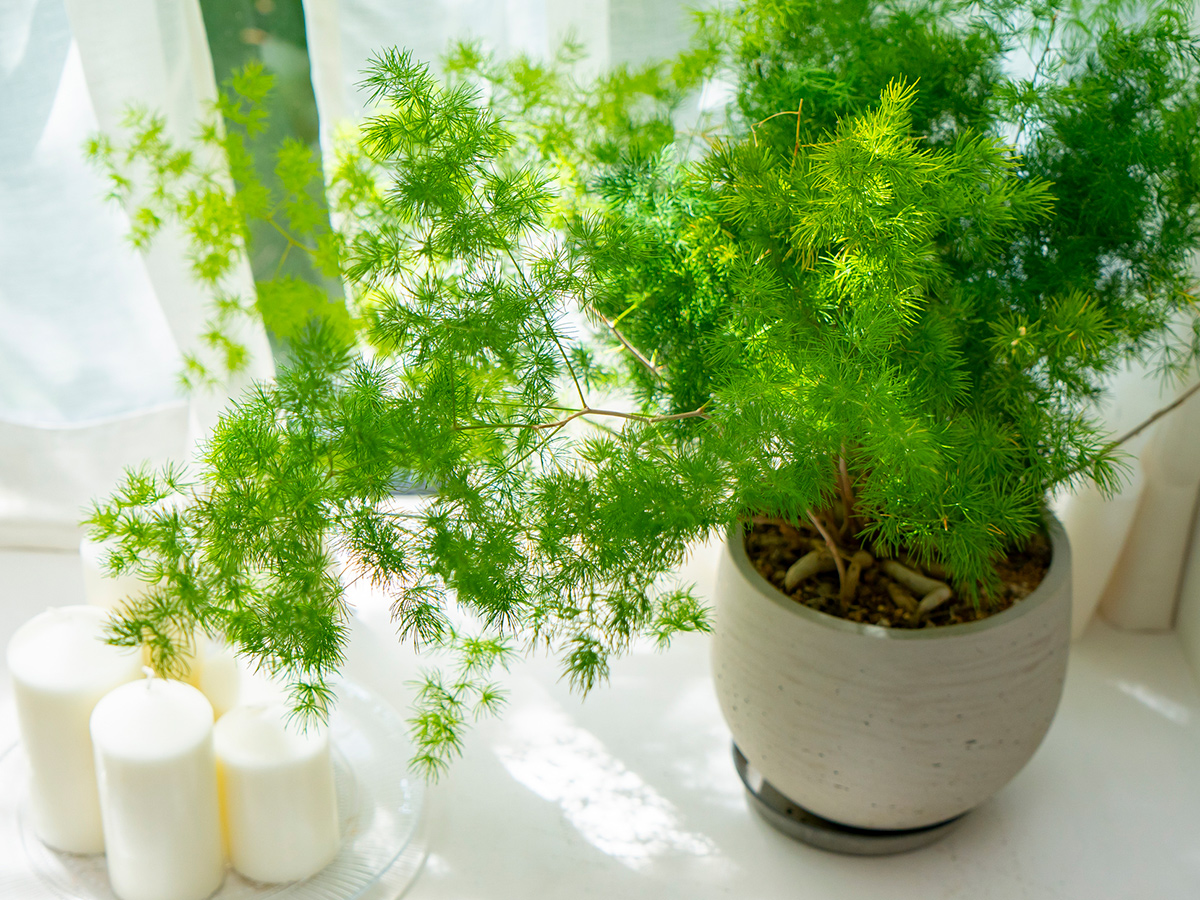
Light levels for your plant should be kept to medium indirect light. Placing a potted asparagus fern in prolonged direct light can result in burnt and damaged foliage. Even in our greenhouse, the asparagus ferns are placed on the ground beneath a layer of other potted plants to allow only dappled light to hit them.
Asparagus fern spring and summer care
If you are inclined to plant your asparagus fern in the garden for the growing season next spring, stick to a location that receives primarily shade or is at least partly shady in the afternoon (when the sun’s rays are the harshest). Their foliage will provide great textural contrast with classic large-leaved shade plants such as hostas.
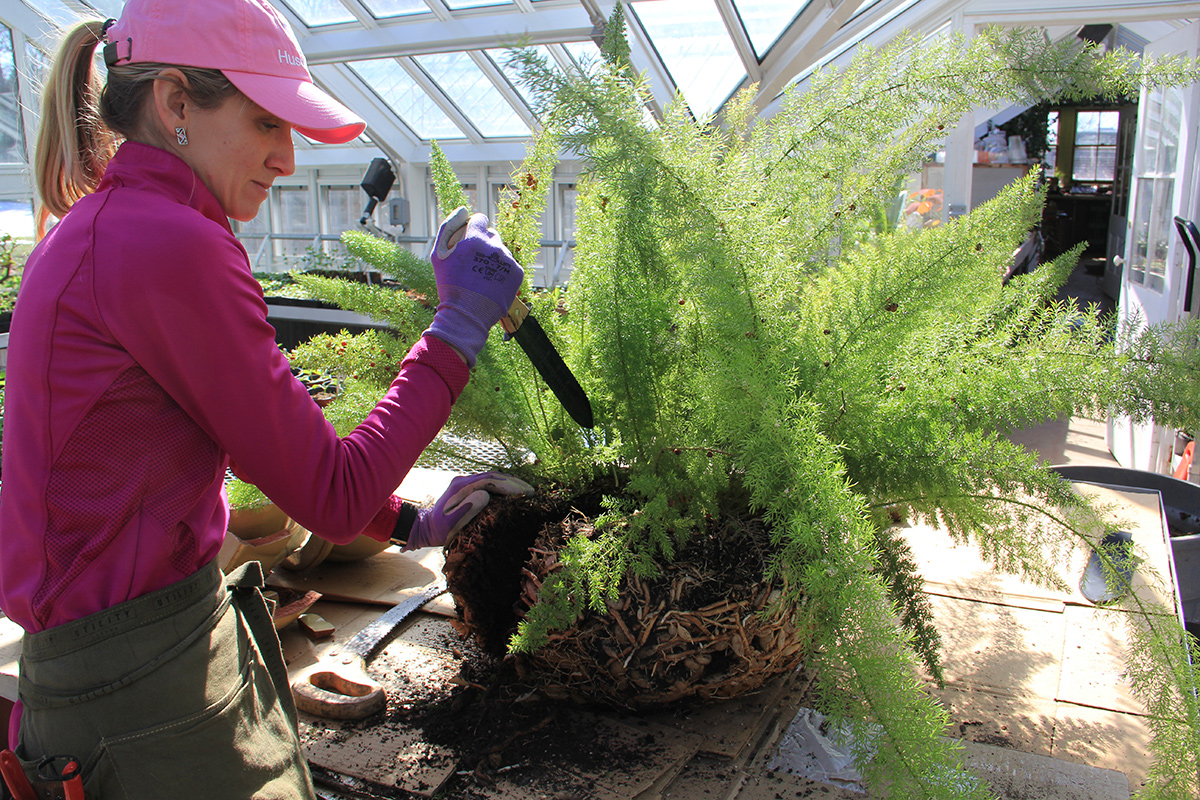
When kept in a container year-round, adjust summer watering to be more frequent as heat will increase evaporation. Some experts recommend monthly fertilizing starting in spring. I have not found this to be necessary as the plants are quite vigorous and often need to be repotted or even split. The roots are both fibrous and tuberous, which allows the plant to store nutrients for leaner times of the year. When we repot asparagus fern, we use a combination of bagged soil-bark mix and our own compost. Our compost will slowly feed the plants without overdoing it and causing them to quite literally break out of their containers.
If your plants are happy, you will get to see them bloom in spring to summer. The flowers are small and may go unnoticed to the untrained eye, as they bloom along the stem beneath the foliage. In the fall, the red fruits will follow and provide colorful seasonal interest harkening to the holiday season ahead.
Top asparagus fern varieties
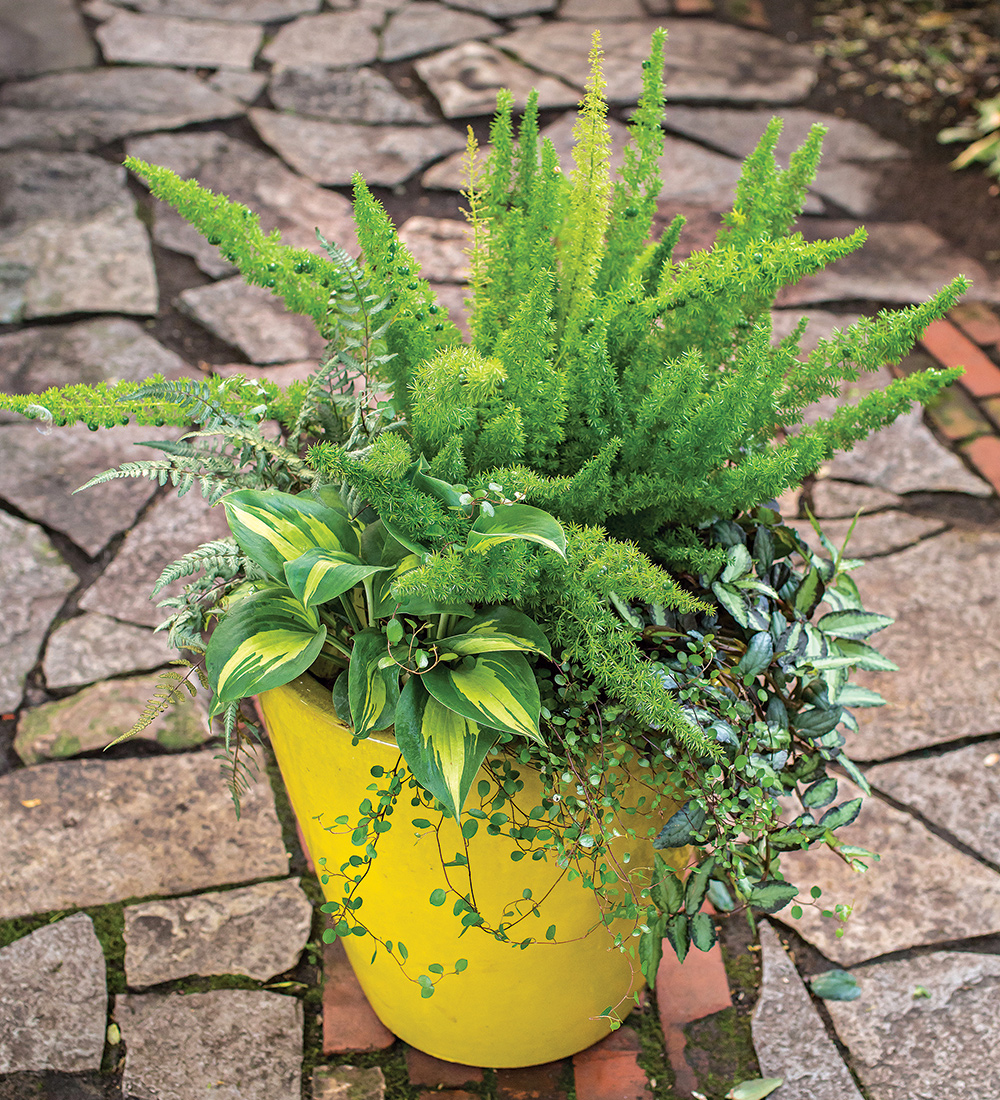
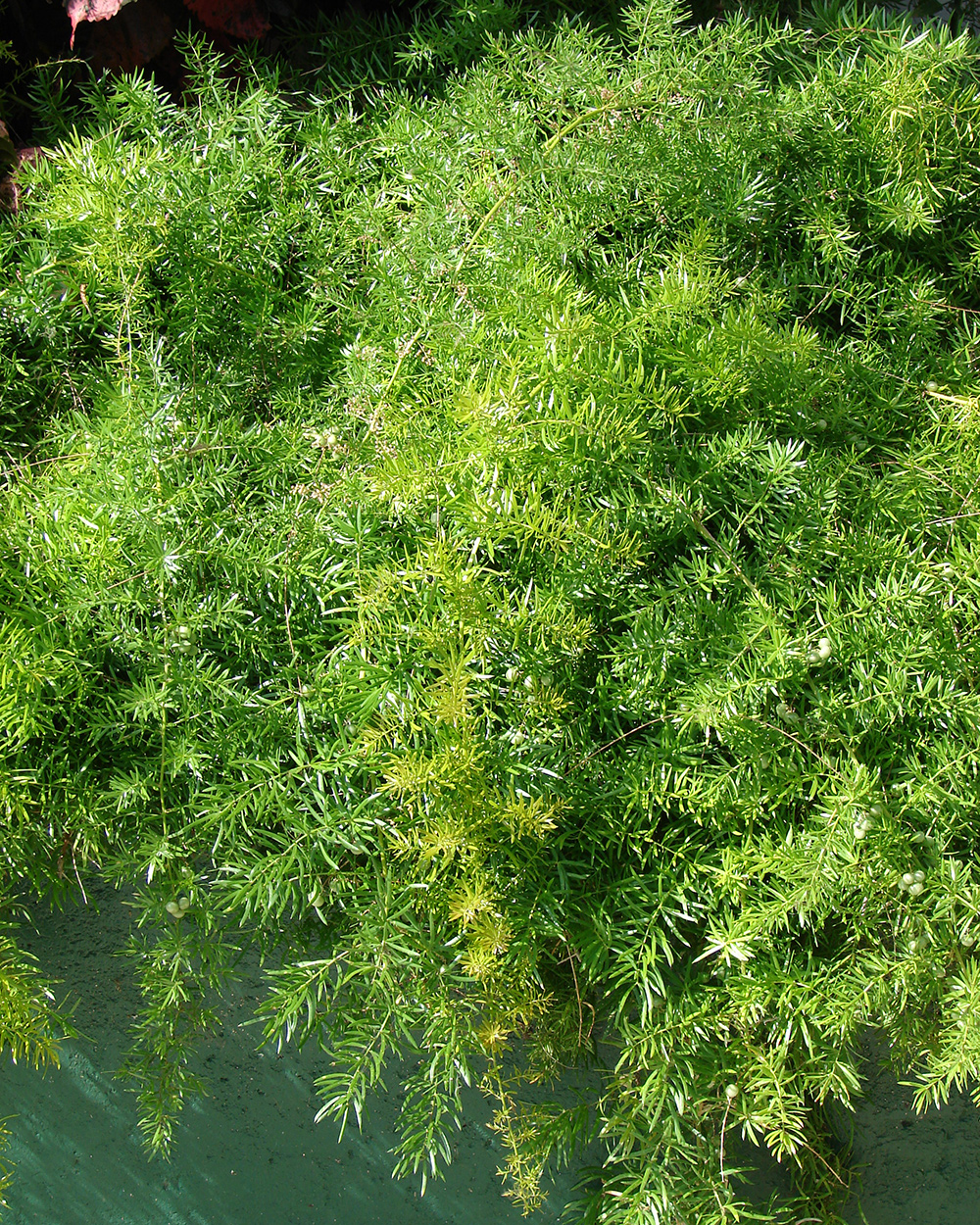
We have two types of asparagus ferns here at Blithewold. Asparagus densiflorus ‘Myersii’, known as the foxtail fern, has shorter upright foliage that does indeed resemble a fox’s tail. This is a wonderful choice if you are planting the fern with other plants in a display container as it will not splay out and cover the companion plants over time. Asparagus densiflorus ‘Sprengeri’ is the common asparagus fern with long foliage trailing out in all directions. It is also a fantastic container plant, but I prefer it solo in a planter displayed with other containers nearby. These are not hard-and-fast rules, so feel free to experiment with whatever works best for your asparagus fern.
Learn more about indoor plants:
Discuss this article or ask gardening questions with a regional gardening expert on the Gardening Answers forum.
And for more Northeast regional reports, click here.
Betsy Ekholm is the gardens manager at Blithewold Manor, Gardens & Arboretum in Bristol, RI.
Fine Gardening Recommended Products

Planting in a Post-Wild World: Designing Plant Communities for Resilient Landscapes
Fine Gardening receives a commission for items purchased through links on this site, including Amazon Associates and other affiliate advertising programs.
Featuring gorgeous photography and advice for landscapers, Planting in a Post-Wild World by Thomas Rainer and Claudia West is dedicated to the idea of a new nature—a hybrid of both the wild and the cultivated—that can nourish in our cities and suburbs.

ARS Telescoping Long Reach Pruner
Fine Gardening receives a commission for items purchased through links on this site, including Amazon Associates and other affiliate advertising programs.
Telescopes from 4 to 7′. Cut and Hold (160) Blades. Drop forged blades for unsurpassed long lasting sharpness. Lightweight, 2.3 lbs., for continued use. Perfectly balanced for easy pruning.

Pruning Simplified: A Step-by-Step Guide to 50 Popular Trees and Shrubs
Fine Gardening receives a commission for items purchased through links on this site, including Amazon Associates and other affiliate advertising programs.
Pruning Simplified shows you exactly how to do it. This must-have guide offers expert advice on the best tools for the job, specific details on when to prune, and clear instructions on how to prune. Profiles of the 50 most popular trees and shrubs—including azaleas, camellias, clematis, hydrangeas, and more—include illustrated, easy-to-follow instructions that will ensure you make the right cut the first time.