

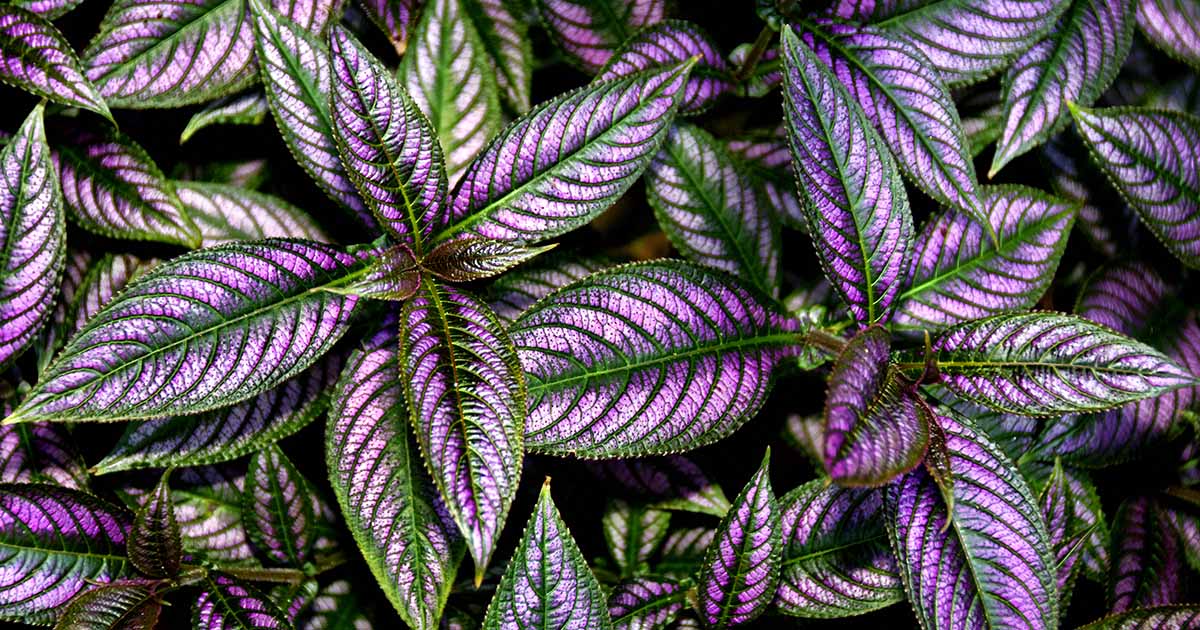

Strobilanthes dyerianus
Persian shield, Strobilanthes dyerianus, is a stunning ornamental species that originates in warm, humid Myanmar, where it grows as a tender evergreen perennial.
It is a member of the Acanthaceae family, which consists mostly of flowering tropical flora.
With its unique iridescent purple leaves, S. dyerianus had no difficulty attracting the attention of US gardeners, and is now grown here as an annual, perennial, and houseplant.
We link to vendors to help you find relevant products. If you buy from one of our links, we may earn a commission.
In this article, you will learn all you need to know to cultivate this delightful tropical foliage outdoors in USDA Hardiness Zones 10 to 11.
It may also be grown as an indoor houseplant in all locales.
Here’s what we’ll cover:
Tropical Persian shield, aka royal purple plant, thrives on heat and humidity, yielding its most brilliant color in bright, indirect sunlight and partially shaded locations.
It prefers temperatures above 60°F.
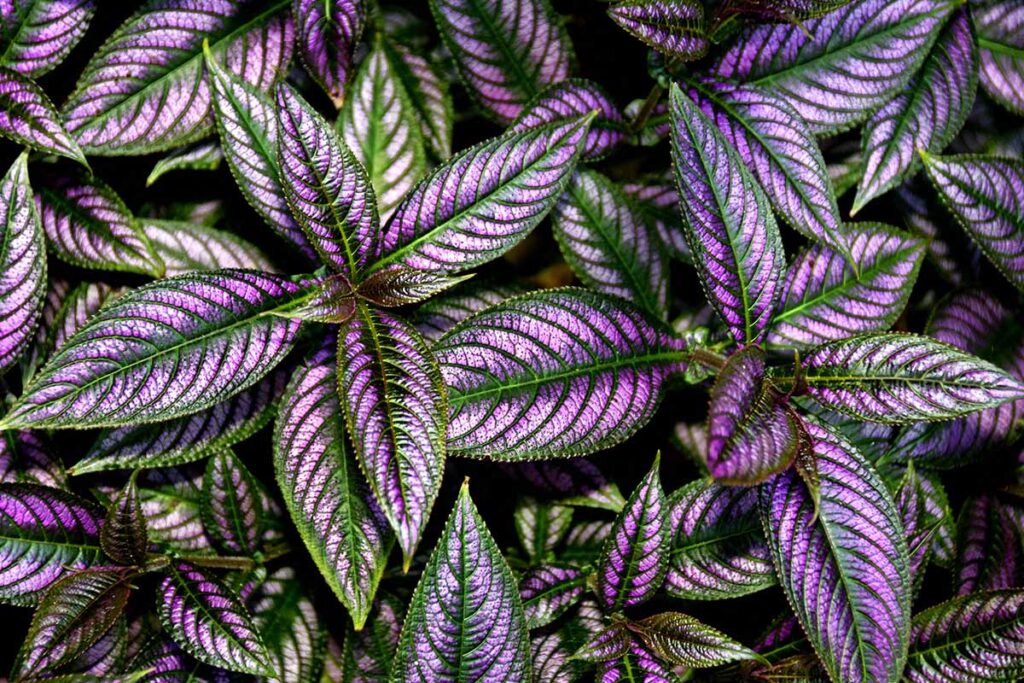
The characteristic broadleaf foliage positively shimmers. Neon shades of purple veined with green seem to be overlaid with a silver gloss.
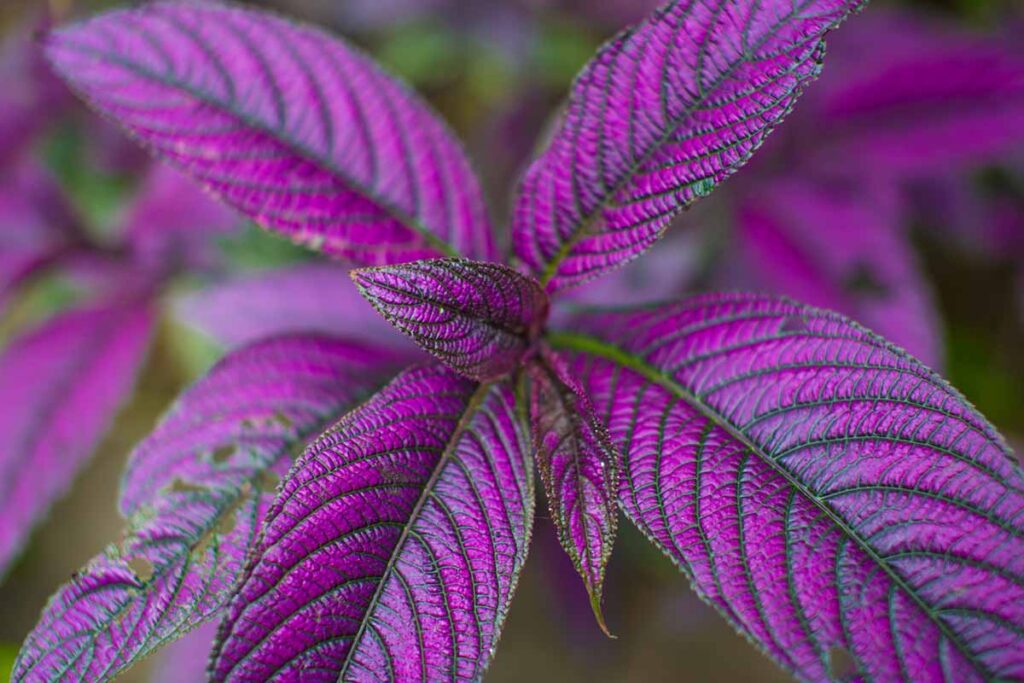
The growth habit is upright with leaves that are lance-shaped and measure six to eight inches long.
Stems are soft and may exceed three feet in height. Over time, they may become woody.
Small, tubular, cone-shaped blue flowers, reminiscent of Virginia bluebells may bloom in season, but these are a rarity.
Quick Look
Common name(s): Persian shield, royal purple plant
Plant type: Tender evergreen perennial
Hardiness (USDA Zone): 10-11 (outdoors)
Native to: Myanmar
Bloom time / season: Spring and summer
Exposure: Bright indirect sun to part shade
Soil type: Organically-rich loam, well-draining
Soil pH: 5.5-7.5, slightly acidic to neutral
Time to maturity: 3-5 years
Mature size: 1-3 feet tall by 1-3 feet wide
Best uses: Beds, borders, containers, houseplant
Taxonomy
Order: Lamiales
Family: Acanthaceae
Genus: Strobilanthes
Species: Dyerianus
The reason is not entirely understood, but is believed to be an example of “masting” behavior, in which blooming is sporadic, but profuse when it occurs.
This botanical phenomenon makes it impossible for wildlife to depend upon the seeds for food, as they are not always available.
In cooler regions, Persian shield grows as a summer annual, often failing to exhibit its most vibrant color, and dying off with the first frost.

With its vivid silvery-purple hues, Persian shield makes a bold perennial statement in warm-region gardens.