
You Could Be Degrading The Battery Of Your EV By Charging It This Way

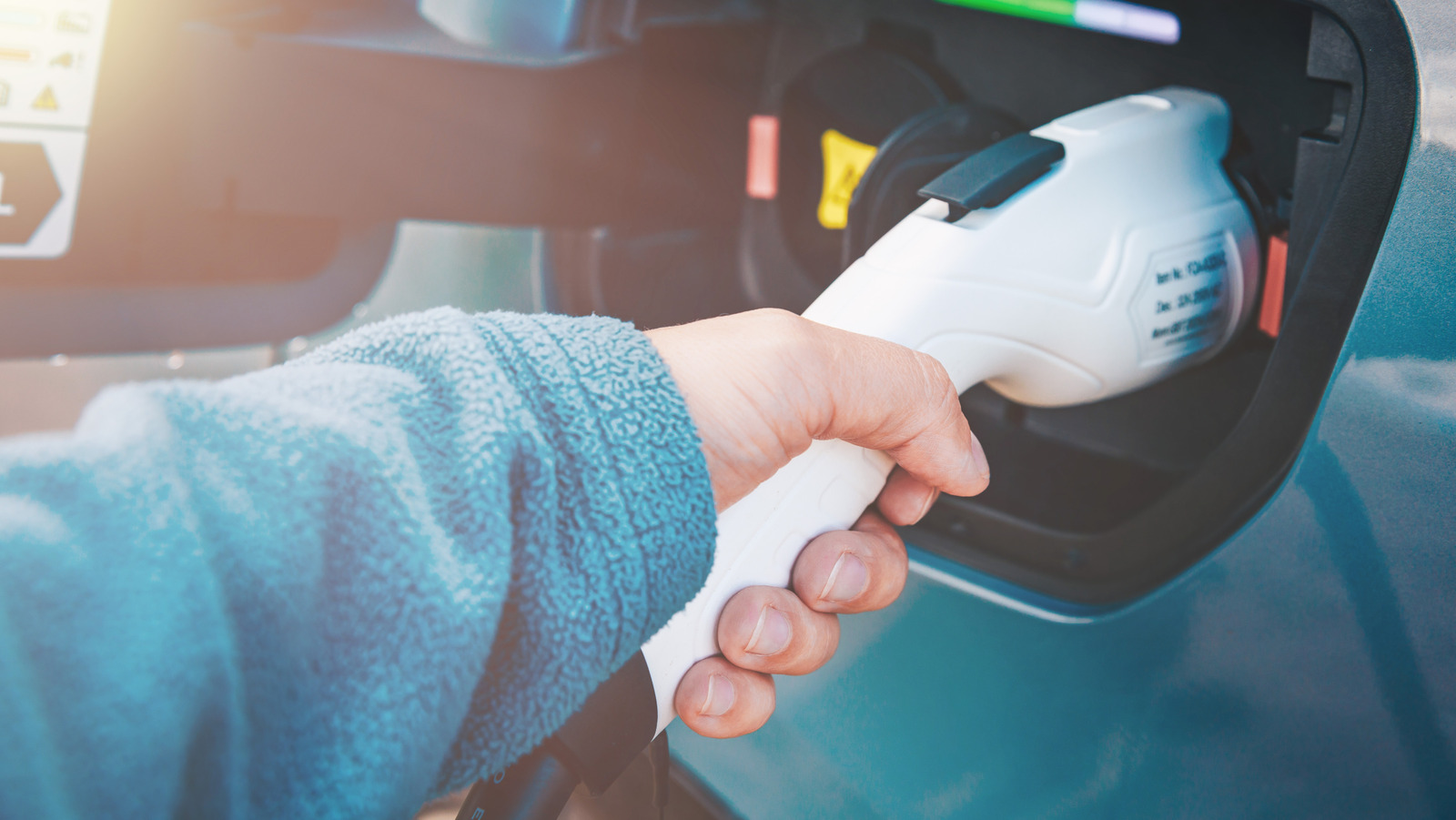
While electric vehicles have continued to advance in recent years, offering greater range and improving the technology surrounding their batteries, some owners still experience concerns around charging. While charging station infrastructure is steadily getting better, finding a nearby place to plug in can provide a challenge depending on where you live. For example, most available EV charging stations are along the coast of the United States. Events like Electrify America charging stations incapacitating at least three EVs also don’t help to quell apprehension on the subject. As a result, EV owners — in an attempt to ensure their cars are always good-to-go — can actually be harming their batteries with poor charging habits.
While there are multiple types of electric vehicle batteries with differences in how you should approach charging them, there are some general guidelines that apply to both. For instance, in general (with some exceptions), you should avoid reaching a 100% battery charge. You should also not allow the battery to drain to 0%. And don’t keep your EV continually plugged in – for example, in a situation with a home charger where the car is connected all throughout the weekend, or you go traveling on holiday for an extended period.
Why do these charging practices degrade your EV’s battery?
Everyone freaking out about EV battery replacements can officially calm down with how unlikely it is that they’ll fail soon. Even so, it might seem counterintuitive not to allow your EV to charge all the way up 100%. But there are some good reasons not to, and they have everything to do with heat. Regardless of your efforts, your lithium-ion won’t last forever.
Within a lithium-ion battery are cathode and anode electrodes managing the passage of both electrolytes and ions. That final 20% of charge to full results in greater thermal production in those electrodes, which is the enemy in terms of battery longevity. The processes within the battery undergo far less strain during frequent short charging cycles between 20% and 80%. Why? Because particles within the lithium-ion undergo changes to their shape during cycling, and the larger the cycle, the greater the change — and the more opportunity for cracks to develop. Once these particles suffer several fissures, the processes within the battery become less efficient.
If you leave your EV plugged in continuously, once the battery reaches full charge, the charger will kick itself off. However, a battery’s charge level does still drop over time while the EV remains stationary, especially if the ambient temperature is high. So, let’s say your car is parked outside under the hot sun and plugged into a charger for several days. The charge level could dip below 100% several times, causing the charger to engage and leading to multiple mini-cycles just below full capacity. This, alongside heat built up within the battery, contributes to its deteriorating function.
The main types of EV battery and a slightly different approach to charging
There are two primary lithium-ion batteries used for electric vehicles: nickel manganese cobalt (NMC) and lithium iron phosphate (LFP). NMC has been the popular form of lithium-ion in electric cars. However, LFP variants are on the rise as they offer some benefits, such as a reduced environmental impact and better thermal management compared to NMC.
If you have an LFP battery in your EV, while the best charging practices for it are similar to NMC, there are a few differences. For instance, studies have shown that LFP experiences more harm undergoing a smaller cycle on the upper end of the charging spectrum compared to a huge cycle from completely drained to fully charged. In other words, an LFP battery can be fully charged every now and again without contributing as much to degradation.
Because LFP batteries aren’t as sensitive to large cycles, you could also potentially wait longer to charge, allowing your battery level to get lower before addressing it. Regardless of which type of lithium-ion you have, the technology has continued to improve, with more safeguards against battery degradation than ever. Here’s how long EV batteries really last compared to gasoline cars.