Beautiful Veliko Tarnovo & Arbanassi: Bulgaria’s Tsarist Capitals

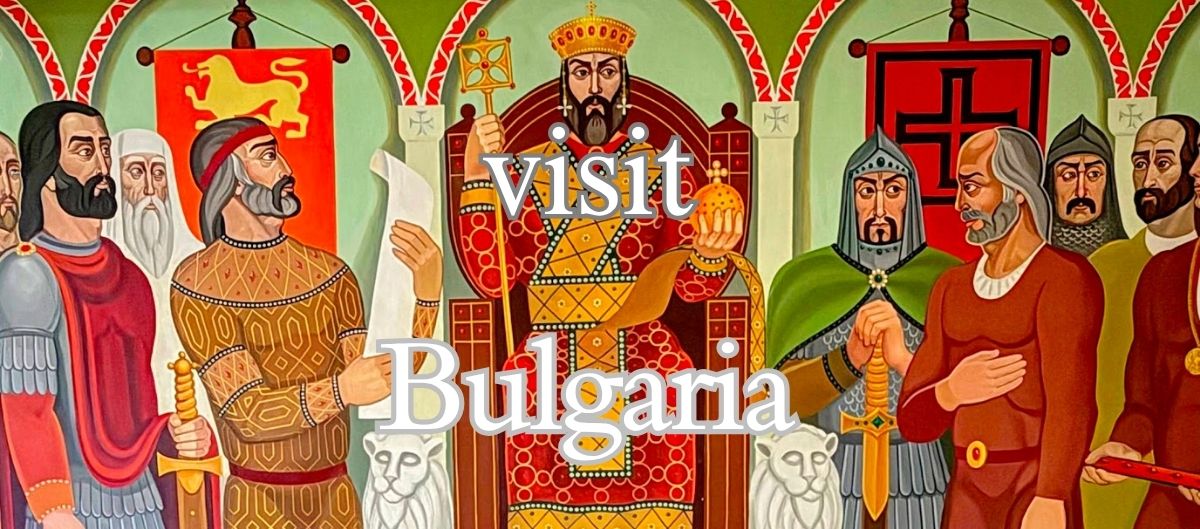
Nestled in the mountains above the winding Yantra River, Veliko Tarnovo keeps the secrets of its thousand year history. Once the proud capital of the Second Bulgarian Empire, the city still carries itself like royalty, reaching its golden age under Tsars Kaloyan and Ivan Asen II before being slowly conquered by the Ottomans in the late 14th century.
From the moment you approach, Veliko Tarnovo unfolds in tiers: houses painted in warm earth tones, stacked like an amphitheater facing the river valley. The jewel in its crown is Tsarevets Fortress, a medieval stronghold that guarded Bulgarian kings for centuries.
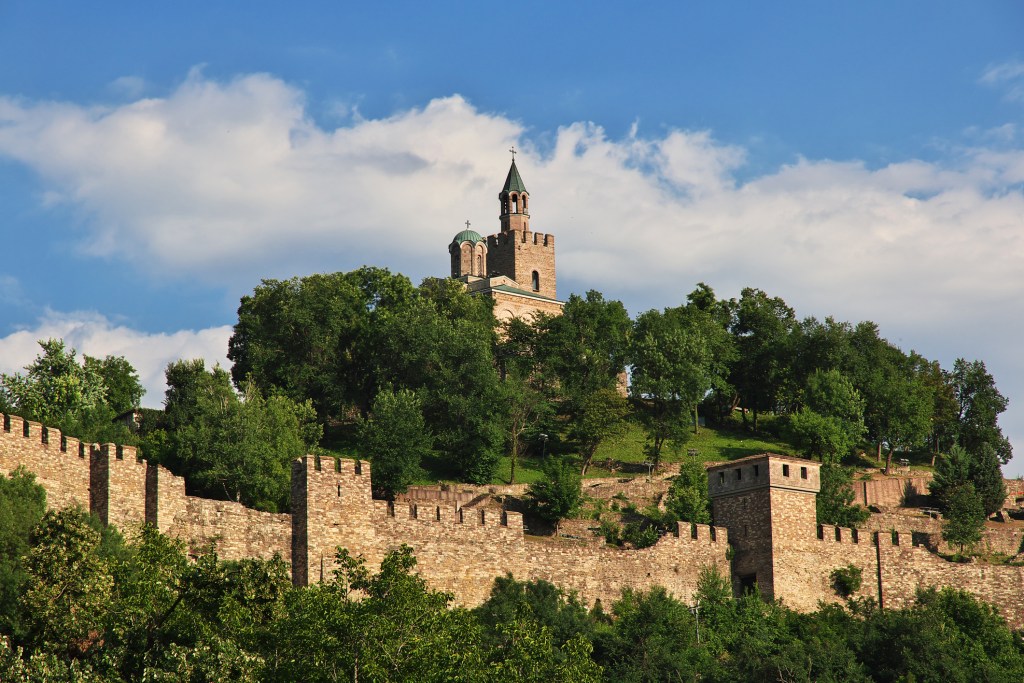
Climbing the fortress paths, you can almost hear the echo of horse hooves on stone, the clang of the blacksmith’s hammer, the raucous street conversations and smell woodsmoke and grilling game.
But Veliko Tarnovo isn’t just about the past. Its winding Samovodska Charshia street still buzzes with artisans—potters, woodcarvers, and weavers…
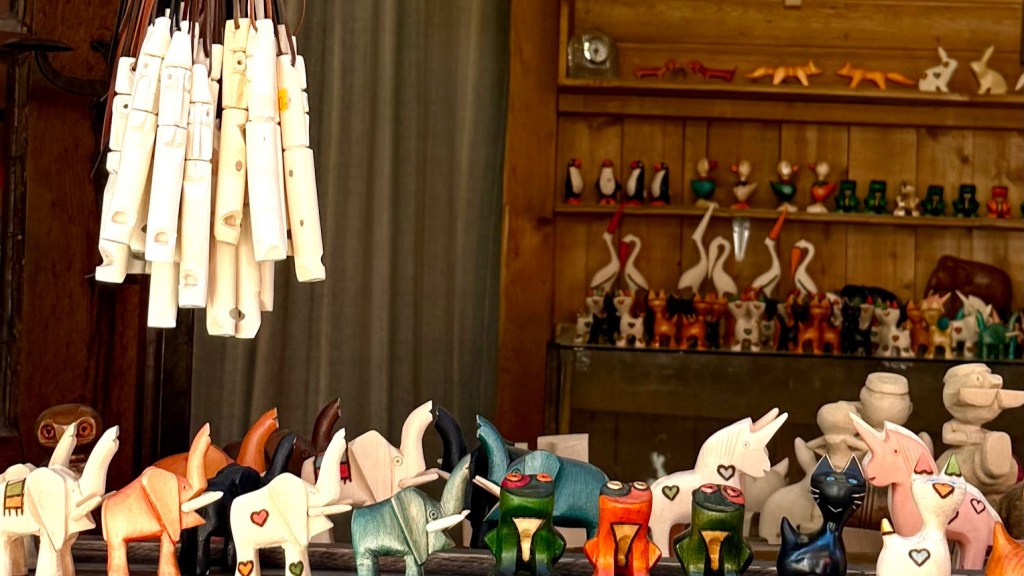
keeping traditions alive. Café tables spill onto the sidewalks, serving up thick, aromatic coffee or rakia for those so inclined. It was a little early for me and the day was one of the hottest of Bulgaria’s summer so coffee was not an option.


Just a few kilometers away lies Arbanassi, a village that feels like it’s been preserved in amber. In the 16th and 17th centuries, Arbanassi was a merchant hub and the old wealth still whispers to its visitors in beautiful architectural touches, old stone and the testimony of a thousand seasons.
And it was cooler, shaded.

Walking into the Church of Archangels Michael and Gabriel, you step into a masterpiece—walls and ceilings covered in vivid frescoes telling stories from the Bible, each detail painted with a devotion that has survived centuries.


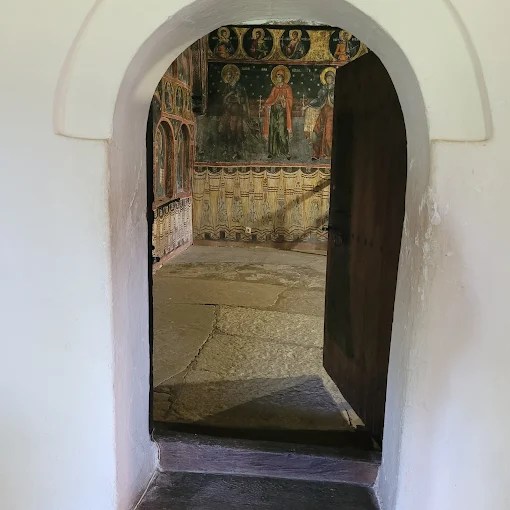
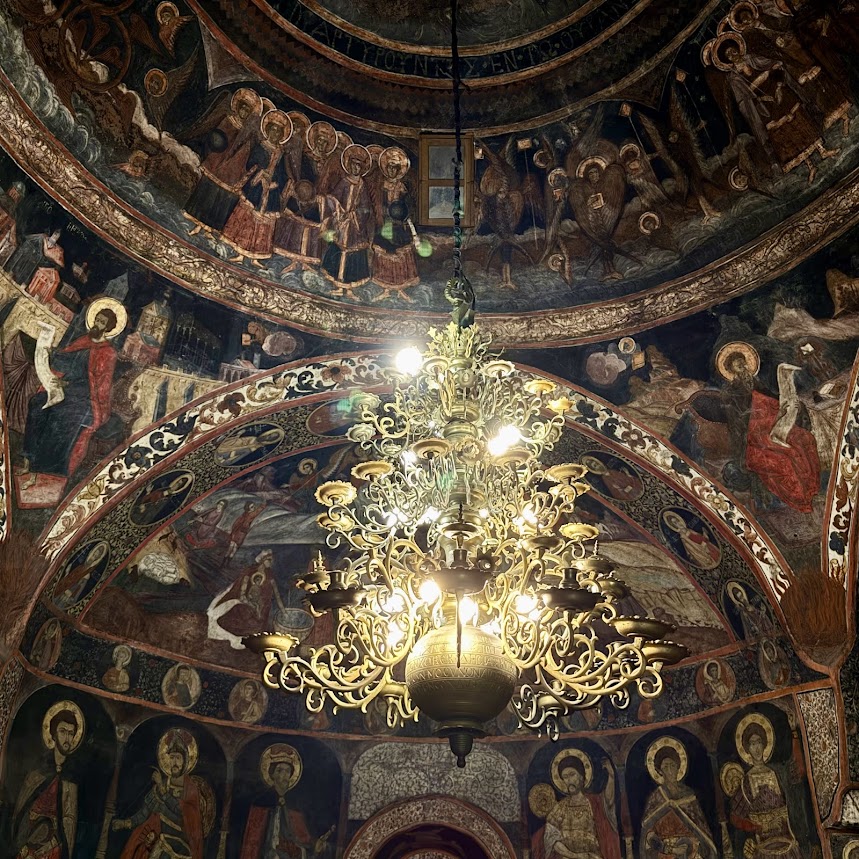
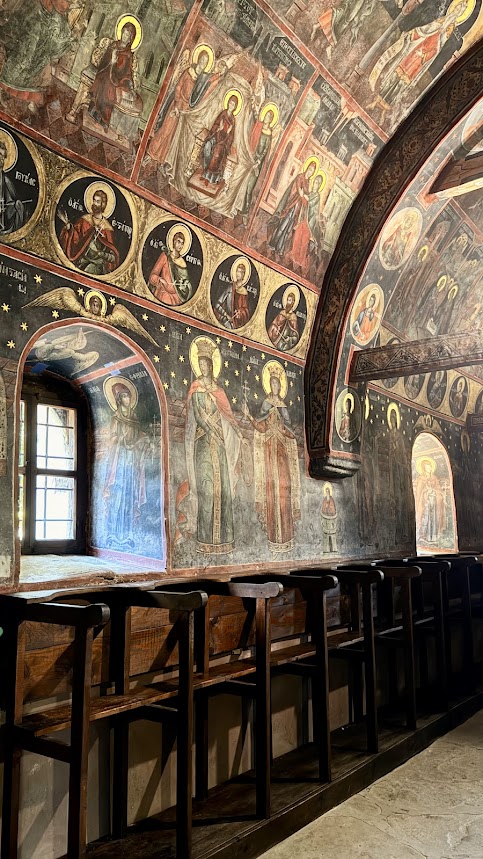
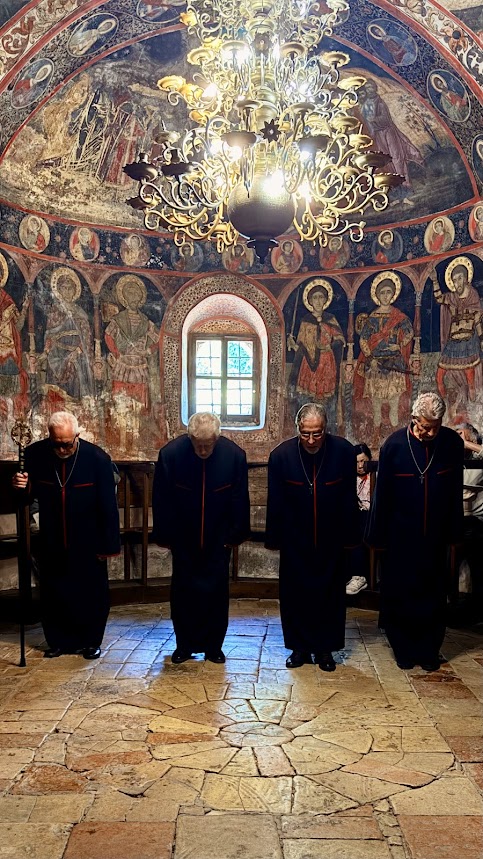

The silence inside is thick, broken only by muffled whispers of visitors . Unless you are as fortunate as I was to hear the magical sounds of a local choir perform in this 17th century church.
Outside the church, the streets are quiet and shaded, lined with houses that seem built to last a thousand years. If you go, take your time. Wander the streets of Veliko Tarnovo and Arbanassi to appreciate their outdoor art called “sgraffito”, described as a light layer of plaster that is applied over a darker one and then scraped off to create patterns with the color underneath. Large scale scratch-off art.

Veliko Tarnovo and Arbanassi offer two sides of Bulgarian life—one bustling with the pulse of a small village shaped by empires, the other a tranquil retreat where time still moves slowly. Together, they offer a perfect glimpse into Bulgaria’s soul: proud, resilient, and deeply rooted in its past.