
According to a report from the New York Civil Liberties Union, a number of women have had their visitation rights revoked by prison officials after body scanners wrongfully identified their tampons as “contraband.”
“Women were turned away after traveling to see their incarcerated loved ones and barred from future visits for six months or even indefinitely – all because they were on their period,” a post from the NYCLU’s Instagram page reads.
“This is a clear act of sex discrimination. The Department of Corrections and Community Supervision must restore these women’s visitation rights and change screening procedures immediately to accommodate the basic fact that some visitors will be menstruating.”
In one instance, according to New York Focus, a woman named Caroline Hansen and her 16-year-old daughter drove three hours from their home on Long Island to visit Hansen’s husband at Eastern Correctional Facility. Hansen had gone through the body scanners before, but this time, she was using a tampon.
When Hansen got to the scanner, she was flagged, and eventually, an officer had her step into a back room. The back room contained three male officers and a police dog.
“This is how horror movies start,” she told New York Focus.
She said the officers interrogated her, asking to search her and her car. They had the dog smell her several times. Hansen was ultimately “allowed” to remove the tampon and go back through the scanner.
By that point, Hansen said, she and her daughter were both “hysterical.”
The experience was “dehumanizing,” she said. Prison officials then denied the pair their usual visit at a table, where they could touch and interact. Instead, they were downgraded to a no-contact visit and had to speak to her husband through a pane of glass.
“Now, I just don’t go when I’m on my period,” Hansen said. “I don’t want to deal with that again.”
James Bogin, senior supervising attorney at Prisoners’ Legal Services of New York, said his organization has been hearing from people — “always women” — who were denied visits based on scans a few times a week. He said many of them get barred from visiting their loved ones — sometimes temporarily, sometimes indefinitely.
Most aren’t getting a chance to prove they’re not trying to smuggle things into the prison, advocates and visitors said. “The scanner is not proof of contraband, but they are treating it like proof of contraband,” said Cannan.
Those who do get a chance to plead their case report being forced to remove their menstrual products, like Hansen, and endure “humiliating and dehumanizing” scrutiny, according to the NYCLU.
Attorneys, advocates, and legislators say they have repeatedly heard stories like Kelder’s since earlier this year, when New York’s state prison agency started requiring most people to go through scanners before visits with their loved ones.
The body scanning policy was implemented shortly after a three-week corrections officer strike in March, and soon after, advocates say they started hearing high numbers of complaints over the summer.
The scanner rollout was one of the striking officers’ demands, aimed at reducing cavity searches and alleviating what they described as high numbers of visitors smuggling drugs and other contraband into the facilities.
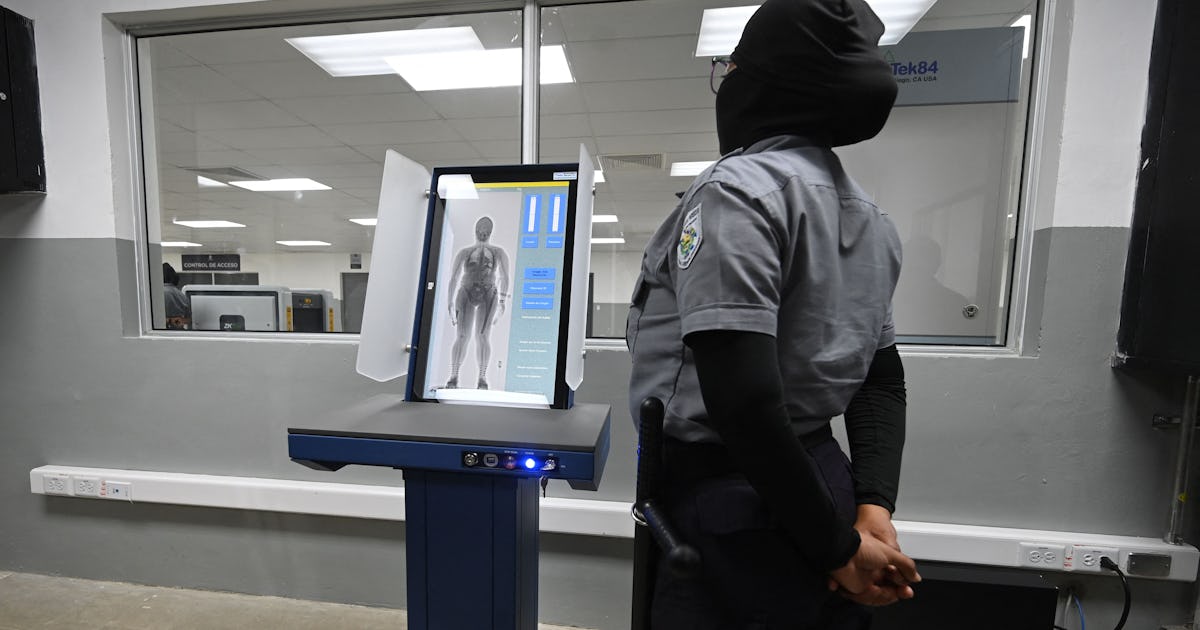
Visitors now must pass through body scanners to qualify for a full-contact visit in which they can sit at a table with their incarcerated loved one and touch them. The scanners use X-ray imaging to identify physical anomalies, including items under someone’s clothing and inside their body.
Under the new body scanner policy, staff should deny visitors entry to a prison if they’re found with contraband or if they are “unable to clear the body scanner screening,” though it doesn’t define what it means to “clear” the scan.
Guards are turning visitors away after their body scans pick up “normal anatomy, medical conditions, and predictable artifacts,” said Michelle Bonet, an advocate who has been organizing prison families since the strike.
Menstrual or contraceptive products, like tampons and intrauterine devices, also get flagged, advocates and visitors told New York Focus. A vast majority of those flagged are women, the advocates have noted.
The New York Civil Liberties Union has sent a letter to the state prison agency asserting that its body scanner practices are sex discrimination.
“Protocols with respect to scanning and visitation do not appear to take into account that women menstruate, need to use menstrual products, and will frequently have tampons or other reproductive health care devices in their body cavities,” the letter said.
The Department of Corrections and Community Supervision (DOCCS), which runs the state prison system, did not answer questions about the allegations regarding the body scanners, but instead sent a statement detailing its visitation and mail security policies.
“Contraband, such as drugs and weapons, contribute to violence in prisons,” the statement said.
Now, local politicians are taking action.
State Senator Julia Salazar, who chairs the chamber’s correction committee, said that her office has received around 50 complaints in recent months from people across the state about DOCCS employees denying visits “ostensibly due to body scans.”
In June, she introduced a bill that would prohibit jails and prisons from denying visitors entry or contact visits because they are menstruating or using contraceptive devices.
Salazar’s office said that DOCCS has said that staff are properly trained on the scanners, but the senator’s staff hasn’t seen what that training entails.
“From what we’ve seen, they do whatever they want,” Shafeeqa Kolia, a spokesperson for Salazar, said.