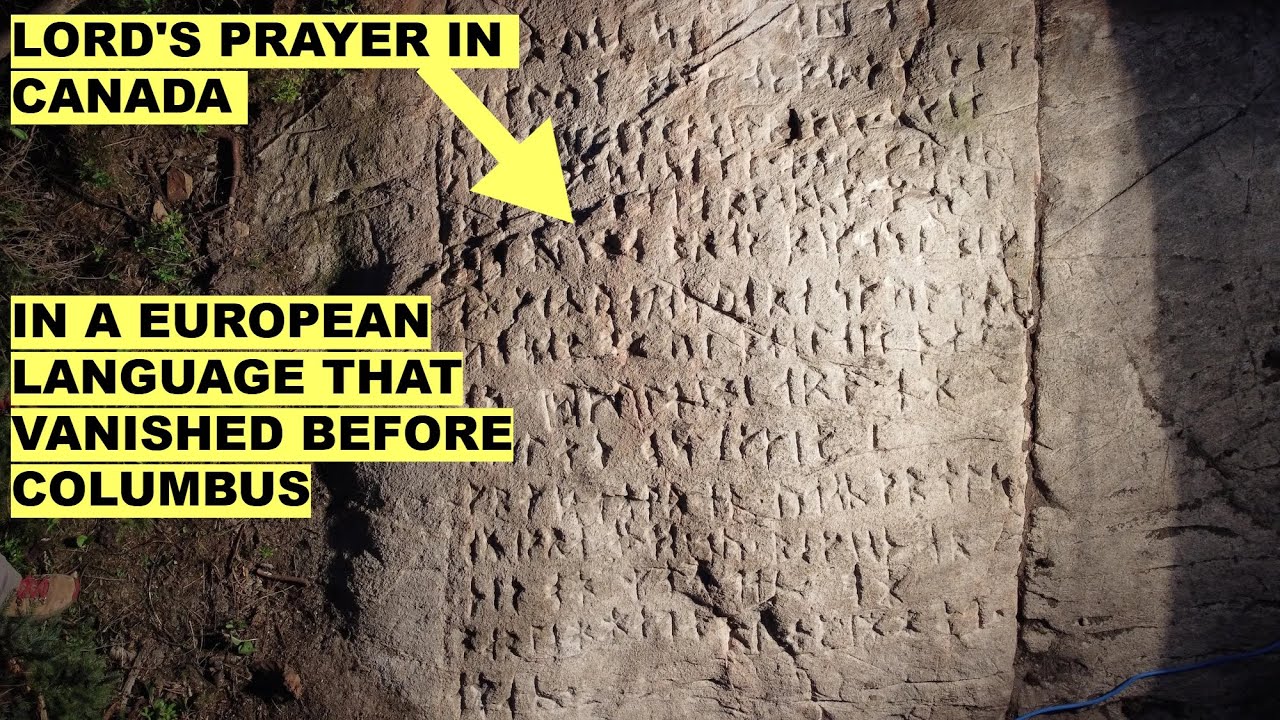
"Creator: Believed to be a Swedish worker for the Hudson's Bay Company in the early 1800s, using a 17th-century runic translation." Takes five seconds to look this up.
The Norse were not Christians at the time they used Elder Futhark. If it wasn't obvious enough that it's a forgery, the inscription itself makes no sense.
well looking at the map, it's in a place that seems to be able to be accessed from the atlantic ocean, so what's the mystery? obviously there were explorers who dont happen to be mentioned in your history book
The video is misleading. It implies that the evidence for a modern origin for the inscription is uncertain or even weak compared with a "Viking Christian" origin. In fact the researchers have established beyond reasonable doubt that it is modern… post 1800 and the product of a colonial era carver.
Exactly who carved it is unknown, but it is not a Scandinavian carving from before 1000.
In case any doubt remains, the text of the Lord's Prayer is in *modern Swedish*, albeit written with runes. Runic versions of the Lord's Prayer were printed in multiple books, and both Bureus and a later work and copies included full versions of the Lord's Prayer text in runes.
To reiterate. An ancient origin for the inscription is absolutely and unequivocally ruled out.
Thats because Europeans had been coming across the Atlantic for centuries before Columbus!! He didn't discover anything !!! The Aztecs knew of tall white bearded men from the east long before Cortez and the Spanish showed up!!! History books are full of assumptions and outright lies !!!🤔🤔🤔
Misleading title. The inscription is written in Swedish, which obviously did not "vanish before Columbus". A lot of people in this comment section seem to be under the belief, that this could have been made by early viking explorers, but that is simply not possible. The language is too modern, and the text itself is from the 16th century. Could have said these things in your video.








Who makes this content?
Ty sir for using the correct term, Anno Domini! I really appreciate the clarity and conciseness of your work.
"Creator: Believed to be a Swedish worker for the Hudson's Bay Company in the early 1800s, using a 17th-century runic translation."
Takes five seconds to look this up.
The Norse were not Christians at the time they used Elder Futhark. If it wasn't obvious enough that it's a forgery, the inscription itself makes no sense.
I wonder if there is a connection between this stone and the theorizied Templar Kensington stone found Minnesota.
@3:17 Time travel…duh!
Lothar of the Hill People lives in this region!
well looking at the map, it's in a place that seems to be able to be accessed from the atlantic ocean, so what's the mystery? obviously there were explorers who dont happen to be mentioned in your history book
Fake news. 👎
First written language in North America?
The video is misleading. It implies that the evidence for a modern origin for the inscription is uncertain or even weak compared with a "Viking Christian" origin. In fact the researchers have established beyond reasonable doubt that it is modern… post 1800 and the product of a colonial era carver.
Exactly who carved it is unknown, but it is not a Scandinavian carving from before 1000.
In case any doubt remains, the text of the Lord's Prayer is in *modern Swedish*, albeit written with runes. Runic versions of the Lord's Prayer were printed in multiple books, and both Bureus and a later work and copies included full versions of the Lord's Prayer text in runes.
To reiterate. An ancient origin for the inscription is absolutely and unequivocally ruled out.
PLEASE don't let me find out this channel has something to do with Mormonism. There is an abundance of evidence ruling out its historical claims.
Same with Judaism and Christianity btw
Thats because Europeans had been coming across the Atlantic for centuries before Columbus!! He didn't discover anything !!! The Aztecs knew of tall white bearded men from the east long before Cortez and the Spanish showed up!!! History books are full of assumptions and outright lies !!!🤔🤔🤔
7:20
14 x marks, 14 people in the boat… correlation maybe?
Mystery just means not part of the approved narrative
I don't even get your comment at 7:10 what you call X marks are clearly Christian crosses. This channel is clueless, won't sub you. Bah bye.
Scholars already know about this rock text dated to the 1800s.
I thought it was common knowledge that the Vikings went to Wineland (America) at least 500 years before there was a Columbus.
It didn't help. But then praying to imaginary deities never does.
Jesus Christ is LORD.
If anyone scratched into the runes to clean them a few hundred years ago that would change the dating.
Misleading title. The inscription is written in Swedish, which obviously did not "vanish before Columbus". A lot of people in this comment section seem to be under the belief, that this could have been made by early viking explorers, but that is simply not possible. The language is too modern, and the text itself is from the 16th century. Could have said these things in your video.
5:50 So the old viking style boats were meant as a deception?
Maybe Joseph of Arimathea spread the word along the way
This is not at all supernatural or mystical. Humans made that, sure as anything. Enough already. Fiction needs to stay fiction.
My first idea was perhaps a religious hermit. A monk or contemplative.