
House GOP advances bills to accelerate approvals for energy and infrastructure projects

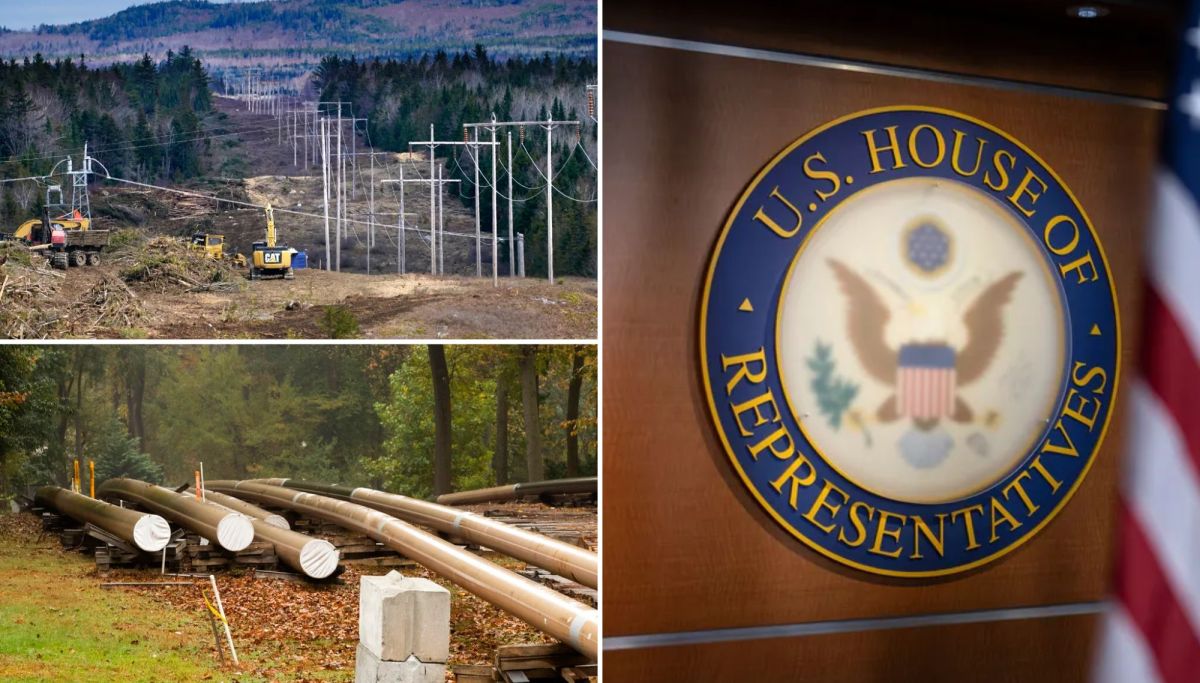
Republicans in the House advanced several permitting bills this week, fueling the bipartisan effort to pass significant reforms to the federal environmental review and approval process for energy and infrastructure projects.
For months, Republicans and Democrats in the House have sought to advance legislation streamlining the federal permitting process in order to build highways, power plants, solar farms, transmission lines, housing, and much more at a faster pace.
Both parties have griped that existing laws and regulations can tie these crucial infrastructure projects up in lengthy legal battles and bureaucratic red tape, making it difficult to build anything in an efficient manner.
While some bills proposed are meant to speed up the permitting process through modernization, Republicans are also seeking to simplify and limit the scope of bedrock environmental laws like the National Environmental Policy Act and the Clean Water Act, which require federal agencies to conduct certain environmental reviews before granting approval for construction.
The CWA has primarily been targeted in the Promoting Efficient Review for Modern Infrastructure Today Act, also known as the PERMIT Act, which passed the House in a 221-205 vote on Thursday. Six Democrats voted in favor and one Republican voted against.
This bill, introduced by Rep. Mike Collins (R-GA) in June, proposes redefining which waters are protected under the law, excluding waste treatment systems, groundwater, and converted cropland, as well as ephemeral features that flow only in direct response to rain.
It would also double the duration of general wastewater discharge permits from five years to 10 and remove permit requirements for pesticides that are discharged into waterways, only if they were authorized for use under the Federal Insecticide, Fungicide, and Rodenticide Act.
The PERMIT Act also would dramatically limit the timeframe for organizations or individuals to challenge a federal permit in court, slashing the statute of limitations to just 60 days after the approval was issued by an agency.
While Republicans have said the legislation will streamline federal reviews and provide stronger regulatory certainty, environmentalists and climate activists argue it would weaken clean water protections and allow polluters to dump harmful waste.
This week, the House also passed multiple smaller bipartisan bills aimed at modernizing, simplifying, and studying the existing permitting process.
Among these is H.R. 573, the Studying NEPA’s Impact on Projects Act, introduced by Rep. Rudy Yakym (R-IN) and cosponsored by Rep. Jimmy Panetta (D-CA).
This bill, which was approved with unanimous consent via a voice vote, would require the Council on Environmental Quality – which oversees the implementation of NEPA by issuing guidance for federal agencies – to publish an annual report on environmental reviews and causes of action based on alleged non-compliance with the law.
The bipartisan lawmakers have said the legislation would allow the government to better assess the efficiency and effectiveness of the federal permitting process.
Another bill that passed with unanimous consent this week was H.R. 4503, the ePermit Act, which was introduced by Rep. Dusty Johnson (R-SD) and cosponsored by at least six Democrats. The ePermit Act is intended to accelerate permitting not by changing existing laws, but by digitizing the entire federal permitting process.
All of these bills are preceding what is considered to be one of the most important pieces of legislation targeting permitting under NEPA – the Standardizing Permitting and Expediting Economic Development Act, better known as the SPEED Act.
The bill, which was introduced by House Natural Resources chairman Bruce Westerman (R-AR), proposes some of the most far-reaching changes to federal agency processes for issuing permits for energy and infrastructure projects under NEPA and how those approvals can be challenged in court.
While Westerman has secured support from several Democrats, many on the left side of the aisle remain hesitant to vote in favor of the bill because of the lack of safeguards for renewable energy amid the Trump administration’s effort to block projects.
“The bill is a dramatic overreach,” House Natural Resources ranking member Jared Huffman (D-CA) told the Washington Examiner. “[It] does nothing to end this crazy war on clean energy that’s driving up electricity prices for struggling families.”
Huffman added that he expects any “serious work” on permitting to originate in the Senate – a sentiment echoed by Democrats in the upper chamber.
BILL ADVANCES IN HOUSE TO LIFT RESTRICTIONS ON ENERGY AND INFRASTRUCTURE PROJECTS
“The House is going to do what the House is going to do, but I think the plan is that the bill will be put together here and then sent over to the House on a package that requires some attention to it, which I think is a good strategy,” Senate Environment and Public Works ranking member Sheldon Whitehouse (D-RI) told the Washington Examiner.
The House is expected to vote on the SPEED Act next week.
Maydeen Merino contributed to this report.