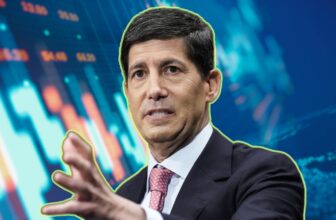
Kevin Durant says he’d reject Jalen Brunson’s $100M discount


The two-time champion told Boardroom Talks that his inner circle would have vetoed the nine-figure pay cut, and that a championship does not fully erase the opportunity cost
Kevin Durant sat down with Speedy Morman for Boardroom Talks and weighed in on Jalen Brunson’s contract decision. The Knicks guard famously signed a four-year, $156.5 million extension in July 2024 rather than waiting for a larger deal that would have been worth $269 million. Durant was asked whether he would have taken that reported nine-figure discount. His answer was measured but pointed: his advisors would have talked him out of it.
The clip circulated widely after New York’s 2026 NBA championship. So, this added new context to Brunson’s choice. Durant acknowledged that a well-mapped championship path could make the decision rational. However, he insisted that a title does not fully recover the money left behind. “Even if you get it back, it’s like, well, I still could’ve had an extra hundred,” he said.
KD If He Were in Brunson’s Shoes
Durant did not answer with a simple yes or no. He described how the decision would play out in his own life. His first instinct would be to agree — “All right, I’m cool with it” — but then his inner circle would step in. He named Rich Kleiman, his longtime business partner, and his friends. Their reaction would be immediate: “What? Are you serious? Why do you need to take that risk when this dude’s a billionaire?” The “billionaire” was a reference to Knicks owner James Dolan, who would benefit from a star accepting less guaranteed money.
Durant generalized from there. “Nobody would do that,” he said, if the choice were presented cold, with no additional framing. An immediate decision to walk away from roughly $100 million is not how people actually choose. But he quickly qualified that claim. If the team sat a player down and laid out a multi-year plan — “this will happen in four years if you do this, this is how the team could be built” — the same decision can be made to sound rational. The difference is salesmanship and time horizon versus an isolated number.
Speedy followed up on the outcome that actually occurred. The Knicks won the championship. “Is he ever really going to recoup it?” Durant’s answer became the clip’s most quoted line: even if Brunson is later made whole, “there’s always going to be a hundred that you don’t have.” Getting the money later is not the same as having had both the money and the extra hundred.
The Mechanics Behind the Headline Number
Jalen Brunson’s decision in July 2024 was not a simple rejection of cash on the table. He signed a four-year, $156.5 million extension rather than waiting for a larger five-year deal worth $269 million. The headline gap was commonly described as more than $100 million. But the choice was between security now and a larger potential payday later. Waiting carried injury risk, decline, or a changed market.
Brunson and those around him described the choice in those terms — security, a free mind, not spending a season negotiating, and a desire to keep the roster flexible. In contemporaneous comments, he said winning “trumps everything that I do individually,” that he had already secured enough for his family, and that a lot can happen in a year if a player waits.
The basketball purpose of the discount was cap flexibility. The Knicks were assembling an expensive supporting cast. Brunson’s lower number helped create or preserve room used to construct the roster that later included Karl-Anthony Towns, Mikal Bridges, and OG Anunoby — the group that became the 2026 championship core. Whether that specific dollar amount was necessary for every subsequent move is a front-office counterfactual; the public narrative after the title treated the discount as a load-bearing sacrifice.
A Ring Changes Everything, But Not the Math
In June, the Knicks defeated the San Antonio Spurs 4-1 in the NBA Finals, winning Game 5 on the road 94-90. It was New York’s first title since 1973 — a 53-year drought. Brunson was named Finals MVP, averaging 32.6 points, 4.2 rebounds, and 4.6 assists in the series. He scored 45 points in the clincher, a Knicks Finals record, while playing with a visible limp.
That outcome is the reason Durant’s comments landed when they did. The interview was not a 2024 contract-week reaction. It was a post-title reflection: the gamble is no longer hypothetical. The team won, so the question is no longer “was this smart?” in the abstract. However, the question has evolved to: “given that it worked, is Brunson still out the money?”
Durant’s response is a counterweight to the romantic version of that story. He does not deny that the plan can be sold. He denies that the title erases the opportunity cost. That is a precise economic claim: a later payday, even a large one, does not restore the path in which the player had both the championship and the extra $100 million from the start. Endorsements, a bigger next contract, equity, and New York marketability can narrow the gap. They do not, in his framing, close it to zero.
Who Bears the Downside
Kevin Durant’s line about “this dude’s a billionaire” is about who bears downside. If Brunson had waited, gotten hurt, and never received the larger deal, the lost earnings would have been his. If he signed early and the supporting cast failed, he would have accepted less without the ring. The owner’s franchise value, media rights, and asset base are not similarly exposed to one player’s next medical exam.
That asymmetry is why player agents and inner circles so often talk stars out of large voluntary haircuts unless the championship path is unusually clear. Durant’s comments function as a public airing of the advice players actually get, not only the advice fans prefer. “Take less to win” is popular with audiences. “Do not take less when the owner can afford the tax” is popular with agents. Durant is describing the second conversation.
The clip therefore sits inside a long-running NBA tension: max contracts versus the ability to surround a star with enough talent to win. The salary cap, apron rules, and luxury-tax system punish stacking multiple maxes. A star who takes less can, in theory, buy an extra starter or retain a third piece. Brunson’s deal became the most visible recent example because the dollar figure was enormous and the on-court result was a title in a massive market after a historic drought.
Fans and Analysts Weigh In on X
The primary viral post of the clip, from @katsuxbt on X drew 475,000 views, 1,300-plus likes, and more than 100 replies. Sentiment split along familiar NBA argument lines: money versus rings, contract mechanics versus headlines, New York mythology, and Durant’s own title résumé.
One user argued that Brunson now occupies the same cultural category in New York as Joe Namath, Lawrence Taylor, and Eli Manning, and that that status is worth more than $100 million. Another noted that Brunson comes from money, won a chip for New York, and is “GOOD GOOD.” A third wrote that people pretend Brunson “passed up $100 million” when he “took the extension available instead of waiting,” and that he could have gotten injured and ended up with far less.
Legacy comparisons appeared. One user wrote that 25 years from now people will remember the Knicks title and few will dwell on Durant’s “soulless ring-chasing titles w an already elite Warriors team.” Another pushed the opposite accounting: Brunson would have made the larger figure and then made more on the following contract. A meta-thread mocked the host for steering clips toward money while accusing Durant of talking about money too much. The disagreement was over units of value — cash versus legend — and contract mechanics — wait versus refuse.
Conclusion: The Debate That Won’t End
Durant’s comments are not a feud with Brunson. They are a compact statement of how a max-level star and his inner circle price a championship plan against a nine-figure gap, delivered after that plan had already produced a title. Brunson’s side of the ledger is a Finals MVP, a 53-year drought ended, and a New York identity that money does not automatically purchase. Durant’s side is that those outcomes still leave a specific $100 million unearned, and that most players in his position, asked cold, would not volunteer to be the one who funds the owner’s flexibility.
The clip does not resolve that tension. It only records one player’s view of how the decision would play out in his own life. Brunson is a champion. Durant is a champion. They made different choices about how to get there. Both are right, depending on how you count. For Brunson, the title validated his choice. For Durant, the money left on the table remains a real loss, regardless of the outcome.
The debate will continue whenever another star faces a similar decision. Teams will point to Brunson’s ring as proof that the sacrifice works. Agents will point to Durant’s words as a warning against giving away leverage. The tension is structural — the salary cap creates winners and losers, and the players are the ones who decide which side they want to be on.