


 By
By 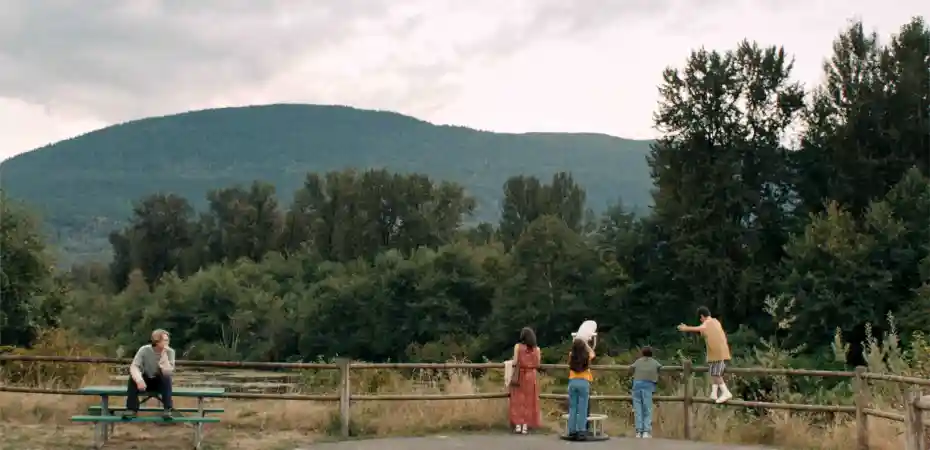
Blue Heron is the new film from the Canadian filmmaker Sophy Romvari, a story about her own family. In the 90s, her parents, Hungarian immigrants, moved to Vancouver Island. There, her oldest brother, a half-brother from her mother’s previous relationship, shows serious signs of anti-social behavior–shoplifting, wandering off without telling anyone, walking on the roof of the house, punching his hand through the window–and their parents just have no idea what to do. They try to get help. But there’s no real help to be had. Finally, they receive a recommendation to put him into foster care and they do.
This is a pretty intense family story to tell in a film and Romvari does it in a real unusual way. The story itself is the first half or a bit more of the film. It’s filmed very much as a little girl would remember it–she’s 8 at the time. So the story focuses on some seemingly random events over a summer because random events from the past is what we remember of our childhoods of that age. I love that she didn’t over dramatize anything. He’s not threatening to shoot anyone (though the parents talk about him threatening to burn the house down with everyone inside), he doesn’t seem to be a bad kid really, he’s just odd and disturbed and no one knows what to do.
Then the second half of the film switches to the present, where a filmmaker is making a movie about her brother. Romvari doesn’t act this herself–Amy Zimmer is great if a bit not Hungarian looking unlike the child Romvari who is played by Eylul Guven. But that section starts by her presenting the case to a bunch of psychologists to ask if the treatment would be different today. The answer is….maybe but probably not really. What do you do with someone disturbed like this? What do parents do? It’s traumatic, devastating, but they have three smaller children to protect too.
Then the end of the movie has the director character go visit her parents and it is back in the past and she is playing a social worker asking questions of her parents. That scene has been described as “surrealism” but that’s not really quite accurate, it is more an imagined scene of a daughter wondering what her parents were thinking but not really having any answers.
There’s no happy ending here–it’s not clear what happens to the brother in the future, but he’s in and out of the system and they lose him eventually, though to what I don’t know. You’d think the film would be really sad–and it is–but that’s not really the point. It’s just a very smart small but actually huge film about the complexities of family, childhood, and loss. Very highly recommended, streaming on Criterion.