


However, if you complete the set of your opponent, you get to draw 2 presents, and you get to look at their value this time. After this, you can keep the present worth the most points for yourself, and give the other one to the person whose set you finished. This is the clever way that giving is rewarded. It’s certainly the best way to ensure you score the highest points possible, but you still have to be strategic and discerning about who you choose to help.
Both my 11-year-old and 7-year-old picked up on the rules very quickly, and as the game unfolded they began to enjoy it more and more. And the reason for this is that as the game goes along, you are given more and more options on your turn.
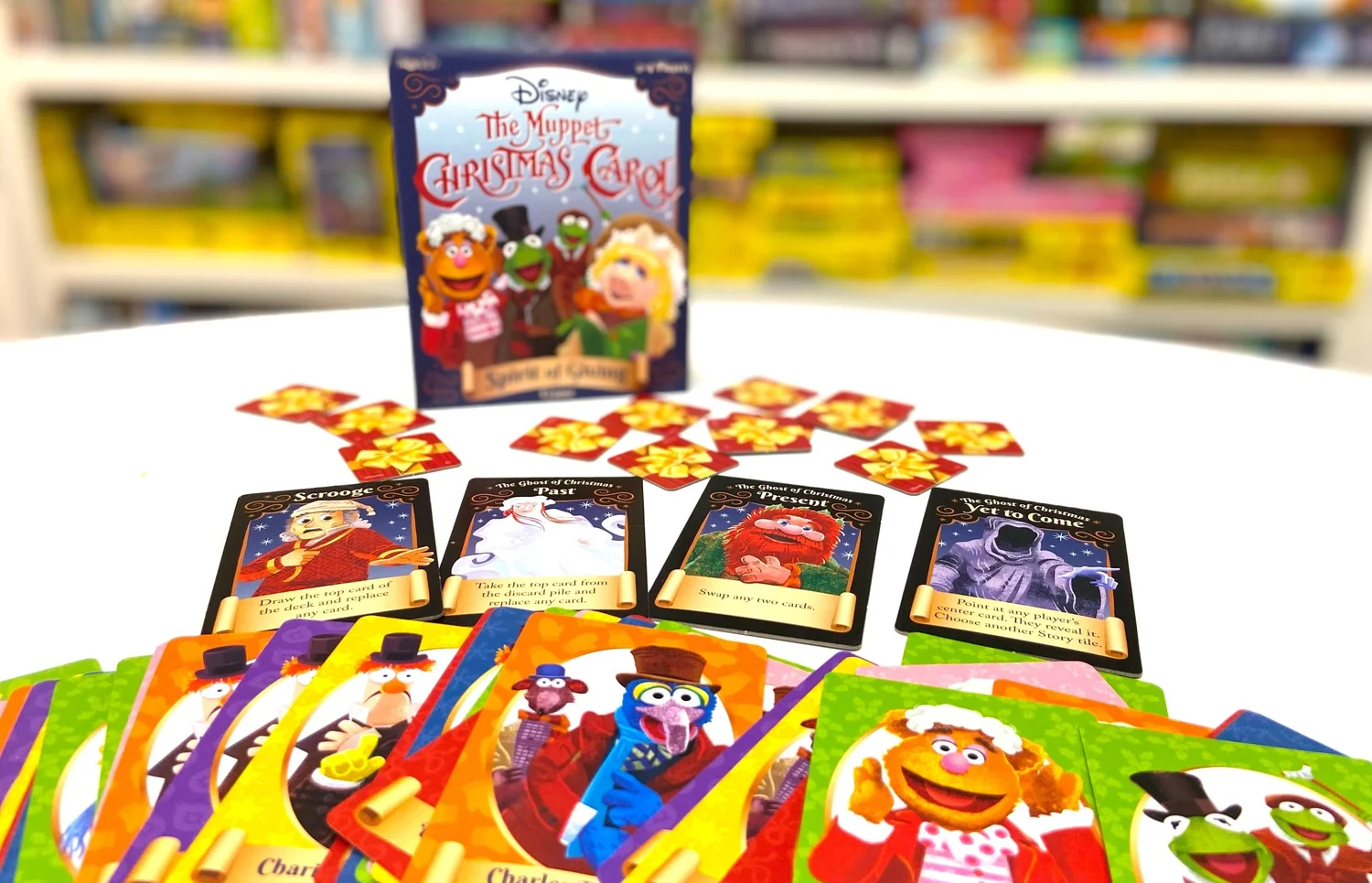
In the beginning of the game, you only have access to the Scrooge card, and this corresponds to a certain move. Choosing the Scrooge card allows you to draw from the draw pile, and swap that card with a card in front of any player. But as the draw pile begins to deplete, the cards of the 3 spirits (Past, Present, and Yet to Come) are revealed – and each one provides you with a new move option on your turn.
The “Past” card allows you to draw your card from the discard pile, the “Present” card allows you to swap any two cards in front of players, and the “Yet to Come” card lets you peek at an upside down card in front of someone as a bonus action. I really like the way these rules are gradually introduced, because I think it was a great way for my kids to learn on our first playthrough. By the time the Spirit of Yet to Come came out, my son was visibly excited to learn what his power was.


