
How to File a Renters Insurance Claim: Step by Step


When living in rental properties, getting renters insurance will help protect your personal property and liability. Renters insurance can help cover your belongings after events like fire or theft and provide liability protection for certain accidents. Coverage depends on your policy, and standard policies generally exclude flood and earthquake damage. Additionally, knowing how to file a renters insurance claim is crucial in case something happens. So, read along as we go over the steps to file a renters insurance claim and when you’d need to.
Main Takeaways
- Check your coverage before assuming a loss qualifies. Renters insurance covers specified events, subject to deductibles, limits, and exclusions. Standard policies generally exclude flood and earthquake damage.
- Report the loss promptly and keep clear records. Contact your insurer, photograph damage when safe, and save receipts and information about affected belongings.
- Follow your policy’s claim requirements. Filing deadlines and required documents vary. Ask your insurer what you need to submit and when.
What Is Renters Insurance?
If you’ve ever lived in a rental property, you’ve likely been offered or required to get renters insurance. Like homeowners insurance, renters insurance helps cover the cost of tenants’ personal belongings in case they’re damaged, stolen, or destroyed. So whether you’re a landlord, tenant, or manager for residential property management in Northern Virginia, you’ll want to know about renters insurance.
Generally, renters insurance offers three types of coverage, including the following.
- Tenant Property Coverage– Renters insurance covers your personal property, including items like furniture, electronics, and clothing, if they are damaged or lost due to covered events like fire, theft, or vandalism. However, there may be some limitations for more valuable items, like jewelry, artwork, or some collectibles.
- Renters Liability Coverage– Renters insurance provides liability protection, which can assist if someone is injured while on your rental property and you’re deemed responsible for their injuries. Additionally, it can provide coverage for damage to a neighbor’s property that you are held accountable for.
- Additional Living Expenses—If a covered event makes your rental uninhabitable, your policy may help pay eligible expenses above your normal living costs, such as temporary lodging and increased meal costs. Coverage limits and time restrictions apply.
If something happens to you or your property while living in a rental, you may need to file a renters insurance claim. Next, we’ll discuss instances where you’d want to file a claim and the steps to do so.
When to File a Renters Insurance Claim
For damage to your belongings, compare the likely covered loss with your deductible before deciding to file a claim. If the amount is below or only slightly above your deductible, paying out of pocket may make sense.
Fire, theft, and vandalism are common reasons to file, but coverage depends on your policy. Don’t assume every natural disaster qualifies. Ask your insurer about exclusions, coverage limits, and how your belongings will be valued.
Claims history may affect future premiums or coverage options. However, if someone is injured or makes a claim against you, notify your insurer promptly rather than relying on the property-loss calculation above.
How to File a Renters Insurance Claim
First, get to safety and contact emergency services if needed. Once it’s safe, report the incident promptly and begin documenting the loss. You don’t need to complete every step in this list before contacting your insurer.
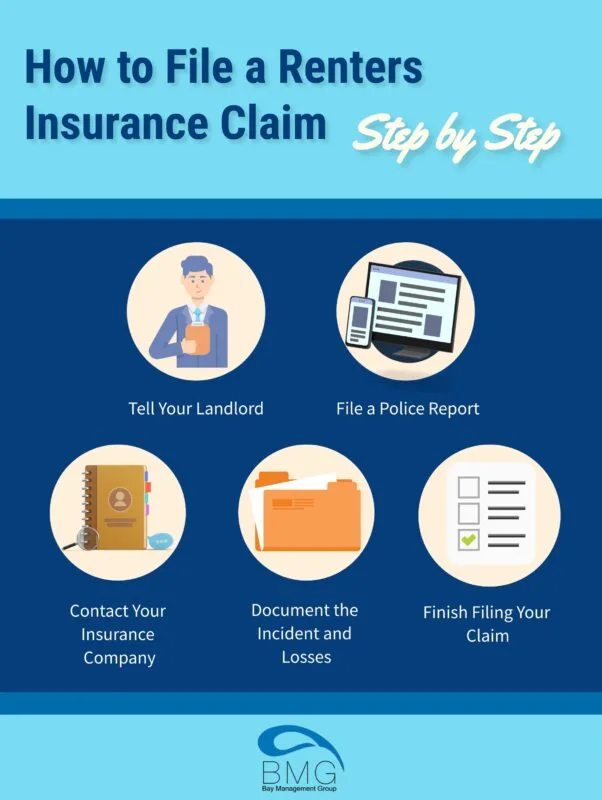
- Tell Your Landlord
- File a Police Report If Necessary
- Contact Your Insurance Company
- Document the Incident and Losses
- Finish Filing your Claim
Tell Your Landlord
Notify your landlord or property manager promptly if the incident affects the building, creates a safety concern, or requires repairs. For example, report damaged doors, broken locks, leaks, or fire damage so they can address the property.
Your landlord generally coordinates building repairs, while your insurer handles your claim for covered personal belongings and other policy benefits. You don’t need to wait for your landlord’s response before notifying your insurer.
File a Police Report If Necessary
Depending on the type of damage or losses you experience, you may need to file a police report. For instance, if your losses are due to theft, vandalism, or burglary, you’ll want to file a police report immediately. Some insurance companies require it to help with the investigation.
The reason for filing a report is to document that a crime has occurred. As such, you’ll want to document as many details as possible, including the names of the police you talk to, so your insurance company can contact them if necessary.
Contact Your Insurance Company
Contact your renters insurance company as soon as reasonably possible after the incident. Explain what happened and ask how to start the claim. If a police report is needed but isn’t available yet, ask if you can submit it later.
Provide the information you have and ask about coverage, deductibles, filing deadlines, and required documents. Keep your claim number and the contact details of the person handling your case.
Document the Incident and Losses
Begin documenting the incident as soon as it’s safe. Take photos or videos of the damage, list affected belongings, and keep records of conversations with your landlord, police, and insurer.
Depending on the incident, your insurer may ask for a police report, receipts for necessary expenses, and records of relevant conversations with your landlord. Ask which documents are needed for your claim. Next, you’ll want to document any lost, damaged, or stolen personal items.
Take reasonable steps to prevent further damage if you can do so safely. Ask your insurer before discarding damaged belongings or arranging nonurgent replacements, and keep receipts for any necessary temporary measures.
Come up with a list of everything that needs to be replaced and information from your home inventory. Document the date you acquired the item, how much you paid for it, copies of receipts, and any other information you have about the damaged or stolen items. The more information you have, the better, and the faster your claim may be settled.
Finish Filing Your Claim
Submit the claim forms and supporting documents by the deadlines your insurer confirms. There’s no single filing deadline that applies to every renters insurance policy, so don’t assume you have only 48 to 72 hours.
You may be able to submit additional information as it becomes available. If you need temporary accommodation, ask about additional living expense coverage before committing to major costs when possible. Save receipts, respond to requests, and keep copies of everything you submit.
Why Would Your Claim Get Denied?
An insurer may deny a claim for several reasons. Review the explanation carefully, since missing information may delay a decision rather than lead to an immediate denial.

- Fraud- Intentionally providing false information or inflating a loss can lead to a claim being denied. Give accurate details and let your insurer know if you discover a mistake.
- Late Reporting—Missing policy deadlines may affect your claim. Report the loss promptly and ask your insurer which notice and documentation requirements apply.
- Insufficient Evidence—Your insurer may request more information to confirm the loss or the value of your belongings. Missing evidence can delay the claim or prevent approval.
- Excluded Loss or Inactive Coverage—The event may fall outside your policy’s coverage, or the policy may not have been active when the loss occurred. Ask the insurer to identify the specific policy terms behind the denial.
FAQs About Filing a Renters Insurance Claim
After damage or theft, you may have questions about what your policy covers and how to document the loss. Here are answers to common questions about renters insurance claims.
How Long Do You Have to File a Renters Insurance Claim?
There’s no universal 48–72-hour deadline. Report the loss promptly and check your policy for notice and documentation requirements. Ask your insurer to confirm the deadlines that apply to your claim.
Is It Worth Filing a Claim If the Loss Is Close to Your Deductible?
For a personal-property loss, paying out of pocket may make sense if the covered amount is below or only slightly above your deductible. Consider the likely payout and possible effect on future premiums. Liability incidents are different, so don’t use this calculation as a reason to delay reporting an injury or potential claim against you.
Do You Need Receipts for Every Damaged or Stolen Item?
Receipts help, but ask your insurer what other evidence it accepts if you don’t have them. Photos, bank statements, order confirmations, and a home inventory may help document ownership and value. Provide accurate details rather than guessing or inflating prices.
Does Renters Insurance Cover a Hotel After Your Home Is Damaged?
Your policy may cover additional living expenses if a covered event makes the rental uninhabitable. This generally means eligible costs above your normal living expenses, subject to limits and time restrictions. Confirm coverage with your insurer and keep receipts.
Will Your Insurer Pay the Full Cost of New Replacement Items?
It depends on your coverage. Actual cash value accounts for depreciation, while replacement cost coverage generally pays to replace covered belongings with comparable new items. Deductibles, coverage limits, and claim conditions still apply.
Does Your Landlord’s Insurance Cover Your Belongings?
Your landlord’s property insurance generally covers the building, not your personal belongings. Renters insurance provides separate protection for your possessions against covered losses.
What Can You Do If Your Claim Is Denied?
Ask for a written explanation identifying the policy provisions behind the denial. Review it against your policy and submit any missing evidence through the insurer’s review process. If you still disagree, contact your state insurance department for guidance.
Do Landlords Require Renters Insurance?
Now that we’ve gone over how to file a renters insurance claim, you may be wondering–is renters insurance required? While not every landlord requires renters insurance, it’s an excellent way to protect your personal belongings in a rental property.
If you’re a landlord, requiring renters insurance may help tenants protect their belongings and obtain liability coverage for certain accidents. Check applicable state and local rules before adding the requirement to your lease. Renters insurance doesn’t replace your landlord insurance or remove your responsibility for maintaining a safe property.
Need More Advice? contact us today!
There are several ways to protect your investment, but insurance and comprehensive property management are some of the best solutions. In addition, qualified property managers can help keep up with maintenance, customer service, and administrative tasks. So, whether you own one property or several rentals, consider hiring Bay Property Management Group to manage them. Contact us to learn more about our services and how we can help your rental business today.


