
How ‘Year in Review’ Personalized Data Storytelling Became a Business Strategy — Juice Analytics


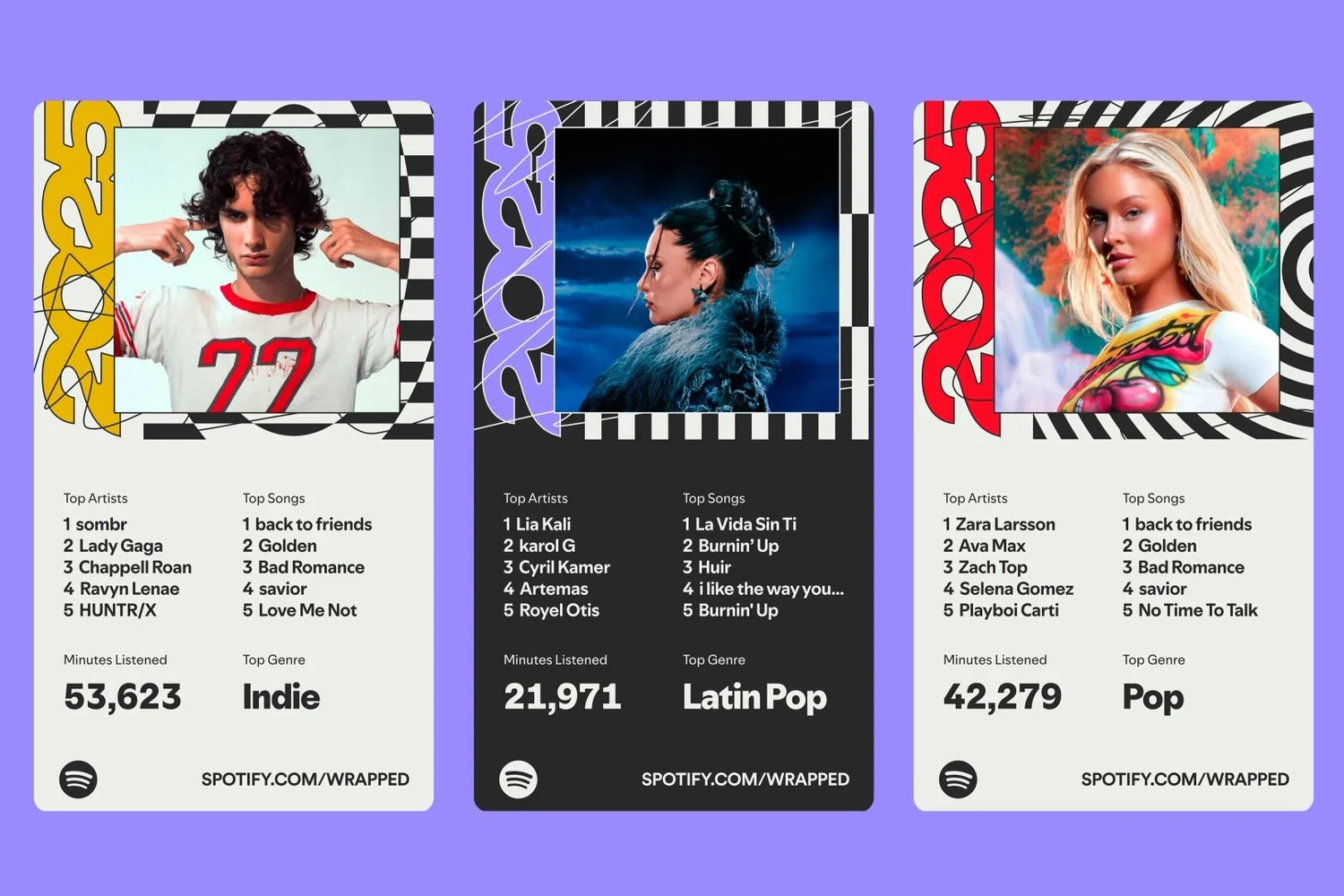
Why It Works
The psychological engine underneath these features is worth understanding.
First, personalization is about relevance: showing people what’s specific to them and they’ll pay more attention. But more importantly, these campaigns tap into “egocentric bias.” When customers are made the protagonist of a data story, they don’t just pay more attention, they process the information differently. The story becomes more of a mirror rather than a scorecard.
Being told you’re in the “Top 0.5% of listeners” for an artist validates your taste. It confirms that a choice you made, perhaps unconsciously, says something meaningful about who you are. It is identity affirmation that creates a different kind of emotional response than a bar chart of hours listened.
Together, the personalized data stories tap into a concept called “optimal distinctiveness theory”, our desire to be the same and different at the same time. Psychologist Marilynn Brewer argues that people are torn between the need for “validation and similarity to others” while wanting to express their “uniqueness and individuation.” It is hard to achieve this balance — but solutions like Spotify Wrapped help us achieve that balance.
In addition, the narratives are about cognitive load. The traditional dashboards and reports asks you to do work: access the tool, interpret the metrics, draw your own conclusions. Year in Review features flip the focus from “exploratory” to “explanatory” — the company does the interpretive labor and delivers a conclusion. The reduction in friction is part of why engagement rates for these features consistently outperform standard communications.
Finally, there’s loss aversion. The more data a customer has invested in a platform, the more valuable their year-end reward becomes. This creates a retention dynamic. Users are less likely to switch when it means losing their history and the annual moment that comes with it.
The Business Value of ‘Year in Review’
These solutions aren’t just about the soft benefits. Spotify’s 2024 Wrapped campaign led directly to 11 million new Premium subscriptions. Because the content is designed to be shared, users do the distribution work. Every shared recap is, in effect, an earned media impression — billions of them, at no incremental cost per impression.
On the retention side, the mechanism is straightforward. Framing twelve months of customer activity as a personal narrative builds an emotional bond that makes churn psychologically harder. For B2B companies considering this approach, a customized data-powered narrative can become a tool for documenting value before the next renewal conversation: time saved, tasks completed, outcomes achieved. The ROI of using a service or platform doesn’t have to be inferred, it can be shown explicitly.
An Accessible Customer Experience Strategy
The technology brands that built these capabilities tend to have massive engineering resources, the scale incentive, and experience refining the product. Most organizations don’t have those kinds of resources. As a result, the desire to connect with customers ends up as a generic annual summary PDF, a mail-merge email with a customer’s name in the subject line, or nothing at all.


