

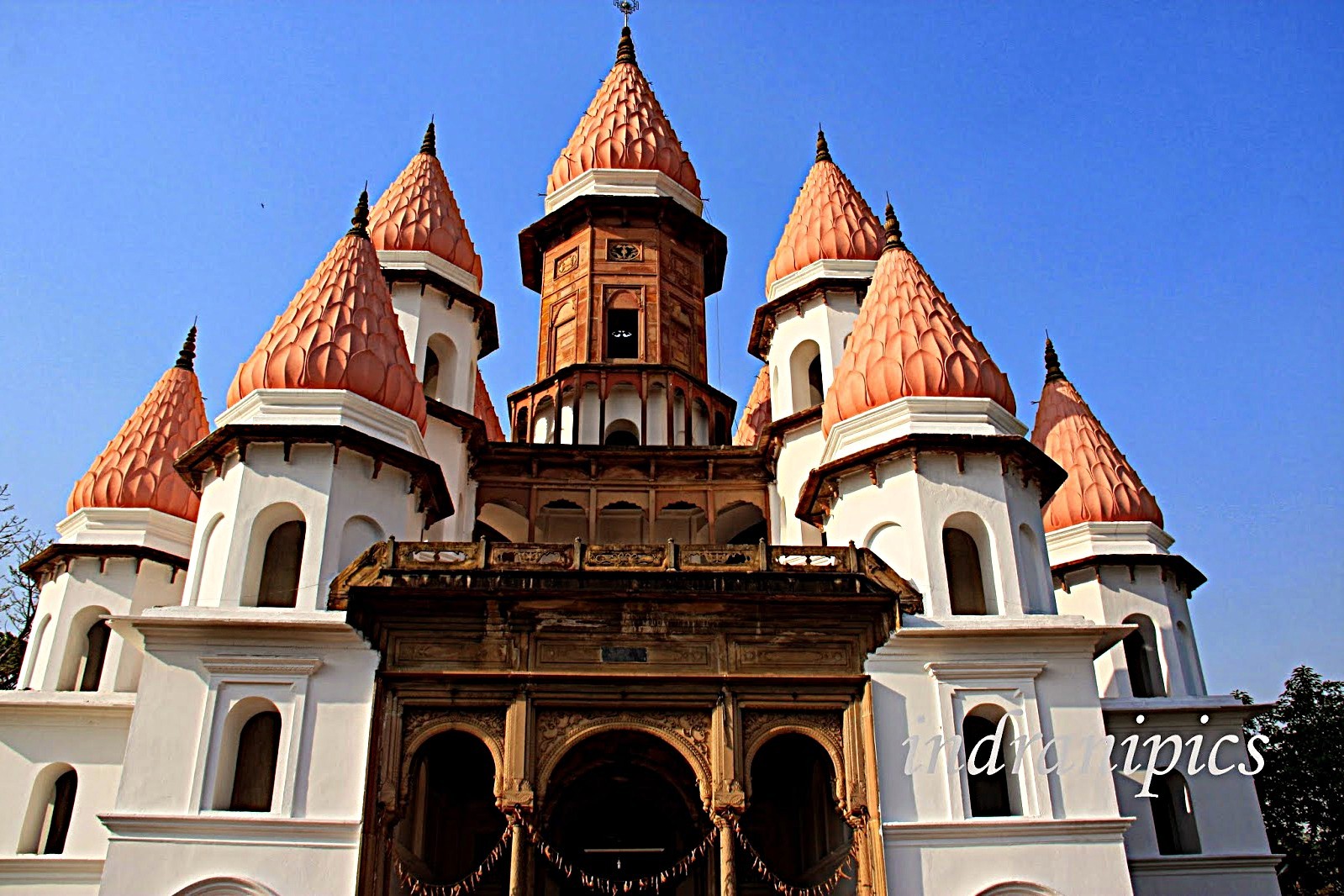
When I first stood before the Hanseswari Temple in Bansberia, its striking lotus-bud towers immediately stood out. Unlike the towering shikharas of North India or the pyramidal vimanas of the South, this temple’s design felt both visually unusual and deeply intentional. It is one of Bengal’s rare surviving examples of Tantric architecture, where spiritual philosophy is expressed directly through built form.
To help travellers and heritage enthusiasts plan their visit, here’s a quick reference:
Quick Summary Box
- Location: Bansberia, Hooghly district, West Bengal
- Deity: Goddess Hanseswari (a form of Kali/Shakti)
- Architectural Style: Tantric-inspired lotus-bud towers (13 pinnacles)
- Built By: Raja Nrisingha Deb (initiated 1799), completed by Rani Sankari (1814)
- Timings: 6 AM – 11 AM | 4 PM – 7 PM
- Entry Fee: Free
The Hanseswari Temple sits within a twin complex alongside the Ananta Basudev Temple, making Bansberia an easy and rewarding heritage day trip from Kolkata. Its layered history, rare architectural language, and spiritual significance make it worth visiting for anyone interested in Bengal’s cultural and religious past.
By Indrani Ghose | Last Updated: May 2026

Thirteen lotus bud spires of the 19th-century Hanseswari Temple in Bansberia Hooghly
The Legacy of King Nrisingha Deb and Rani Sankari
The history of Hanseswari Temple Bansberia begins with Raja Nrisingha Deb Roy Mahasay, the local zamindar who initiated its construction in 1799. His interest in Tantric philosophy shaped the temple’s design from the outset. He did not live to see it completed.
After his death, his wife Rani Sankari took charge of the project and oversaw its completion in 1814 — a span of fifteen years in total.
Rani Sankari’s role deserves particular attention. It is she who ensured the original architectural vision remained intact, including the completion of all 13 pinnacles as planned.
In nineteenth-century Bengal, it was not uncommon for women of the aristocracy to step in as patrons and administrators of religious projects after the death of a male heir. The Hanseswari Temple is, in that sense, a shared legacy: conceived by the king, completed by the queen.
From Kashi to Bansberia — How the Temple Vision Was Born
According to historical accounts, Raja Nrisingha Deb’s travels to Kashi (Varanasi) significantly influenced his vision for the temple. He was drawn to the city’s spiritual intensity and its tradition of temple architecture, and he wanted to bring something of that spirit back to Bansberia.
The most distinctive outcome of this influence is the temple’s lotus-bud pinnacles. In Tantric philosophy, these are understood to represent the nadis — the energy channels or nerve pathways of the human body.
The 13 pinnacles of the Hanseswari Temple are said to correspond to specific points of spiritual significance, making the structure a physical map of Tantric anatomy. This is what sets Hanseswari Temple apart from most other temples in Bengal: the architecture is not just decorative, it is doctrinal.

Arches at entrance to Hansehswari Temple in Bansberia
Construction, Cost, and Craftsmanship (1799–1814)
The temple’s fifteen-year construction drew on materials and craftsmen from Chunar, near Benaras — a quarry historically associated with fine stonework across northern and eastern India. The zamindar family took extra effort to maintain a quality of craftsmanship that would match the temple’s spiritual ambition.
The overall cost was substantial by the standards of the time, reflecting both the family’s wealth and their religious commitment. After Raja Nrisingha Deb’s death, it was Rani Sankari who managed the remaining construction, coordinating artisans and ensuring the original design was honoured.
The result — a fully realized thirteen-pinnacle structure that still stands today — is as much a product of her administrative resolve as it is of his original vision.
Decoding the Architecture — Tantric Symbolism and the Human Body
The Hanseswari Temple in Bansberia is unlike any other shrine in Bengal. Its five-storey structure was not styled as any unique design, but a deliberate architectural representation of Tantric philosophy, specifically the Satchakra: the six vital energy centres of the human body as described in Tantric texts.
Each level of the temple is understood to correspond to one of these chakras, guiding the devotee’s awareness upward from the material world toward spiritual realisation. This is what makes Hanseswari Temple architecturally significant beyond its visual appearance.
The building is designed to function as a spiritual diagram — a physical map of the subtle body, rendered in brick, marble, and carved wood. The vertical rise of the structure mirrors the ascent of kundalini energy through the body’s central channel, while the lotus-bud pinnacles at the top represent the point of transcendence.
For anyone interested in Tantric architecture in Bengal temples, this is as complete an example as survives anywhere in the region.
The 13 Lotus-Bud Pinnacles and What They Represent
I was curious about the 13 lotus-bud shaped pinnacles which are so different from the curved shikharas of conventional Bengal temple architecture I had seen till then during my West Bengal tour. The purohit there explained these are not decorative additions — their number, form, and placement all carry symbolic weight.
In Tantric interpretation, the lotus is the seat of each chakra, and the upward-pointing bud represents the aspiration toward higher consciousness. The 13 pinnacles are distributed across the five storeys of the temple, reinforcing the idea of progressive spiritual ascent from the ground level upward.
What also sets these pinnacles apart visually is their resemblance to the nodes of the human nervous system — each one positioned to correspond with a specific energy point in the Tantric map of the body. This is the detail that makes Hanseswari Temple a genuinely rare example of Tantric architecture in Bengal: the symbolism is structural, not ornamental.

Hansehswari Temple and Anant Basudev Temple to its right in same complex.
Inside the Temple — Ira, Pingala, and Sushumna Nadi
The interior layout of the Hanseswari Temple reflects the three principal nadis, or energy channels, described in Tantric and yogic tradition:
- Ira Nadi (left channel): Associated with lunar energy, receptivity, and the feminine principle.
- Pingala Nadi (right channel): Linked to solar energy, dynamism, and the masculine principle.
- Sushumna Nadi (central channel): The primary pathway, running along the spine, through which kundalini energy is believed to ascend toward the crown chakra.
The temple’s corridors and vertical alignment are said to symbolise these three channels. As devotees move through the sanctum from entry to the inner shrine, they are, in the Tantric framework, enacting the journey of energy rising through the nadis toward union with the divine.
I spent half an hour here walking through the corridor trying to absorb and understand how the building mirrors an internal spiritual process. Scholars and historians describe Hanseswari as a Tantric diagram in architectural form.
The Blue Neem-Wood Idol of Maa Hanseswari
At the centre of the temple is the idol of Maa Hanseswari, carved from blue neem wood. I stood with folded hands, prayers in heart, for some time. The interior was quite dark through which the blue idol seemed to radiate divine aura.
Both the material and the colour carry specific significance within Hindu and Tantric tradition.
- Neem is regarded as a sacred and purifying tree in Hindu practice, with associations ranging from medicinal healing to ritual cleansing. Use of neem wood emphasises organic, living energy over the permanence of stone or metal.
- The blue colour adds a further layer of meaning: in iconographic tradition, blue is associated with the infinite, the transcendent, and the cosmic — qualities central to Shakti worship.
I am accustomed to seeing stone or brass idols, therefore this neem-wood figure was visually and conceptually distinctive.

Door Frame of Inner Shrine of the 19th-century Hanseswari Temple in Bansberia
Why the Architecture of Hanseswari Temple Matters
The Hanseswari Temple Hooghly architecture is best understood as a coded text in built form. Its five storeys represent the Satchakra, its 13 pinnacles correspond to lotus energy centres, and its interior pathways mirror the Ira, Pingala, and Sushumna nadis. Every element of the design serves a function within the Tantric framework it was built to express.
From my short tour of Hanseswari temple, I stress upon the fact that this temple is not just a heritage site to photograph and move on from. It rewards attention. Understanding even the basics of its symbolic logic changes how you experience the space — from an ornate old temple to a building that was consciously designed to represent the architecture of the human spirit.
The Ananta Basudev Temple — The Overlooked Shrine in the Same Complex
Most visitors to Bansberia come for the Hanseswari Temple, but the Ananta Basudev Temple stands right beside it within the same complex and deserves equal attention. Dedicated to Lord Vishnu, it predates the Hanseswari Temple and reflects a different but equally significant strand of religious patronage in the region. Where Hanseswari draws attention through its dramatic vertical form, Ananta Basudev rewards a slower, closer look.
Terracotta Panels vs. Stone Construction — Two Architectural Languages Side by Side
The Ananta Basudev Temple is a well-preserved example of Bengal’s terracotta temple tradition. Its outer walls carry intricate panels depicting scenes from the Ramayana, the Mahabharata, and Vaishnava devotional narratives. These baked clay reliefs are characteristic of 17th–18th century Bengal temple architecture, where terracotta served as both a decorative medium and a way of conveying religious stories to worshippers who could not read.
The Hanseswari Temple, built later, represents a clear architectural departure. Its stone construction — using marble sourced from Chunar near Varanasi — its five-storey vertical form, and its lotus-bud pinnacles all show the influence of North Indian and, to a degree, European aesthetics. This is a significant contrast to the low-profile, narrative-relief style of its neighbour.
I got a concrete sense of how Bengali religious architecture evolved across two centuries, from the terracotta storytelling tradition to the experimental Tantric symbolism of Hanseswari. It is one of the more instructive architectural pairings available on any heritage day trip from Kolkata.

Plain white facade of Hangseswari Temple
Planning Your Visit — Timings, Best Season, and What to Know Before You Go
The Hanseswari Temple complex is open daily in two sessions: 6 AM to 11 AM and 4 PM to 7 PM. Entry is free. Morning visits are generally quieter, which makes them better for both photography and unhurried exploration. The evening session, particularly around sunset, sees more devotional activity if you want to observe rituals.
The best time to visit is October to March, when temperatures are comfortable and the light is well-suited for photographing the temple’s exterior. April and May bring significant heat, and the June–September monsoon period can bring flooding in parts of the Hooghly region, making road access unpredictable. If you are planning a heritage day trip from Kolkata, the October–February window is the most reliable.
Photography is permitted in the outer complex, including the lotus-bud towers of Hanseswari and the terracotta panels of Ananta Basudev Temple. Tripods and flash photography are not permitted inside the sanctums. Do check with temple staff before setting up any equipment, and keep movement unobtrusive during active worship.
How to Reach Bansberia from Kolkata — Train and Road Options
By train (recommended):
- Board a local train from Howrah Junction on the Bandel line. Trains run frequently, roughly every 20–30 minutes.
- Alight at Bansberia station — the journey takes approximately one hour.
- From the station, take a cycle rickshaw or shared auto to the temple complex. This takes around 10–15 minutes and costs very little.
By road:
- Bansberia is approximately 50 km from central Kolkata via NH19 (Delhi Road).
- Driving time is typically 1.5 to 2 hours, depending on traffic — weekday mornings are considerably faster than weekend afternoons.
- When I visited parking was available near the temple complex, though it fills up on weekends and during festival periods.
The train is the more practical option for most visitors. It avoids Kolkata’s traffic, runs frequently, and drops you within a short auto ride of the temple.
Photography Etiquette Inside the Complex
The complex offers strong photographic subjects — the lotus-bud pinnacles, the terracotta panels of Ananta Basudev Temple, and the overall massing of the two shrines together. A few practical guidelines will help you make the most of the visit without disrupting others:
- Shoot early or late: Early morning and the hour before the evening session closes offer the best natural light on the temple’s façade.
- Respect active rituals: Step back and lower your camera when priests or devotees are engaged in worship. This is both courteous and, in most cases, expected.
- No flash inside sanctums: Even where photography is technically permitted inside, flash disturbs other visitors and can damage older painted surfaces.
- Check before you set up: If you plan to use a tripod or shoot for extended periods, ask a temple staff member first. Rules can vary and are subject to change on festival days.

Shrine with Blue Neem-Wood Idol of Maa Hanseswari
Insider Photography Tip: The best perspective to capture the symmetry of all 13 spires alongside the adjacent terracotta temple is from the far northwestern corner of the complex garden during early morning light. Tripods are generally discouraged near the main sanctorum, so pack a fast prime lens if you intend to capture the details of the blue neem-wood deity inside.
Travel Tips and Day-Trip Itinerary from Kolkata
A visit to Hanseswari Temple Bansberia works well as a heritage day trip from Kolkata. The train journey is straightforward, the temple complex itself takes about two hours to explore properly, and there are enough nearby heritage sites to fill a full day without feeling rushed.
Suggested Day-Trip Itinerary
8 AM — Depart from Howrah Junction on the Bandel local. Trains run every 20–30 minutes. Journey time is approximately one hour.
9 AM — Arrive at Bansberia station. Take a cycle rickshaw or shared auto to the temple complex (10–15 minutes).
9.30 AM – 11 AM — Explore the Hanseswari Temple and the Ananta Basudev Temple. The complex is quieter before midday. Use this time for photography and a closer look at the terracotta panels.
11.30 AM – 1 PM — Walk through Bansberia’s older lanes. The area still carries traces of its zamindari past in the form of old rajbaris and roadside architecture worth noticing.
1 PM – 2 PM — Lunch at a local eatery or dhaba near the temple. Options are simple but adequate. Carry snacks and water if you have specific dietary preferences.
2 PM – 4 PM — Travel to either Bandel Church (one of the oldest churches in Bengal, about 5 km away) or the Hooghly Imambara, both reachable by short train ride or road. Either adds strong heritage context to the day.
4.30 PM — Head back to Bansberia station for the return to Howrah. You should be back in Kolkata by 6–6.30 PM.
Practical Tips
- Check train schedules on the Indian Railways website or the UTS app before you leave — timings shift slightly on weekends and holidays.
- Carry water and sun protection. Between March and June, temperatures in the Hooghly region climb quickly after 10 AM.
- Weekday visits are noticeably quieter. Weekends, and especially festival days, bring larger crowds to both temples.
- There are no ATMs immediately adjacent to the temple complex. Carry sufficient cash for rickshaws, food, and any small purchases.

Sculptural details on arches in the facade
FAQ about Hanseswari Temple
Q. What is the best time to visit Hanseswari Temple?
October to March offers the most comfortable weather and reliable conditions for photography. The winter months — November to February — are particularly good, with clear skies and moderate temperatures.
Q. How much time should I set aside for the temple complex?
Plan for 1.5 to 2 hours. This gives you enough time to explore both the Hanseswari Temple and the Ananta Basudev Temple without rushing, and to look at the architectural details properly.
Q. Is there an entry fee?
No. Entry to both temples in the complex is free.
Q. Can I take photographs inside the temple?
Photography is permitted in the outer complex, including the lotus-bud pinnacles and the terracotta panels of Ananta Basudev Temple. Photography inside the sanctums is generally restricted.
Q. How far is Bansberia from Kolkata, and how do I get there?
Bansberia is approximately 50 km from central Kolkata. By local train from Howrah Junction, the journey takes about one hour. By road via NH19, expect 1.5 to 2 hours depending on traffic.
Q. Are there places to eat or stay near the temple?
Food options near the complex are limited to local dhabas and small eateries. There are no hotels or guesthouses of note in Bansberia itself. Most visitors treat this as a day trip and return to Kolkata for accommodation.
Q. Is the temple accessible for elderly visitors or those with mobility constraints?
The upper storeys of the Hanseswari Temple involve steps and are not easily accessible for visitors with significant mobility limitations. The Ananta Basudev Temple and the ground-level exterior of Hanseswari are accessible without climbing.

Closeup of Towers of the Temple
Conclusion
The Hanseswari Temple in Bansberia stands apart from most heritage sites in Bengal because it operates on two levels simultaneously — as a place of active worship and as a deliberate architectural statement. Its five-storey structure, 13 lotus-bud pinnacles, and interior layout were designed to express Tantric philosophy in physical form, making it one of the most conceptually distinctive temples in the region.
Alongside the Ananta Basudev Temple, the complex also offers a rare side-by-side view of two different traditions in Bengal’s architectural history: the terracotta narrative style of an earlier era and the stone-built, symbol-laden ambition of the early 19th century.
For heritage travellers, photographers, and anyone curious about how religious ideas get translated into built form, Bansberia is worth the hour’s journey from Kolkata. The temples are well-maintained, entry is free, and the experience is quietly rewarding — not because it overwhelms, but because it gives you something to think about on the way back.
Pin and Save this for Later

About the Author
 Indrani Ghose is a cultural travel writer and heritage documentation specialist with over 15 years of experience exploring and writing about temples across India and Southeast Asia. Having visited over 150 sacred sites, she brings both scholarly depth and personal narrative to heritage travel writing.
Her work has been published in Lonely Planet, The National (UAE), Whetstone Asia, Deccan Herald, and various architecture and heritage journals.
Connect with Indrani: Follow Indrani on Instagram | Twitter | Facebook for heritage travel insights, photography tips, and offbeat destination discoveries.