


Nigeria’s plans to use its abundant natural gas resources to drive industrial growth and improve energy supply are facing major challenges, particularly limited infrastructure and insufficient investment.
Although the country has one of Africa’s largest gas reserves, moving the resource from production fields to industries, power plants and households remains a major obstacle.
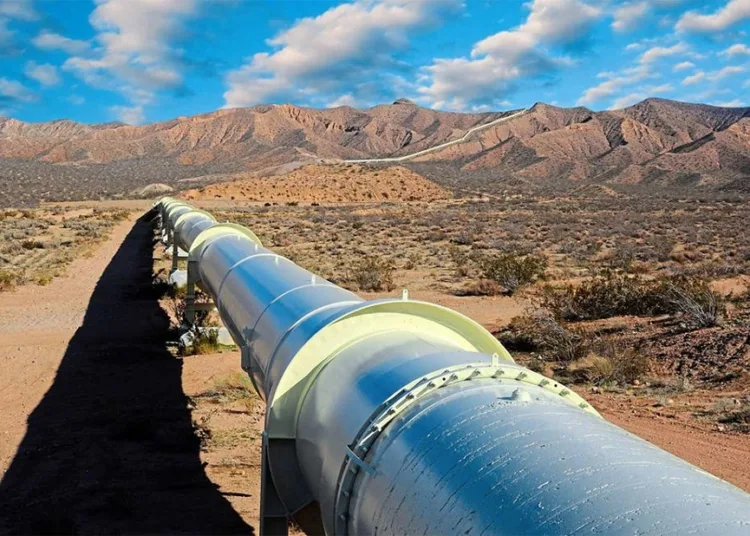
Industry stakeholders say the gap between gas availability and actual access is largely linked to inadequate pipelines, processing facilities, distribution networks and other infrastructure needed to move gas efficiently across the country.
Nigeria currently has more than 200 trillion cubic feet of proven gas reserves, but the country continues to struggle with inadequate domestic supply and infrastructure constraints.
The problem is becoming more urgent as demand for gas continues to rise across the power, industrial, transport and household sectors.
The Federal Government’s Decade of Gas initiative is intended to increase domestic gas utilisation and position the resource as a major driver of economic growth. However, stakeholders say achieving that goal will require significant private-sector investment in infrastructure.
A major challenge is the high cost of developing pipelines and processing facilities. Nigeria requires billions of dollars in fresh investment to expand its gas infrastructure and connect more supply sources to areas where demand is growing.
Industry executives have also identified regulatory uncertainty and weak contract enforcement as factors that can discourage investors from committing capital to long-term gas projects.
James Makinde, managing director of ANOH Gas Processing Company, said investors need greater certainty before committing funds to projects that can take several years to develop.
“There is an erroneous perception that producers do not want to supply gas to the domestic market. That is not correct. The domestic market now offers opportunities that can compete favourably with export markets. However, investors need predictability. Capital flows to environments where there is stability and certainty,” he said.
Makinde also pointed to infrastructure limitations, noting that some processing facilities remain underutilised because they do not receive enough gas, while some gas resources remain undeveloped because the infrastructure required to commercialise them is too expensive.
“There are processing facilities that are underutilised because they lack sufficient feedstock, while significant gas resources remain undeveloped because operators cannot justify the infrastructure costs,” he said.
The infrastructure challenge extends beyond pipelines. Gas gathering systems, processing plants, storage facilities, distribution networks and last-mile delivery systems are all needed to connect producers with end users.
This is particularly important for Nigeria’s power sector, which relies heavily on gas-fired generation. Where gas supplies are unreliable, power plants can operate below capacity, contributing to electricity shortages.
Manufacturers also face higher operating costs when pipeline gas is unavailable and they have to depend on alternative energy sources or more expensive trucked gas.
Nigeria’s household energy transition is another area affected by limited distribution infrastructure. Expanding access to liquefied petroleum gas requires storage, transportation and distribution networks capable of reaching consumers at affordable prices.
The country’s gas ambitions therefore depend not only on increasing production but also on building the infrastructure required to move the resource to where it is needed.
Stakeholders say attracting the necessary capital will require clearer regulations, predictable pricing, stronger contracts and commercially viable projects.
Without sustained investment in pipelines, processing and distribution, Nigeria could continue to have significant gas reserves while many consumers struggle to access adequate and affordable supplies.
The country’s challenge is increasingly shifting from simply having gas underground to developing the infrastructure and investment needed to turn those reserves into reliable energy for businesses, power producers and households.