

Saudi Arabia is investing an unprecedented amount of money in tourism, and also in diversifying its economy away from oil. I’ve been watching this with great interest, as we’ve never seen a project to this scale before, and many have wondered just how realistic some of these ambitions are. I’m also just generally interested in planned projects like this, as it’s amazing how often they fail.
Saudi Arabia’s single most ambitious project is The Line, and it looks like this is now facing its biggest challenge to date. While we’ve seen the project scaled back and delayed in the past, we’re now seeing work reportedly stop for the coming years. Let’s start with a bit of background, and then get into the latest.
Saudi Arabia’s The Line is the wildest thing I’ve ever seen
Saudi Arabia is working on developing all kinds of new regions, in order to create new tourism and lifestyle destinations. The biggest project in Saudi Arabia has been NEOM, which is intended to be a $1.5 trillion investment, and the most unreal-looking aspect of this is The Line.
According to the initial plans, The Line is intended to eventually house nine million people, who will live in interconnected societies run by artificial intelligence. This is supposed to be a 170 kilometer coastal strip that will be free of cars and streets, and will allegedly have zero carbon emissions.
The design of this is unlike anything we’ve seen before. Essentially, the idea was that there would be two skyscrapers that are parallel to one another, each the height of the Empire State Building and the length of the state of Delaware. People would somehow live inside that society. If I didn’t know any better, I’d say there’s no way that this is realistic, and that this must be out of a video game, or something.
This is only one aspect of the NEOM development, with other aspects of the project including everything from marina resorts to ski resorts. Again, all of this stuff just looks so futuristic.
In many ways, I think what happens with NEOM will very much reflect whether Saudi Arabia’s unprecedented investment works out or not. This seems totally outlandish, so if Saudi Arabia can pull this off, maybe the country’s goals aren’t outside the realm of possibility.
However, if the country can’t pull this off after emphasizing so much how it’s the “flagship” project, then that’s quite embarrassing. So along those lines, there’s now a major update about The Line, and it’s not good for Suadi Arabia…
NEOM halts work on The Line project until after 2030
In May 2024, The Wall Street Journal reported how ambitions for The Line were significantly scaled back, as the work was happening over budget, with several construction issues. According to that update roughly two years ago:
- The Line was only expected to be 2.4 kilometers long by 2030, so that would’ve been just 1.4% of the planned length
- The initial plan was for The Line to have at least 1.5 million residents by 2030, while the updated goal was for that number to be closer to 200,000, so that would’ve been just 13% of the original goal
At the time, Saudi Arabia insisted that the long term plans for The Line remained unchanged, even if it would be done a bit more slowly than initially planned. Keep in mind that a $1.5 trillion project is an absurd amount of money, even by Saudi Arabian standards. Saudi Arabia’s Public Investment Fund (PIF) is worth just under a trillion dollars, to just put that into perspective. So this project would cost more than 50% over the total value of the country’s PIF.
That projected cost was also best case scenario, and the project was running way over budget, with many suggesting it would end up costing over $2 trillion. Unfortunately all of that is nothing compared to the latest update.
Semafor now reports that construction on The Line has been suspended completely, and won’t resume until after 2030 (thanks to View from the Wing for flagging this). As a reminder, that’s the year when the project was supposed to be done, and Saudi Arabia has also been all about its “Vision 2030” concept. This change comes as the PIF is instead prioritizing investing in infrastructure, like ports and data centers.
It’s not just The Line facing a huge delay now, but also other tourism destinations along the Red Sea coast that are part of NEOM, like Trojena, which was supposed to host the 2029 Asian Winter Games. That’s now also not expected to see any work until beyond 2030.
If/when work does resume, it’s also expected to feature a simpler design, with the twin mirrored skyscrapers being significantly redesigned, in an effort to make the project less costly to develop. Again, it remains to be seen when this will actually be redesigned, and when new funding will be allocated to it.
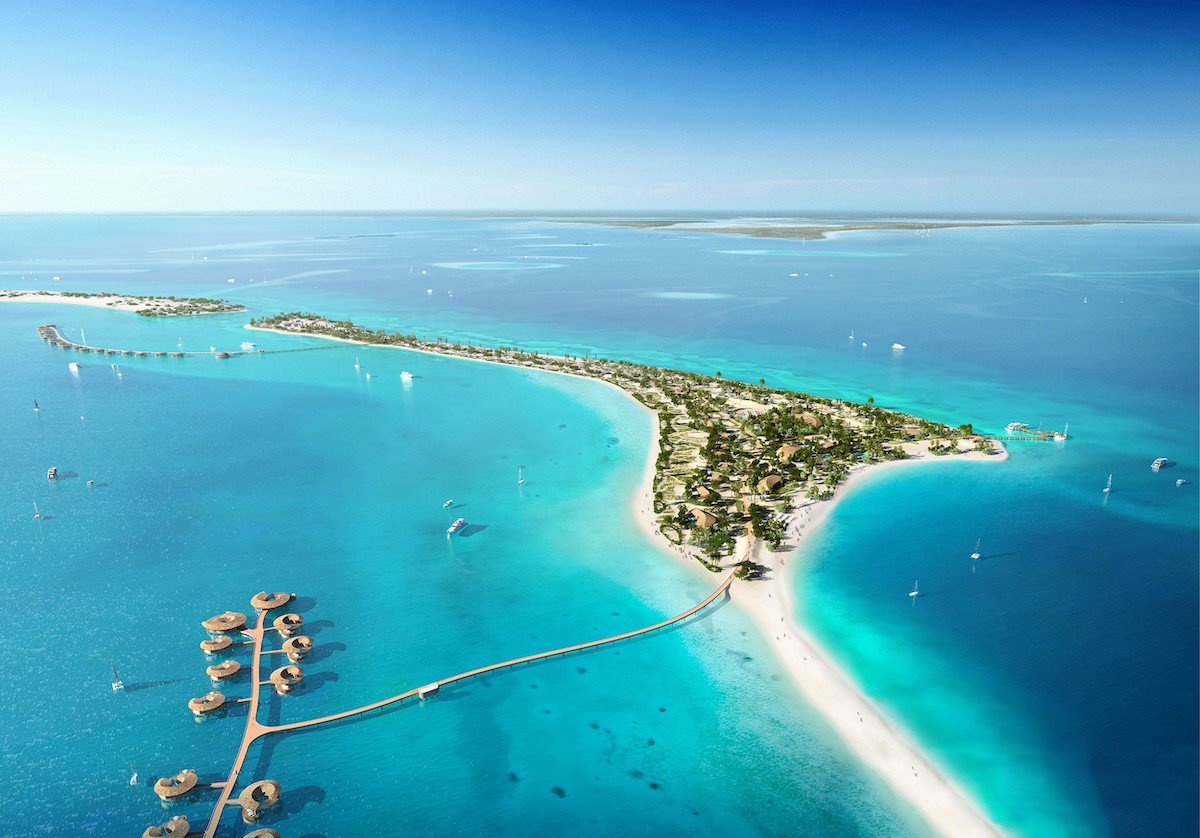
Everyone can decide for themselves what the odds are of this ever becoming a reality. Even if this does eventually happen, with the significantly scaled back plans in terms of the number of residents, it makes the economics and sustainability of the project even more questionable. That’s because endless money is being poured into the region, from solar panels, to desalination plants, to a massive airport, to other infrastructure.
It’s one thing if you could essentially distribute those investments across 1.5 million residents, but with only a tiny fraction of the number of residents, it makes the economics much harder to rationalize.
Every time I write about anything related to Saudi Arabia, people ask why I’m “promoting” the country. Let me emphasize that I’m not — being interested in something is not the same as endorsing something, or thinking it’s a great idea.
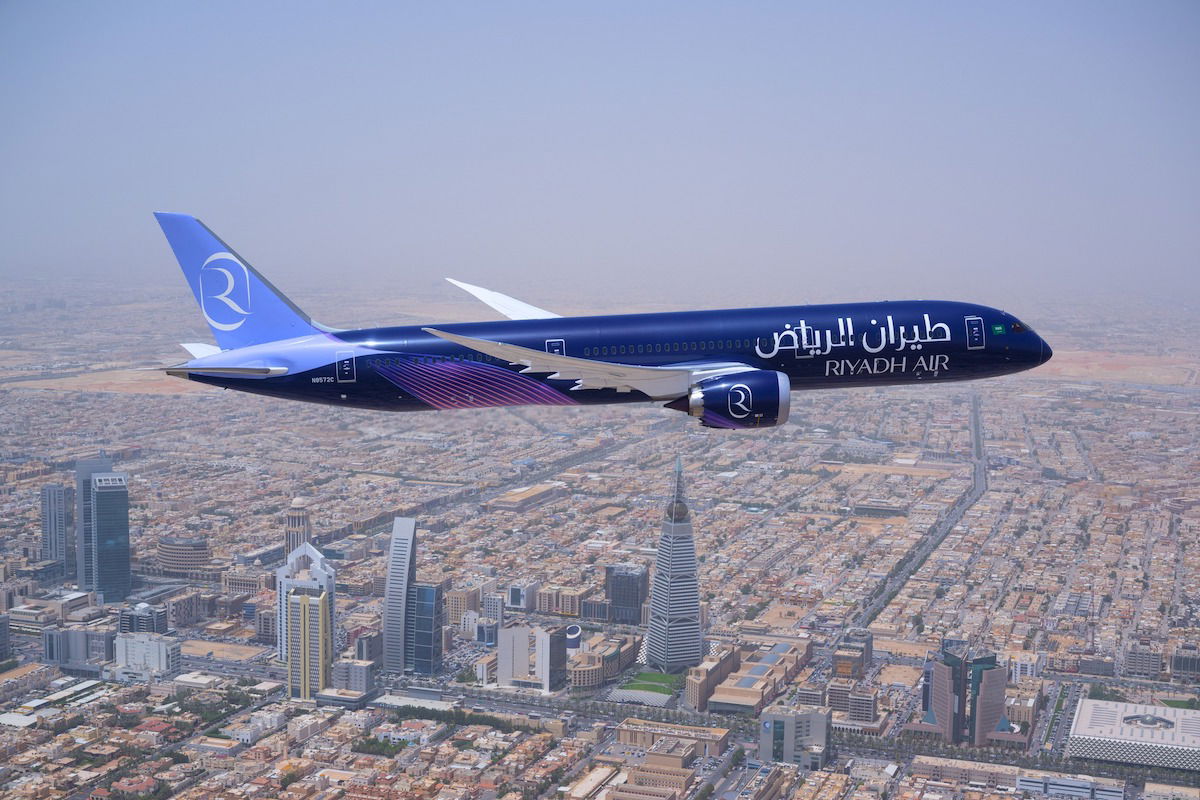
As I said, we’ve never seen a tourism investment to this scale before, and we’re seeing everything from the launch of Riyadh Air, to endless new hotel projects.
Bottom line
I can’t help but be fascinated by The Line, Saudi Arabia’s futuristic development that looks unlike anything the world has ever seen. I’ve been skeptical yet intrigued, so have been keeping an eye on the progress of the project.
A couple of years ago, we learned how The Line was dealing with some major delays and budget issues, which caused the ambitions to be slowed down and scaled back. Those cutbacks have now been taken to the next level, as construction has reportedly been halted, and won’t resume until beyond 2030 at the earliest.
Now it just remains to be seen if this project is permanently abandoned, or if it eventually comes to fruition in some form.
What do you make of The Line? Do you think anyone will ever live there?